PreMark for the symbols and stop bars, TrafficPatternsXD for the crosswalks, and the lots that show them holding.
The crosswalks at Toronto Premium Outlets in Halton Hills, Ontario, have been in service for fourteen years. They are TrafficPatternsXD, and the Product Portfolio Book prints them as a 14-year-old entrance feature, still performing every day. A parking lot's other pavement markings, the arrows, stop bars and accessible parking symbols, can go down in preformed thermoplastic too.
Preformed thermoplastic is sheet material made in a factory and cut to shape, then laid on the pavement and heated until it bonds. In a lot it does two jobs: PreMark for the symbols and stop bars, and TrafficPatternsXD or TrafficPatterns for the crosswalks.
The markings that carry legal weight
On the access road to the new hotel at Cascades Casino Delta, in Delta, British Columbia, the crosswalk markings are PreMark, and they are the photograph on PreMark's spread in the Product Portfolio Book. The book's line for the system: arrows, stop bars, yield triangles, school legends, bike symbols and ladder lines, pre-cut to specification and heat-applied by torch, with no stencils, no curing window, and traffic driving on immediately.
In a lot that list comes down to the arrows at the entrances and the drive-aisle turns, the stop bars at the exits and the crosswalks, and the accessible parking symbols, all named on HUB's Parking Lots and Regulatory Markings pages. Each one has to keep its dimensions and stay legible at night in the rain until the next maintenance cycle. PreMark is 125 mil, with a 90 mil ViziGrip option. Its integrated glass beads return a headlight to the driver, and its service life is 6–8 years.
The crosswalks between the stalls and the doors
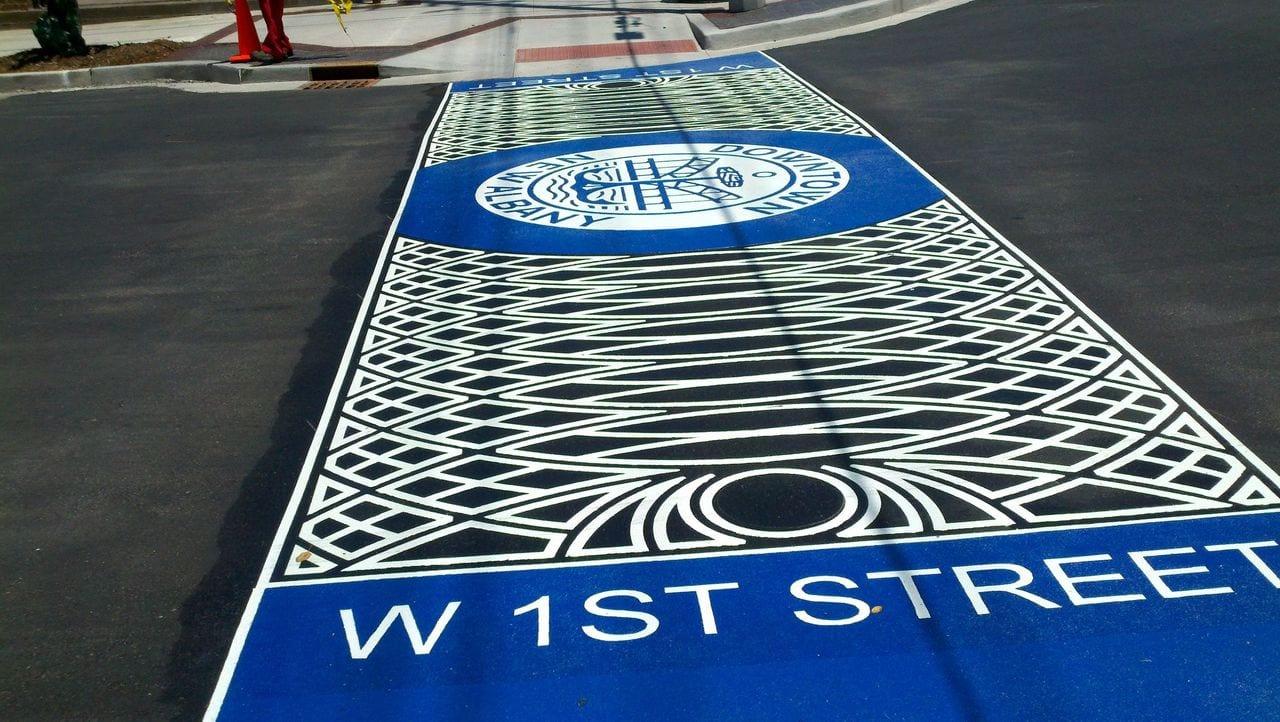
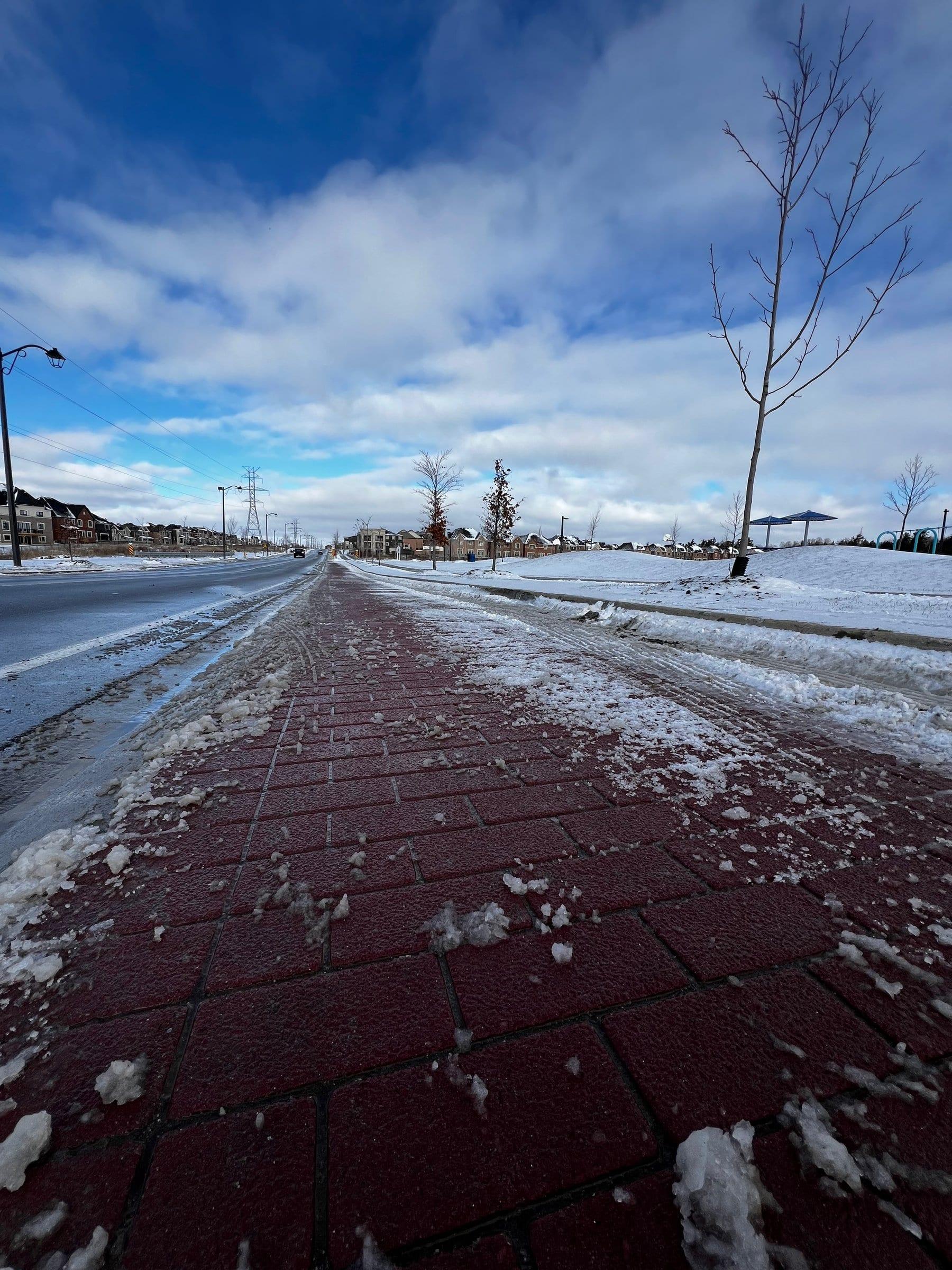
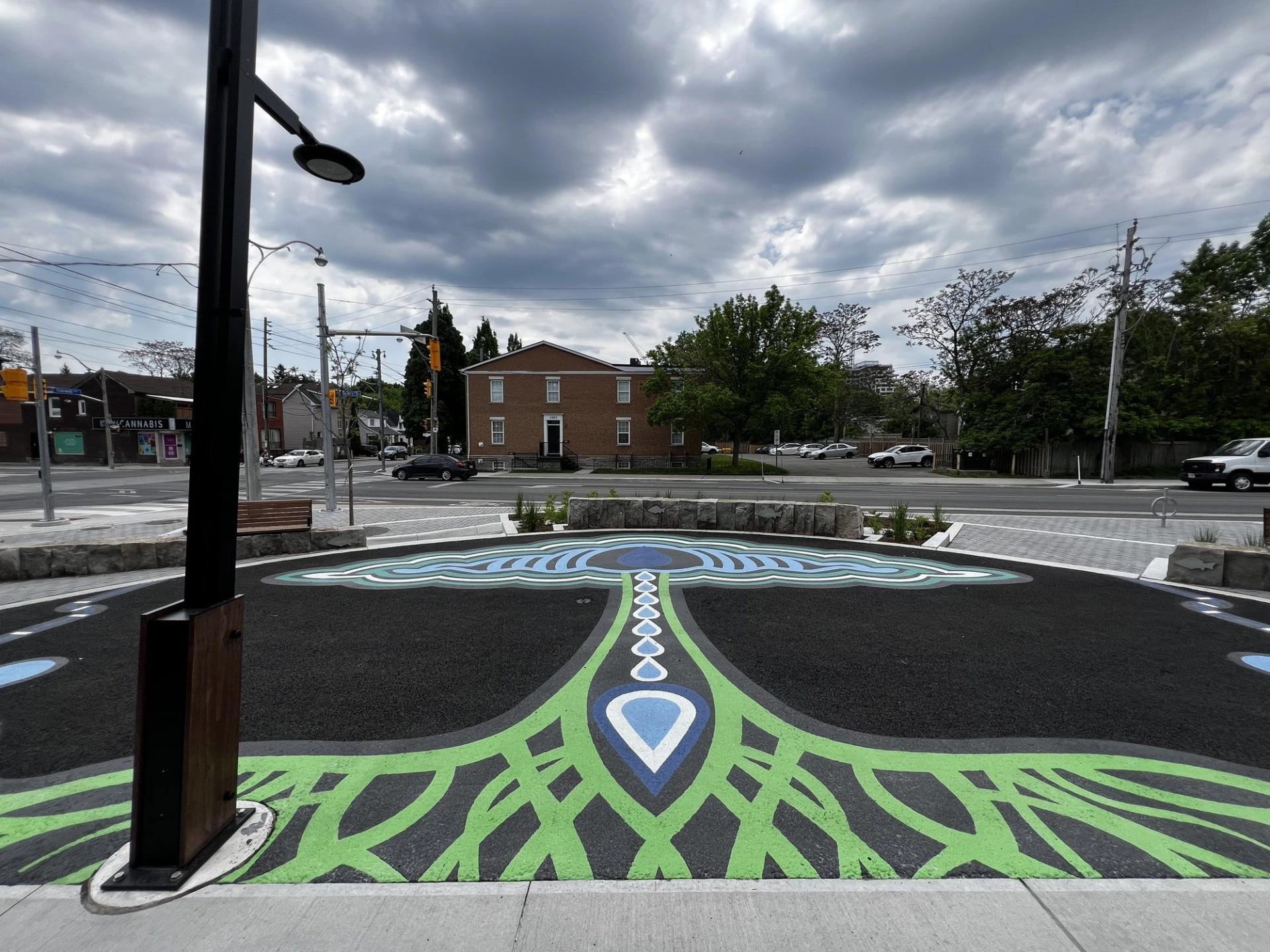
Fourteen years at Toronto Premium Outlets is one record. Fairview Park in Kitchener, Ontario, has TrafficPatternsXD crosswalks and traffic calming devices in its parking lot, with a brick or paving-stone look, and a busy parking lot entrance in Toronto has a brick-pattern crosswalk in the same material. The Product Portfolio Book prints a crosswalk at a grocery store in Oakville, Ontario, in its first year and its tenth.
The book's Parking Lots spread specifies TrafficPatternsXD for this work: 150 mil, aggregate-reinforced, for high-traffic bays and crossings. Its aggregate is rated 8–9 on the Mohs scale and runs through the full cross-section, so the grip lasts as long as the colour. Skid resistance is 60 BPN (ASTM E303), and the service life is 10+ years. It is heated on prepared asphalt and stamped through into the top of the asphalt, and it goes on asphalt only.
Where a crosswalk is on concrete, or does not take heavy turning traffic, TrafficPatterns is the 125 mil sheet. It is heat-applied to asphalt or concrete, where it bonds to the surface, with the same 60 BPN skid resistance; it is open to traffic within hours, and its service life is 8+ years. The book lists parking lots among its uses.
Writing it into the drawings and the tender
Before the work is booked, mark up the lot's layout drawing:
- Every arrow, stop bar and accessible parking symbol: PreMark, pre-cut to specification.
- Every crosswalk between the stalls and the doors, and any traffic calming device, on asphalt with heavy or turning traffic: TrafficPatternsXD.
- A crosswalk on concrete, or one without heavy turning traffic: TrafficPatterns.
- The closures: PreMark is driven on immediately and TrafficPatterns opens within hours. Ask HUB how long a TrafficPatternsXD section stays closed.
- The tender: each system by name with its spec sheet, and the certified installer for your province, whom HUB can name.
The spec sheets for PreMark, TrafficPatternsXD and TrafficPatterns are on Resources, and the lot's surface is a decision of its own, in the parking lot sealcoating guide. For a design team, book a Lunch & Learn; for one lot, the contact page reaches both offices.