Thirty-seven preformed thermoplastic colours, sixty-three coating colours, twenty-three MMA colours, and Pantone matching on top. How to narrow that down for a real specification.
Colour is usually the first decision a project makes about a decorative surface and the last one anybody documents properly. It is worth doing in the other order, because the palette you can draw from depends on the material, and the material is chosen by the duty, not the colour.
Here is what is actually available across the three systems.
Preformed thermoplastic: 37 colours
TrafficPatterns, TrafficPatternsXD and DecoMark all draw from the same palette: twenty standard colours and seventeen premium, formulated for UV stability and matched to the closest PMS reference.
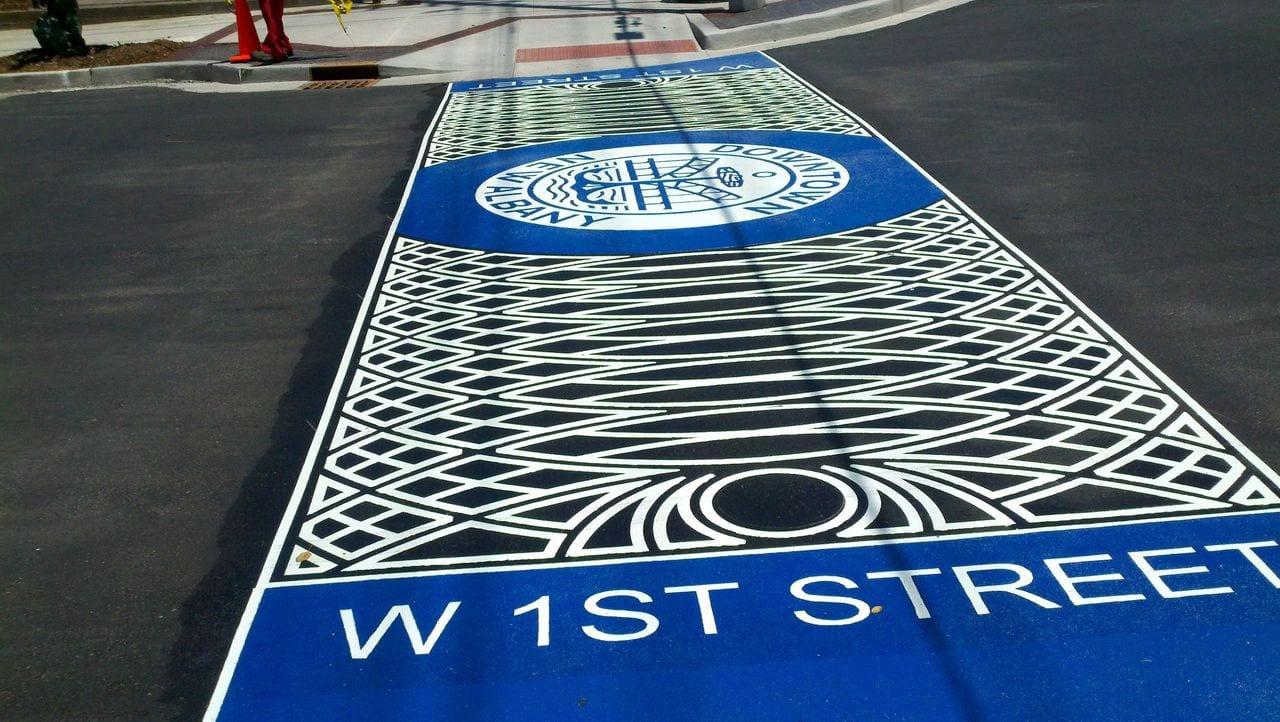
The standard range is where the masonry work lives: the earth and brick tones that make a thermoplastic crossing read as laid stone rather than as a graphic. Sonoma Sand (PMS 479C), Colonial Brick (PMS 483C), Heritage Red (PMS 7593C), Terracotta (PMS 7595C), Field Grey (PMS 418C).
The premium range is where identity work lives: the high-chroma colours a community crest, a Pride crossing or a wayfinding scheme needs. Kelly Green (PMS 347C), Purple (PMS 259C), Sky Blue (PMS 278C), Red (PMS 200C).
Because the material is factory-fabricated to artwork, this is also the palette that reproduces an artist's design. The colour is specified before anything is made.
See the full thermoplastic palette →
StreetBond coatings: 63 colours
The coating system runs the widest range: sixty-three standard colours, plus full custom colour matching.
Every colour on the 2026 card carries a published solar reflectance value, which is the number that matters if the project has a heat or LEED objective. Those values range from 0.04 at the dark end to 0.77 for SR White.
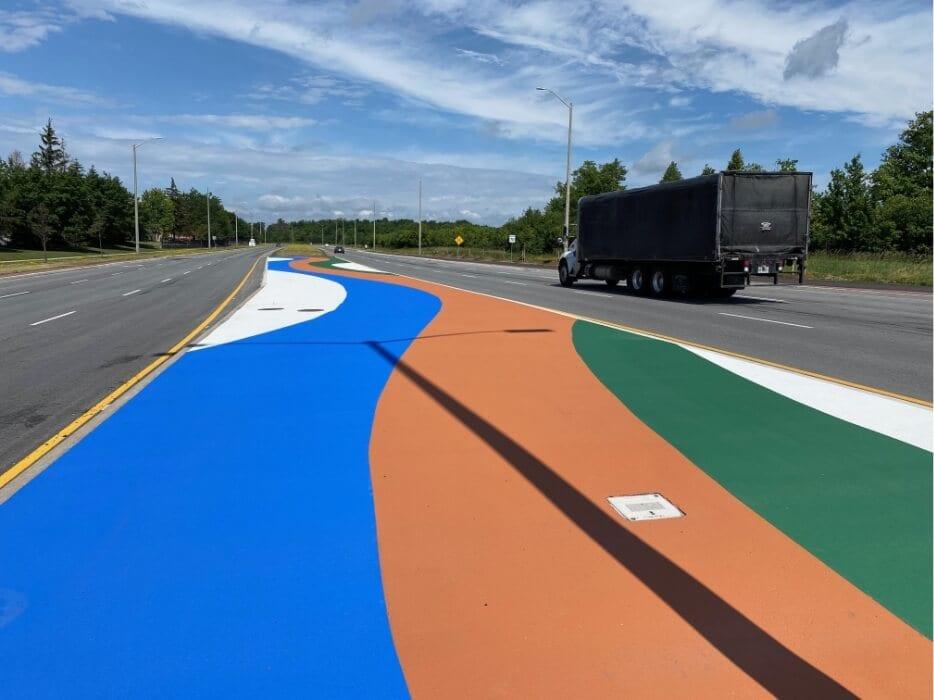
Because StreetBond is a coating rather than a unit, it covers area: plazas, courts, playgrounds, splash pads, path fields. Where thermoplastic is a marking, this is a surface.
See the full StreetBond palette →
The solar-reflective subset
Twelve of those colours carry an initial solar reflectance of 0.33 or higher and are supplied as StreetBondSR. That threshold is what lets a surface contribute to the LEED v5 Sustainable Sites credit for urban heat island reduction (non-roof).
If the project is chasing that credit, the palette narrows to those twelve before any other consideration. Start there and work backwards.
MMAX: 23 colours
The MMA system carries eight standard and fifteen premium colours, PMS-matched.
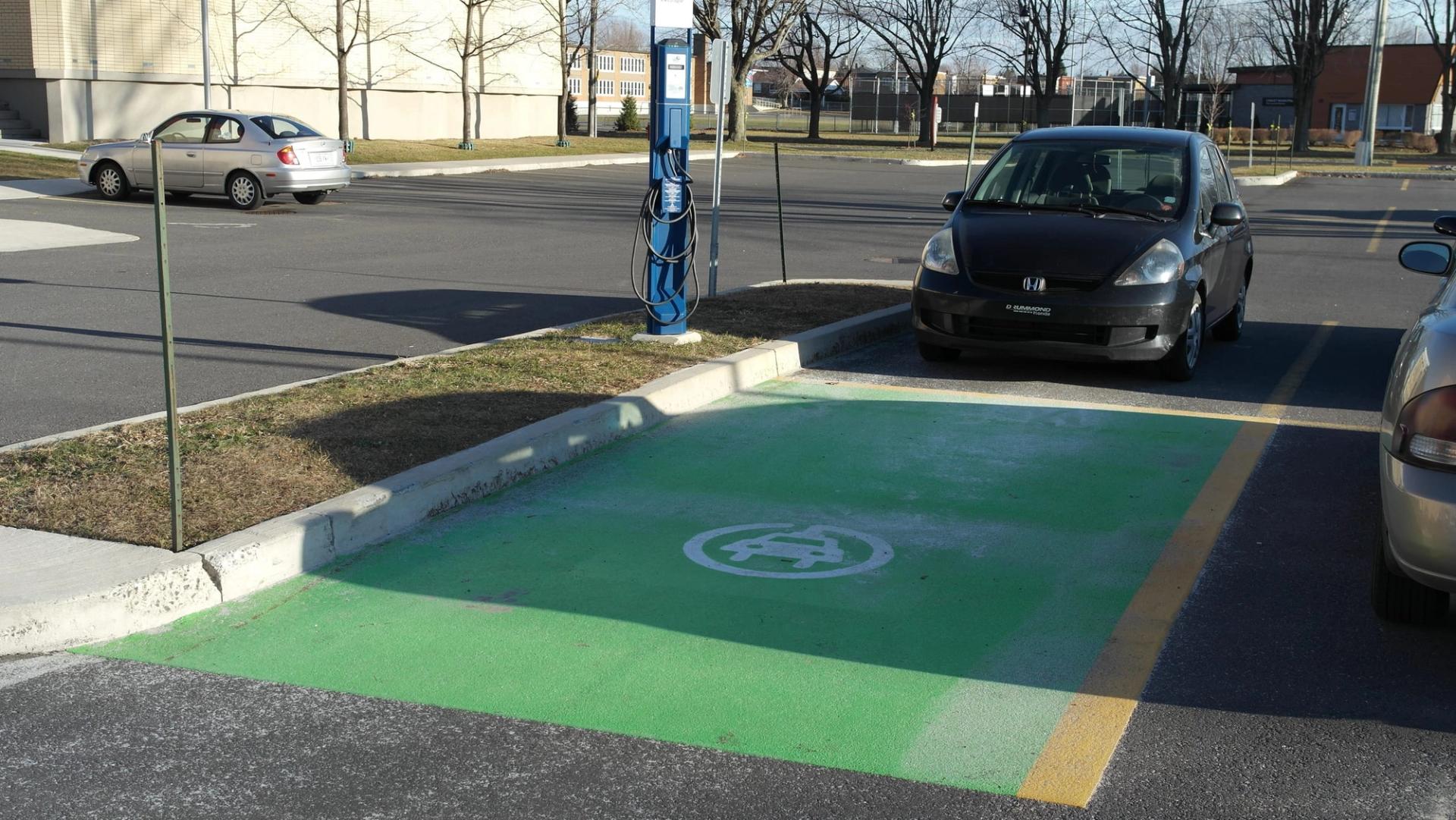
The standard eight are the lane colours in practice: EF Green (PMS 361C) and NYC Green (PMS 556C) for cycling infrastructure, NYC Red (PMS 696C) and Red (PMS 200C) for transit. The premium fifteen open it up for identity and wayfinding work in the same fast-cure material. Premium colours carry a minimum order of 20 kits.
Four things worth knowing before you specify
1. Screen colour is not colour. Every palette on this site is a screen reference. Monitor calibration, printer setup and paper all shift what you are looking at. Where a precise match matters (a brand colour, a Nation's artwork, a heritage scheme), specify from a physical sample.
2. Custom matching exists, and it is not exotic. StreetBond offers full custom colour matching; thermoplastic and MMA are matched to Pantone references. A BIA's own colour or a First Nation's palette can be produced.
3. Contrast is a safety property, not a taste one. On a crossing, the colour's job is to be unmistakably different from the asphalt around it at approach distance, at speed, in rain. That constrains the palette before aesthetics do.
4. Dark colours get hot. The solar reflectance column on the colour card is not decoration. On a splash pad, a playground or a court where people are barefoot or children are playing all afternoon, it is the deciding number.
Getting samples
Physical samples are available on request for all three systems, and the colour cards are on the Resources page as PDFs.
If you would rather work through it with someone, with the actual chips on the table, that is exactly what a Lunch & Learn is for.