How stamped asphalt, coloured thermoplastic, and pattern-based pavement treatments achieve measurable speed reductions at intersections and pedestrian priority zones, without the maintenance liability of physical traffic calming devices.
Speed is the decisive variable in pedestrian fatality risk. At 30 km/h, a struck pedestrian has roughly a 10% chance of dying. At 50 km/h, that number climbs to 75%. Vision Zero's mathematics begin and end with vehicle speed at the moment of conflict.
Physical calming infrastructure (speed cushions, raised crosswalks, chicanes) has a proven record. But it comes with real costs: civil works, drainage modifications, snowplow compatibility issues, and ongoing maintenance of asphalt transitions. For municipalities managing dozens of priority locations across a constrained capital budget, surface-based treatments offer a complementary path.
The Psychology of Place
Drivers don't calculate risk. They read environments. A road that looks like a plaza (with complex paving patterns, colour contrast, and material variation) produces a different instinctive response than a standard asphalt corridor. Speed drops. Attentiveness rises.
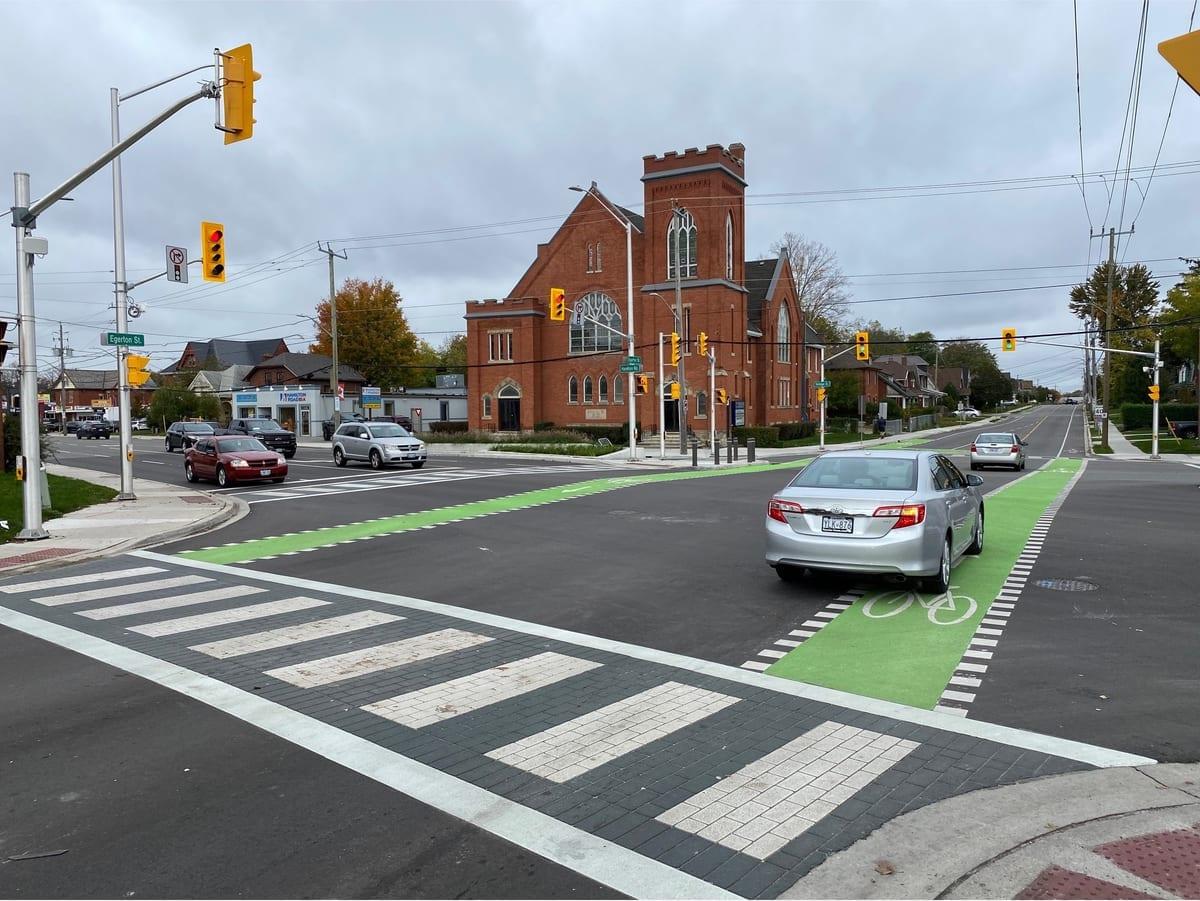
StreetPrint stamped asphalt intersections exploit this directly. By replicating the visual texture of brick or cobblestone at intersections and pedestrian priority zones, these installations shift the perceived character of the space before any regulatory enforcement is required.
Coloured Intersection Treatments
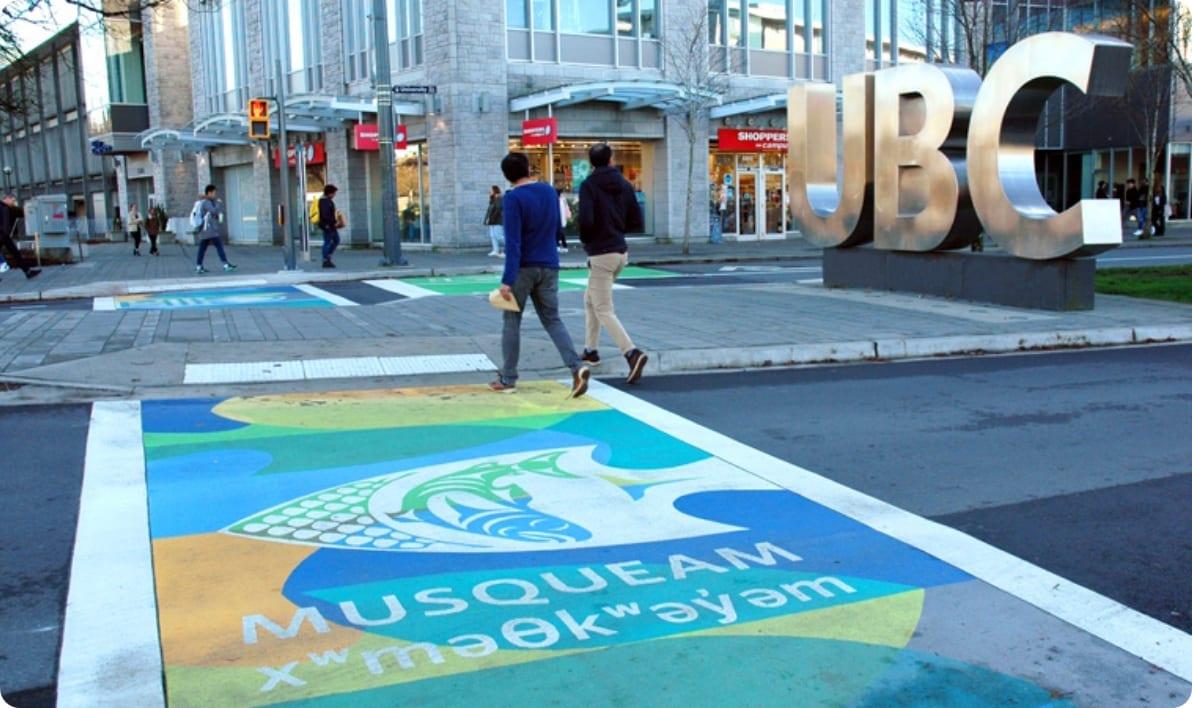
StreetBond coloured pavement coatings at crossings create what traffic engineers call a "visual contract": a legible, unambiguous demarcation that pedestrian space begins here. York Region documented reductions in 85th-percentile operating speeds of 8–12 km/h at coloured intersection treatments versus control intersections with standard crosswalk markings.
StreetBond's colour retention, 8 years and up in Canadian service, matters here beyond its economic value: a faded treatment loses its psychological signal. The durability of the calming effect depends on the durability of the surface.
Pattern Complexity and Retroreflectivity
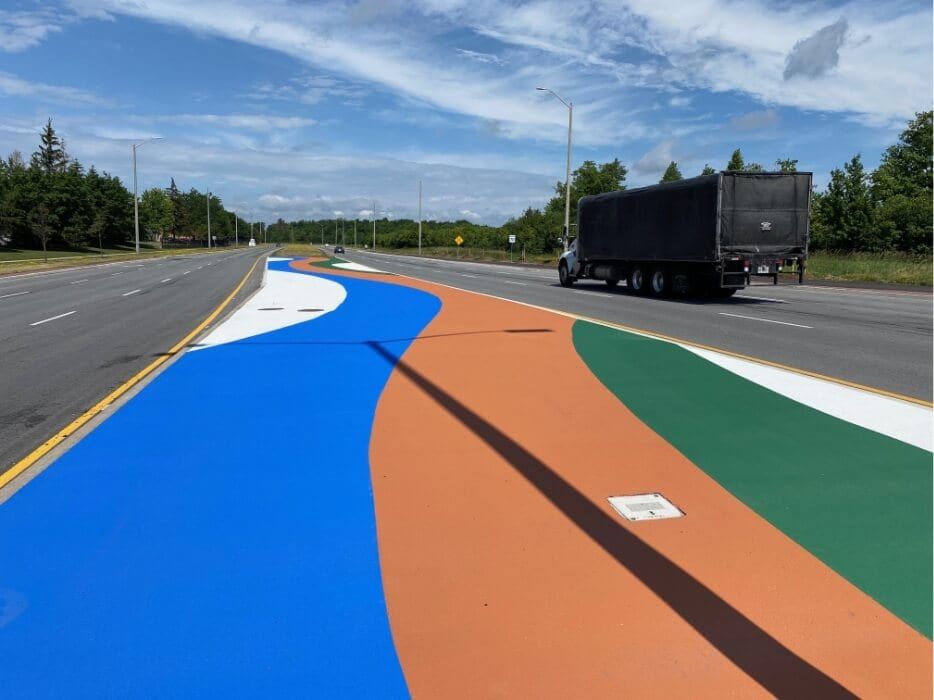
TrafficPatternsXD brick and cobblestone overlays extend pattern-based calming along full corridor treatments. The visual complexity of the marking field, at distance and at night, functions as an advance speed-reduction signal. The 150mil aggregate formula simultaneously delivers BPN 65+ skid resistance, supporting the safety case for the very pedestrian crossings these treatments protect.
performance and Snowplow Compatibility
Surface-based traffic calming maintains zero-elevation-change performance under and equivalent provincial standards, an area where physical raised tables can introduce accessible route complications at their asphalt transitions.
Snowplow compatibility is non-negotiable in Canada. TrafficPatternsXD's monolithic bond to the asphalt substrate has survived repeated mechanical snowplow operations across municipal installations in Ontario, BC, and Alberta without documented edge damage.
Case: Front Street Mews, New Westminster
The Front Street Mews Complete Streets redevelopment combined TrafficPatterns crosswalk markings with StreetBond colour treatments across a 400m mixed-use corridor. The installation created a continuous visual environment reinforcing pedestrian priority through the full length of the corridor. Post-installation vehicle speeds were consistent with the municipality's Complete Streets design targets.
Specifying for Your Program
HUB provides full specification support: pattern selection, colour system consultation, installation coordination, and technical documentation for municipal approval submissions.
Book a Lunch & Learn for a technical session on surface-based traffic calming, or connect with your regional representative.