DecoMark preformed thermoplastic puts print-quality custom graphics on pavement, at corporate campus entries and branded retail courts: UV-stable and skid-resistant.
Brand environments have a floor problem. Organizations spend enormous resources on vertical brand expression: façade treatment, interior design, digital signage, lobby graphics. And then the floor is grey asphalt or beige concrete, unrelated to everything above it.
For corporate campuses, sports facilities, branded retail environments, and institutional headquarters, the pavement is the largest untreated surface in the brand environment.
Print quality at pavement scale with DecoMark
DecoMark is a preformed thermoplastic surface graphic system manufactured to print-quality standards. The production process begins with a colour-matched design: full Pantone specification, fine-detail capability, and multi-colour registration accuracy.
The manufactured product is a thermoplastic sheet with the graphic running through the full thickness of the material, so the colour does not wear off the top. At installation the sheet is heat-applied and bonds to the prepared surface, a traffic-bearing graphic for its service life.
The performance specifications matter: UV-stable pigments that maintain colour depth without bleaching under Canadian sun exposure. Skid-resistant aggregate in the material, meeting or exceeding Canadian transportation standards for pedestrian and vehicle-bearing applications. Traffic-bearing: DecoMark is specified for full road surfaces as well as pedestrian zones. And durability: 6–8 times the service life of spray-applied paint graphics, without the annual repainting cost.
Corporate campus applications
A corporate headquarters campus has several places where the brand can go on the pavement.
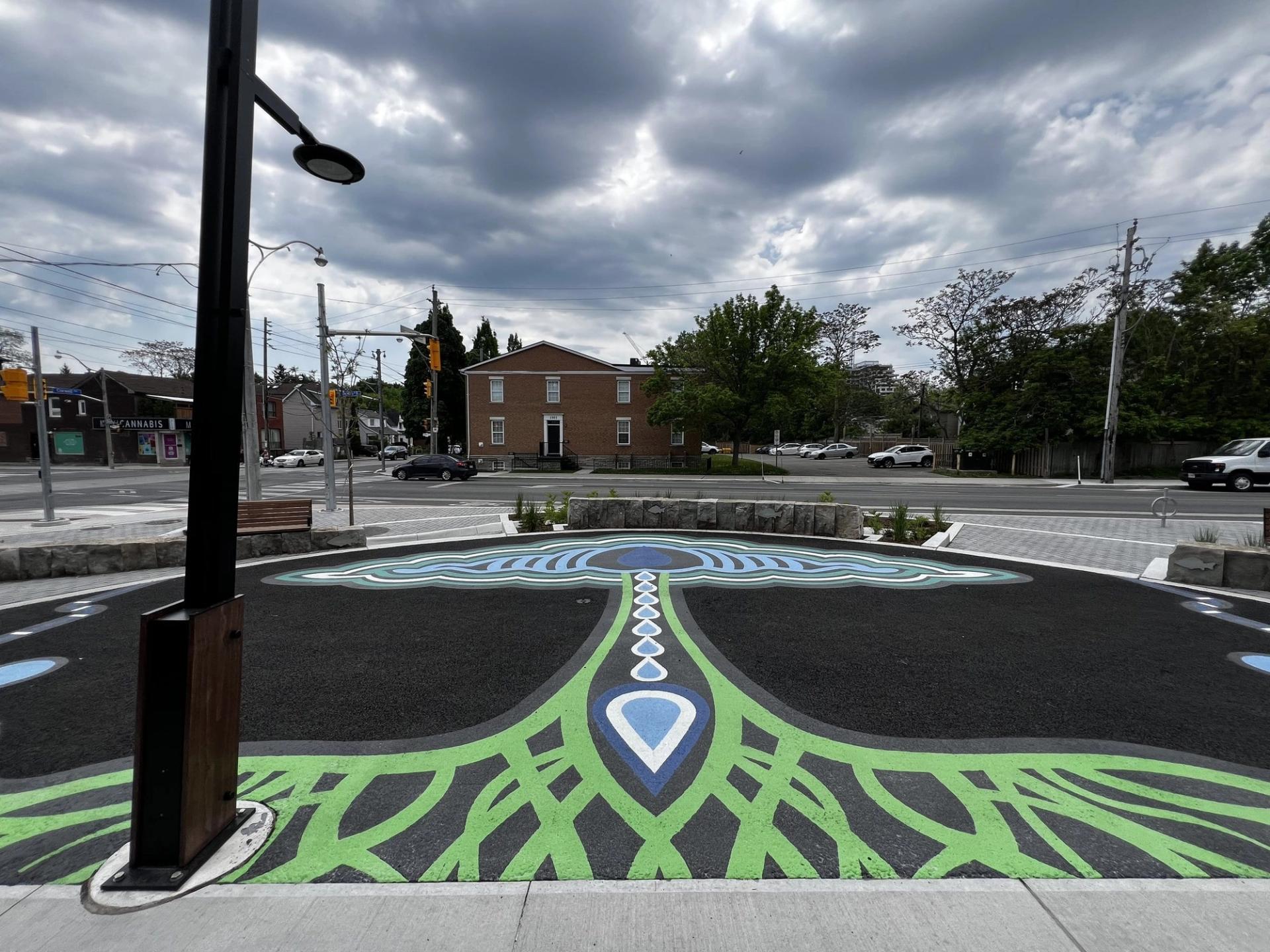
Campus entry. The main vehicle and pedestrian entry is where a visitor arrives. A corporate logo or crest in the entry crossing or plaza surface says whose place this is before the building does. Done in Pantone-accurate colour at full design fidelity, it looks the part.
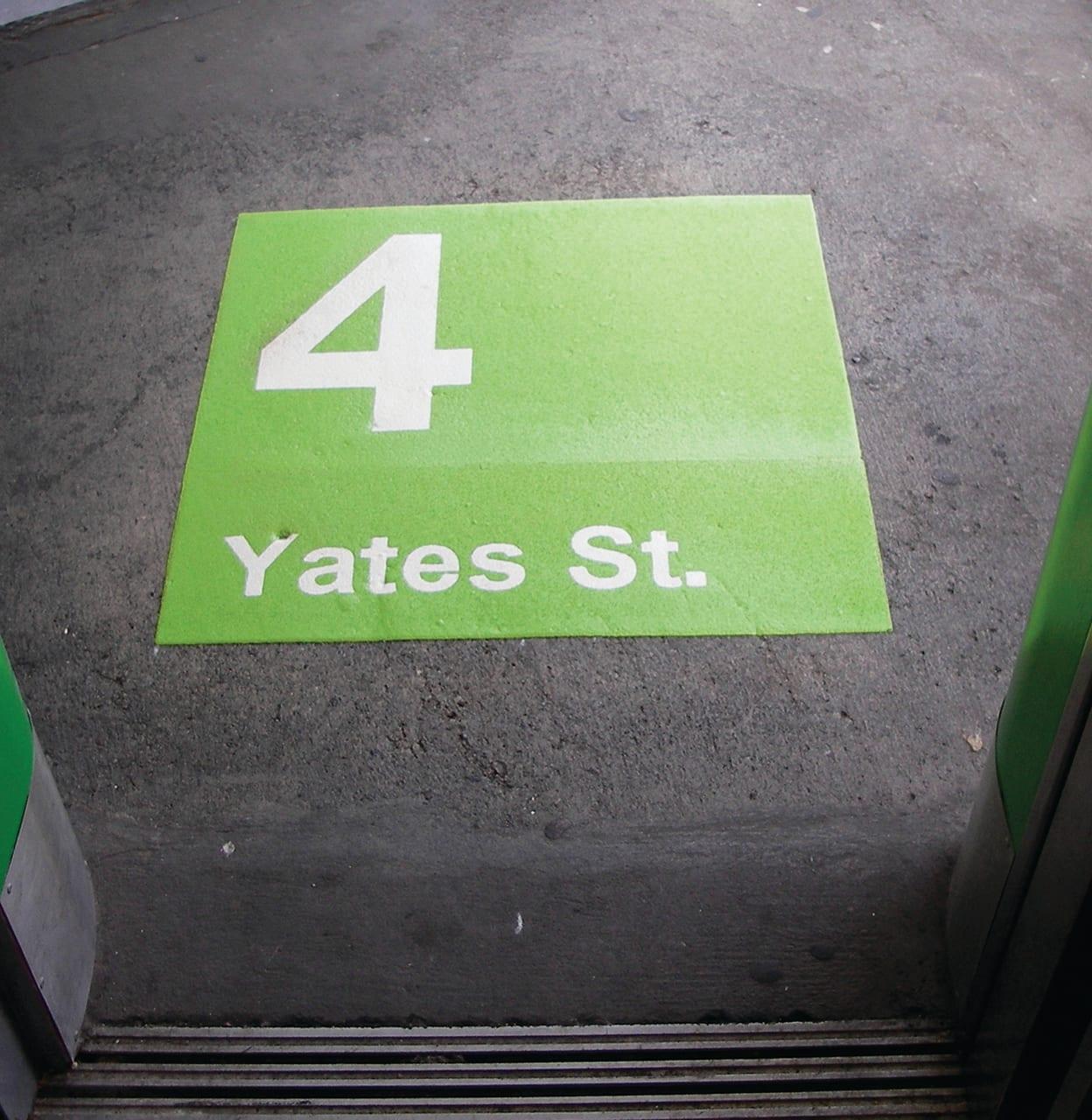
Campus pathways. Colour-coded pedestrian routes in corporate colours create a wayfinding system that doubles as brand reinforcement. The blue path leads to the main building. The grey path leads to parking. The colour choice is drawn from the corporate palette. Navigation and identity in the same surface.
Building entries and plazas. Decorative surface treatment at building-specific entries (department logos, division identifiers, functional zone markings) gives each entry its own mark, all in the corporate palette.
Retail and Mixed-Use Branded Environments
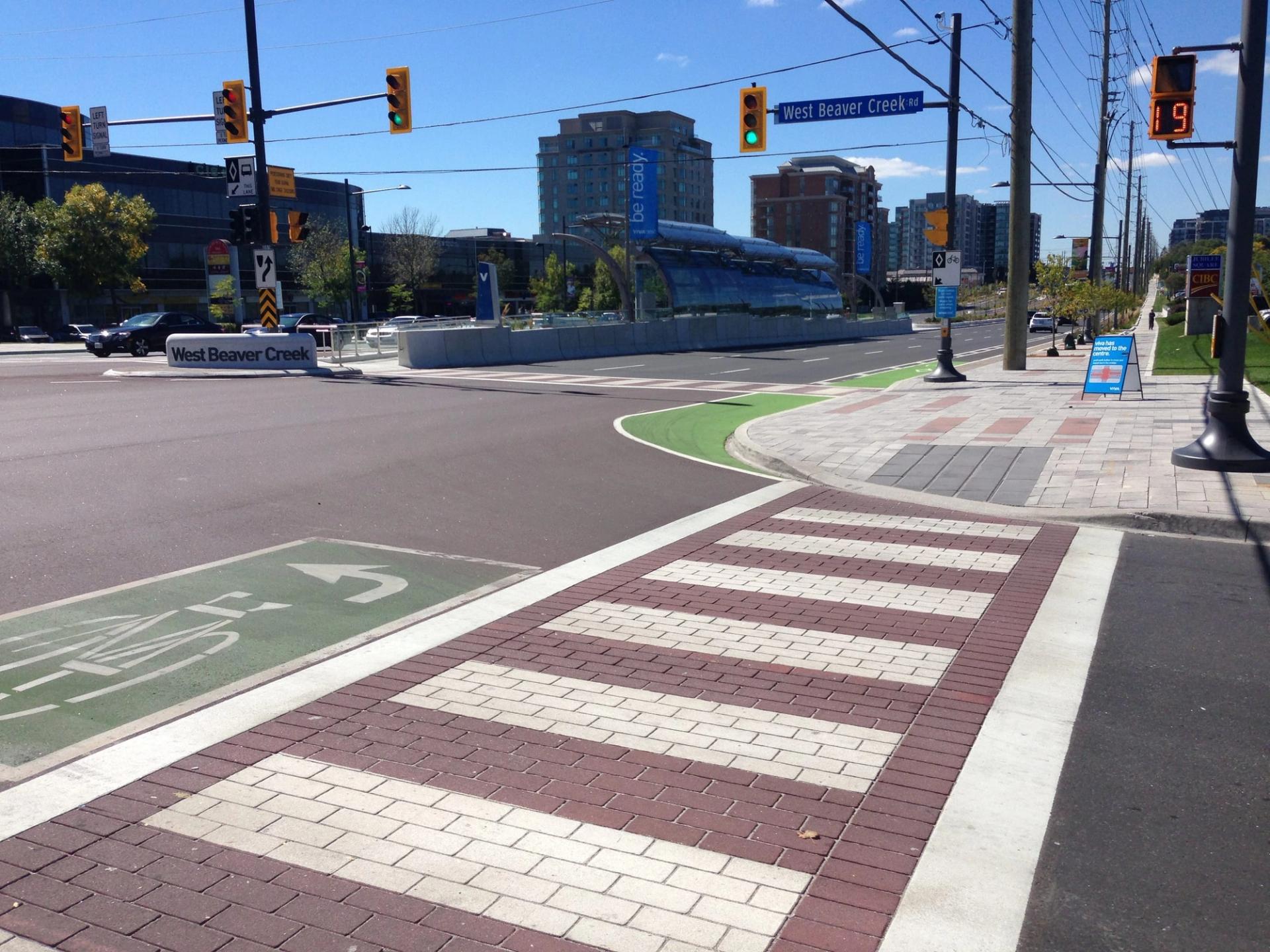
Branded retail developments use surface graphics to create district identity within larger commercial properties. A retailer's logo crosswalk at the entry to a dedicated brand zone within a mall or mixed-use development communicates ownership and destination simultaneously.
For franchise operations with strong brand standards, surface graphics at parking field entries, drive-through queuing areas, and curbside pickup zones can be specified to exact brand standards: the same Pantone reference as every other brand touchpoint, in a medium that is genuinely permanent.
Sports facilities are a significant market for branded surface graphics. Team logos and colours at arena approaches, stadium plaza surfaces, and training facility entries are brand expressions that operate at the scale of the venue. The DecoMark system handles the dimensional requirements (a team crest at plaza scale may be 5 metres across) and the material requirements for outdoor, high-traffic venue environments.
Brand Standards performance
Organizations with formal brand standards have specific requirements: exact Pantone colour values, minimum size and clear space rules, approved design files in specific formats. DecoMark manufacturing can work from brand-standard source files, producing output that meets or exceeds brand specification.
This matters because a slightly wrong colour in a brand environment is worse than no colour at all. A corporate red that reads as fire-engine red rather than brand red is a brand violation at street scale, visible to everyone who enters the campus. DecoMark's Pantone-matched pigments and controlled production are what let pavement meet a brand standard.
HUB's design team works with corporate brand managers and graphic designers through the approval process. Colour proofs and material samples are provided before manufacturing. The installed product matches the approved design.
Technical Specifications
For facilities managers and procurement teams specifying surface graphic systems, the key technical parameters:
Colour: Full Pantone matching. Multi-colour registration accuracy ±1mm. Colour rendered through full material thickness.
Surface texture: Integrated skid-resistance aggregate. BPN (British Pendulum Number) ≥ 55 for pedestrian applications; higher ratings available for specific applications.
Traffic rating: Vehicle-bearing. Tested to full axle load standards for commercial traffic applications.
UV stability: Formulated for minimum 10-year exterior colour retention. No UV top-coat required.
Installation: Heat-bonded to prepared asphalt or concrete. No mechanical fasteners. No adhesive failure mechanism. Surface preparation specifications provided.
Getting Started
The process for a branded pavement project begins with a design consultation. HUB needs the brand asset files, the site plan showing installation locations, and the technical specifications for the surface conditions. From there, we produce colour-matched design proofs, provide material samples, and present an installation plan.
For corporate properties managing multiple sites, HUB can develop a national specification for surface graphics that enables consistent installation across the portfolio.
The pavement is part of the brand environment. It should look like it.
Contact HUB Surface Systems to start your branded pavement project. East: doug.bain@hubss.com | West: cleve.stordy@hubss.com