From UBC's Musqueam cultural crosswalk to custom logo installations at campus entries, universities across Canada are using horizontal surfaces to express institutional identity, guide pedestrian flow, and honour cultural partnerships.
University campuses are among the most design-conscious environments in Canada. Billions of dollars are spent on buildings, landscapes, and interiors. The institutional brand is managed at the level of font weights and colour pantones. And then there is the ground plane (the campus streets, crosswalks, plazas, and pathways that tens of thousands of people traverse daily), which has, until recently, been treated as a utility.
That is changing. A growing number of Canadian universities are recognizing that the ground plane is part of the campus brand environment, and that surface design systems offer a durable, cost-effective way to express institutional identity, improve wayfinding, and honour cultural partnerships.
UBC and the Musqueam Crosswalk
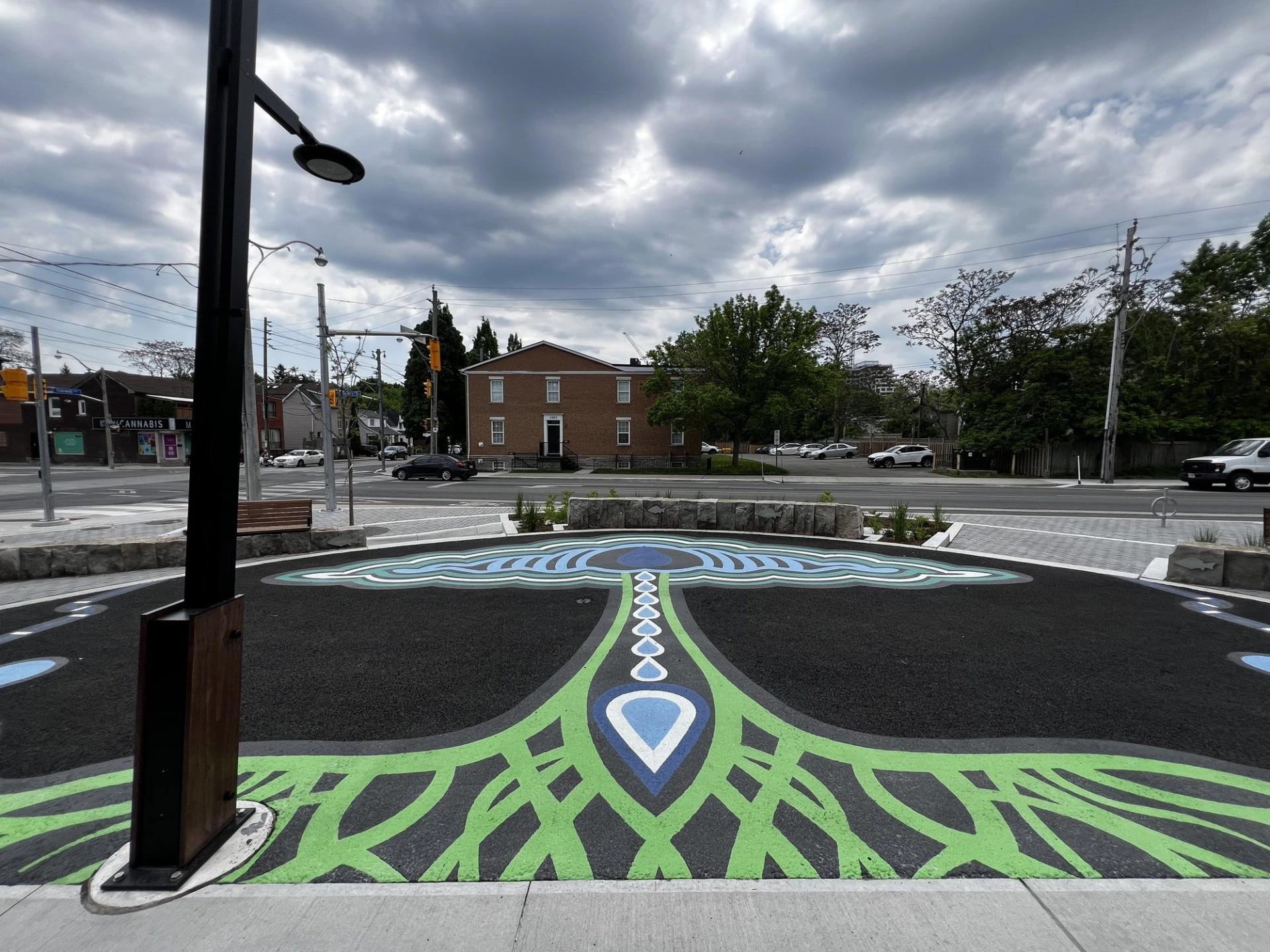
The University of British Columbia sits on the traditional territory of the Musqueam people. The Musqueam crosswalk installation on the UBC campus is one of the most significant examples of culturally embedded surface design in Canada.
Using DecoMark precision thermoplastic, the crosswalk reproduces Musqueam cultural design elements at crosswalk scale with full Pantone colour accuracy and the fine-detail reproduction that the artwork requires. The result is a permanent, traffic-bearing installation that acknowledges Indigenous land and cultural presence in the most literal way available to campus infrastructure: it is underfoot every time a student, faculty member, or visitor crosses that intersection.
The technical requirements for this kind of installation are demanding. Cultural artwork has specific colour relationships, line weights, and design logic that cannot be approximated. DecoMark's manufacturing process (colour-matched to Pantone specification, with fine detail reproduced through the full material thickness) is what makes authentic reproduction possible.
The Musqueam crosswalk is infrastructure and reconciliation simultaneously.
Logo and Wordmark Applications
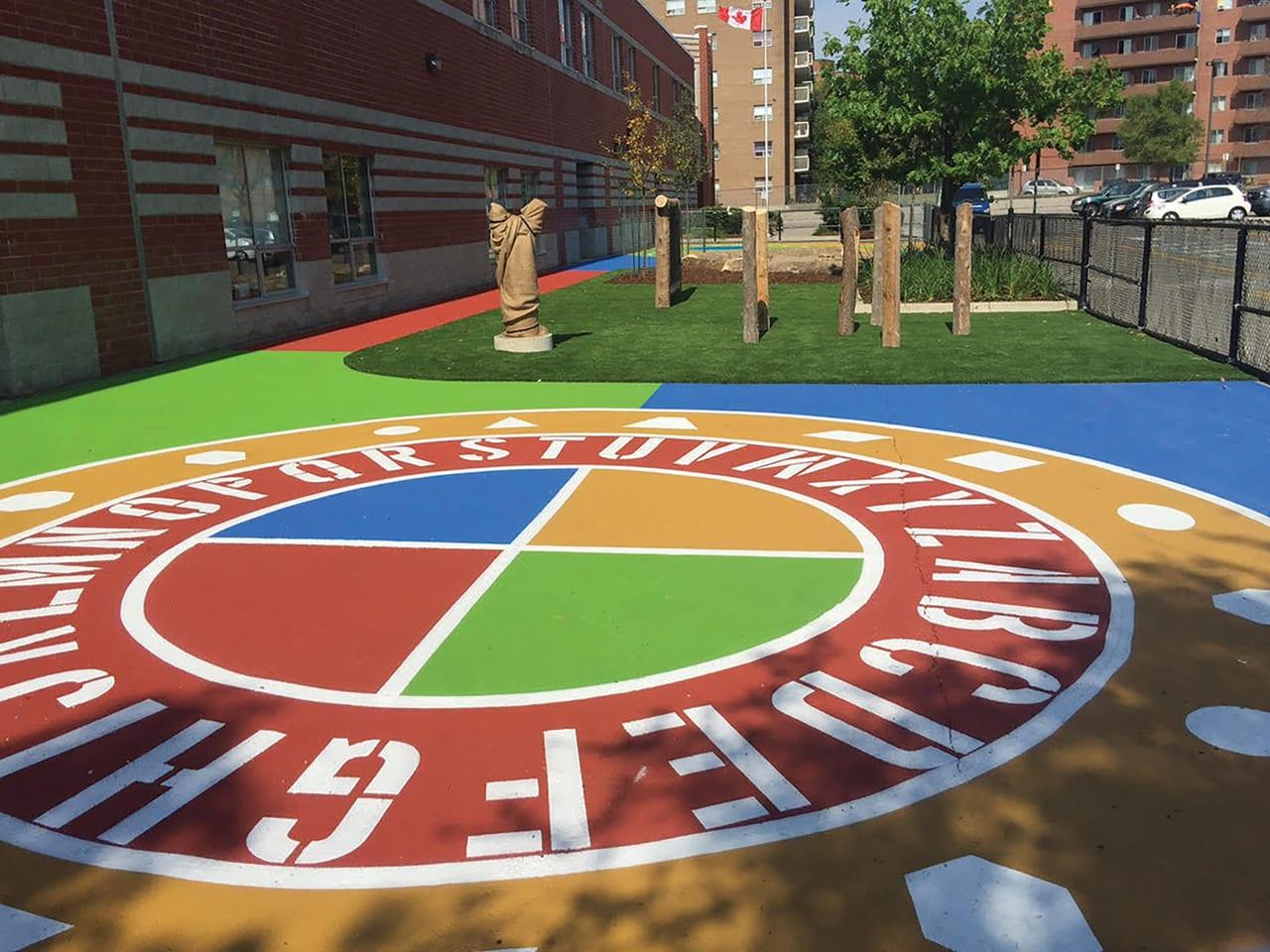
Custom logo installations at campus entries are a natural application for preformed thermoplastic graphics. A university crest or wordmark at the main pedestrian entry to campus communicates institutional identity at the moment of arrival: before the building, before the signage, at the threshold.
DecoMark installations can reproduce institutional logos with print-quality accuracy. Pantone colour matching is standard. Line weights and detail levels that would degrade or misrepresent a brand identity in spray-applied paint are maintained through the thermoplastic manufacturing process.
Applications include: campus entry crosswalks featuring the institutional crest, athletic facility entries with team logos, faculty building approaches with faculty-specific colour coding, and campus event spaces with temporary-appearance-but-permanent-quality installed graphics.
Colour-Coded Wayfinding Systems
Large campuses (UBC, U of T, McGill, University of Alberta) have a wayfinding problem that signage alone cannot solve. The campus is too large, the routes too complex, and the user population too diverse for vertical sign systems to carry the full navigational load.
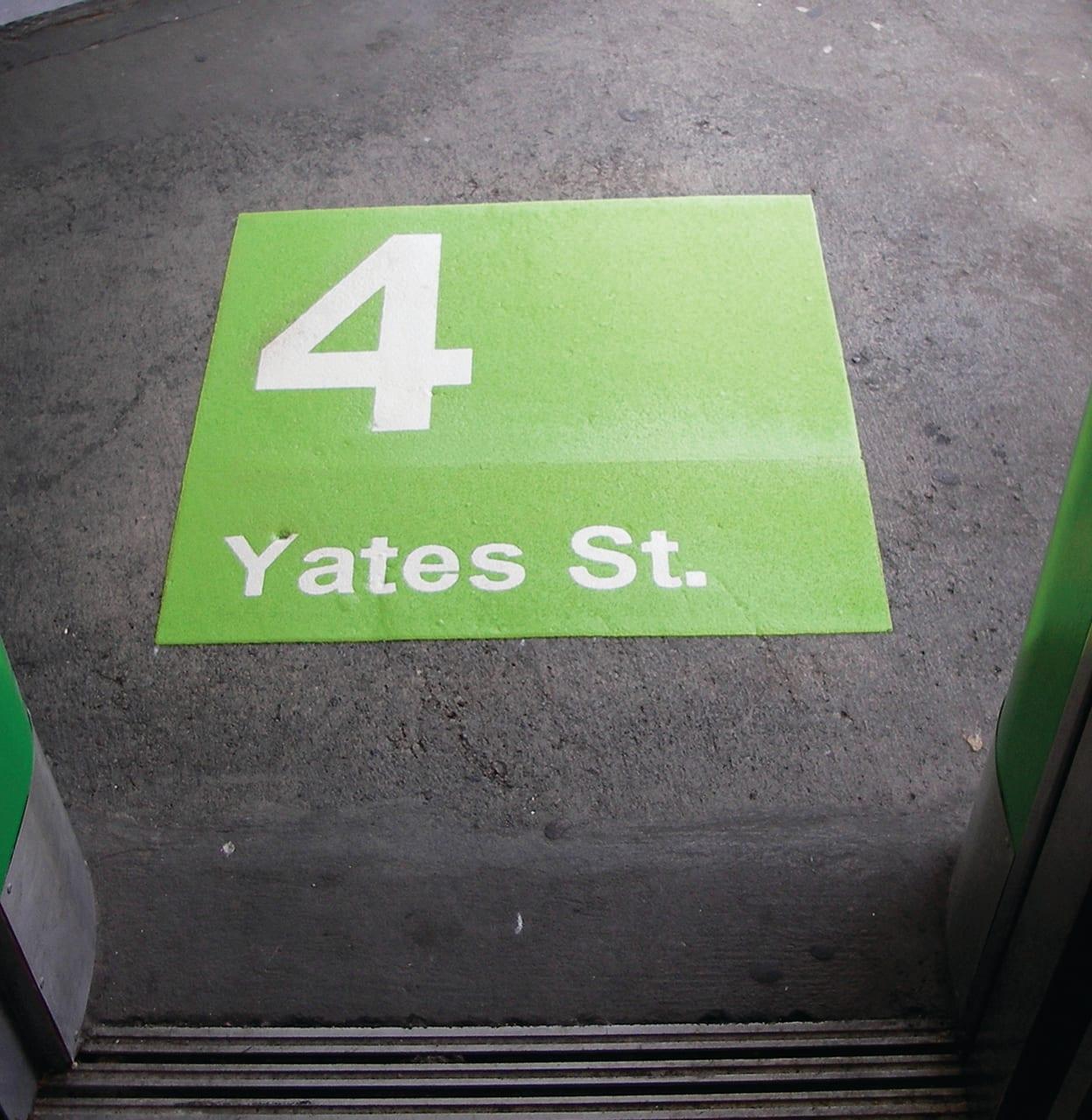
Colour-coded surface systems distribute wayfinding onto the ground plane. Faculty-specific colours for main pathways to academic buildings. Colour transition zones that signal arrival at different campus areas. Accessibility routes in high-contrast surface treatment. Building-specific coloured crosswalks that allow navigation by colour rather than street name.
StreetBond enables this system. The coating is applied to existing asphalt or concrete in the specified colour, providing a durable, UV-stable base layer. Standard preformed thermoplastic markers (directional arrows, distance indicators, accessibility symbols) apply over the coloured surface. The system is scalable: a full campus network can be deployed in phases, with each phase extending the wayfinding logic.
Heavy-Traffic Durability
University campuses generate extraordinary pedestrian and bicycle traffic volumes, concentrated at specific times of day and heavily dependent on weather (Canadian students do not slow down for rain). Campus road surfaces also bear vehicle traffic from delivery, emergency services, and transit.
The surface system must perform under these conditions. StreetBond and DecoMark are both tested and proven in high-traffic pedestrian environments. The StreetBond coating system uses aggregate texture for skid resistance. DecoMark thermoplastic is manufactured to bear vehicle axle loads: it is rated for full traffic-bearing applications, not just pedestrian zones.
Cold weather is the critical test. Freeze-thaw cycling, snow removal operations, and de-icing chemical exposure are the conditions under which lesser systems fail. HUB products are formulated for Canadian winter performance and with manufacturer-backed technical support.
Snow Removal Compatibility
Campus facilities managers consistently raise the same question: can coloured surface systems survive the plowing season?
The answer, for properly installed systems, is yes. The key variable is edge detail: where a coloured surface meets an uncoloured surface at an angle vulnerable to plow blade contact. HUB installation specifications address this with tapered edge details and recessed inset applications where appropriate. The result is a surface system that survives aggressive snow removal operations without delamination or edge damage.
Cultural Sensitivity in Design
Cultural crosswalks and surface art require a specific kind of collaborative process. The design is not HUB's to own: it belongs to the community or institution whose identity it represents. HUB's role is to be the precision manufacturing and installation partner that can faithfully reproduce what the design process produces.
This means working with universities' Indigenous relations offices, design departments, and external community partners on colour specifications and design approvals before manufacturing begins. It means understanding what accuracy means in the context of a specific design tradition, and building manufacturing tolerances around that standard.
We have done this work. The results speak for themselves.
If your campus has a surface identity project (wayfinding, cultural partnership, brand installation), contact HUB Surface Systems to explore what's possible. We can also present to your facilities and planning team to walk through options and precedents.