Canadian cities implementing Vision Zero with high-visibility crosswalk systems are seeing measurable crash reductions. Here's the science and the solutions.
Canadian Municipalities Are Proving That Surface Treatments Reduce Crashes Without Full Reconstruction
Canadian cities face a critical pedestrian safety challenge. Toronto saw 78 traffic fatalities in 2016, prompting the launch of Vision Zero. Vancouver has a road death rate of 2.4 per 100,000 population. Transport injuries cost Canada $3.6 billion annually.
The encouraging news? Cities implementing Vision Zero strategies with high-visibility crosswalk systems and traffic calming surface treatments are seeing measurable improvements:
- Edmonton: Achieved a 30% decrease in pedestrian deaths since 2015 through data-driven infrastructure changes
- Toronto: Reduced pedestrian deaths from 39 per year (2013–2019 average) to 22 in 2022, a 44% reduction
- Montreal: Lowest road death rate among major Canadian cities at 1.3 per 100,000 population
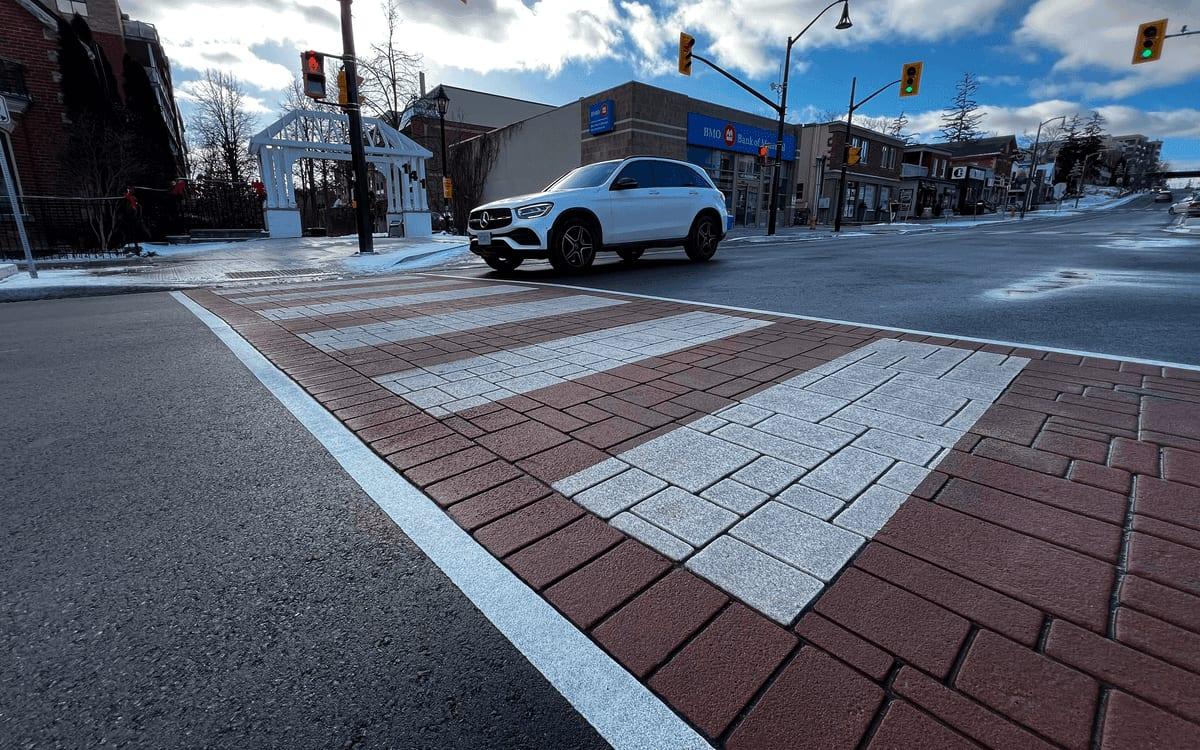
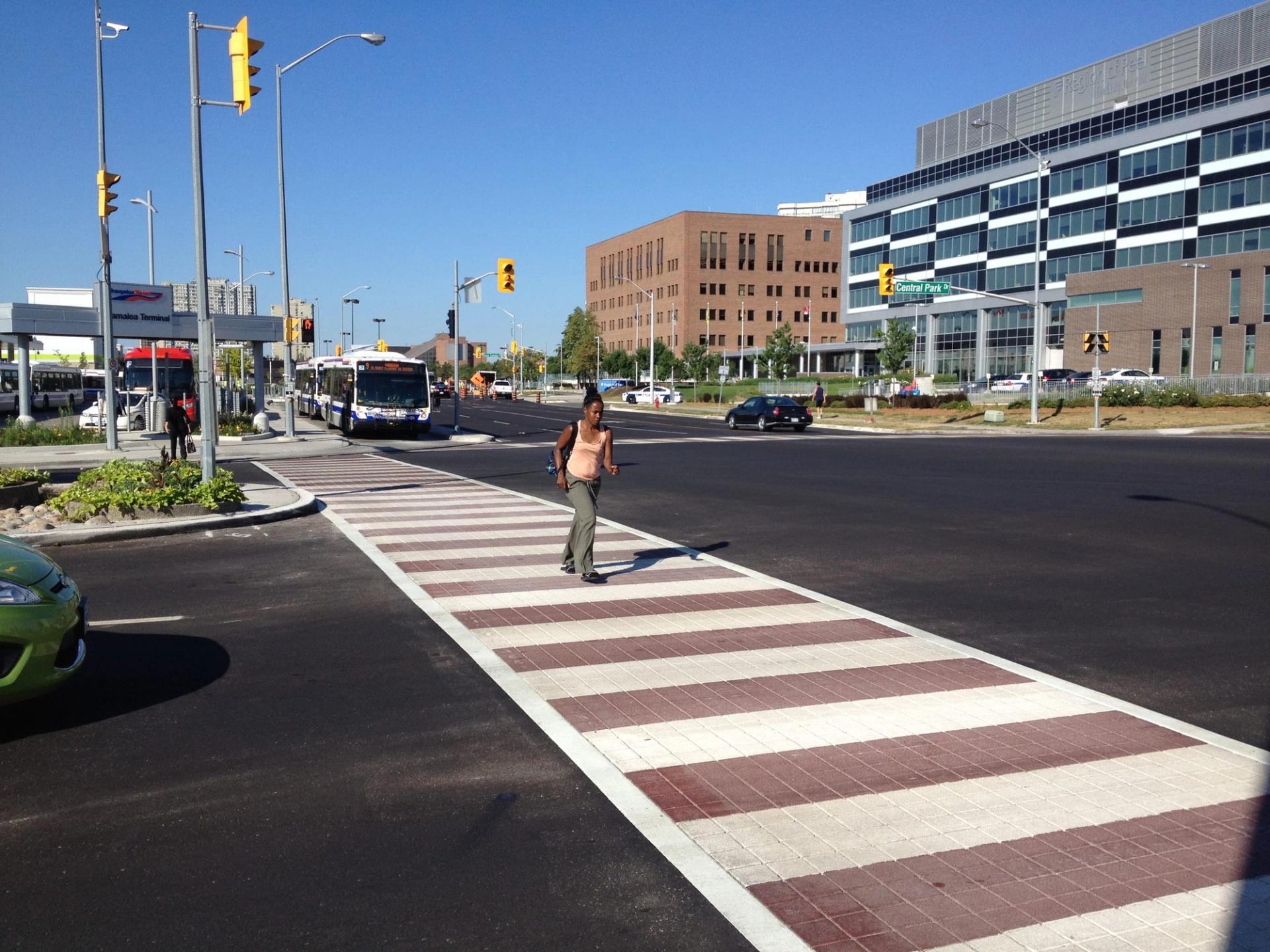
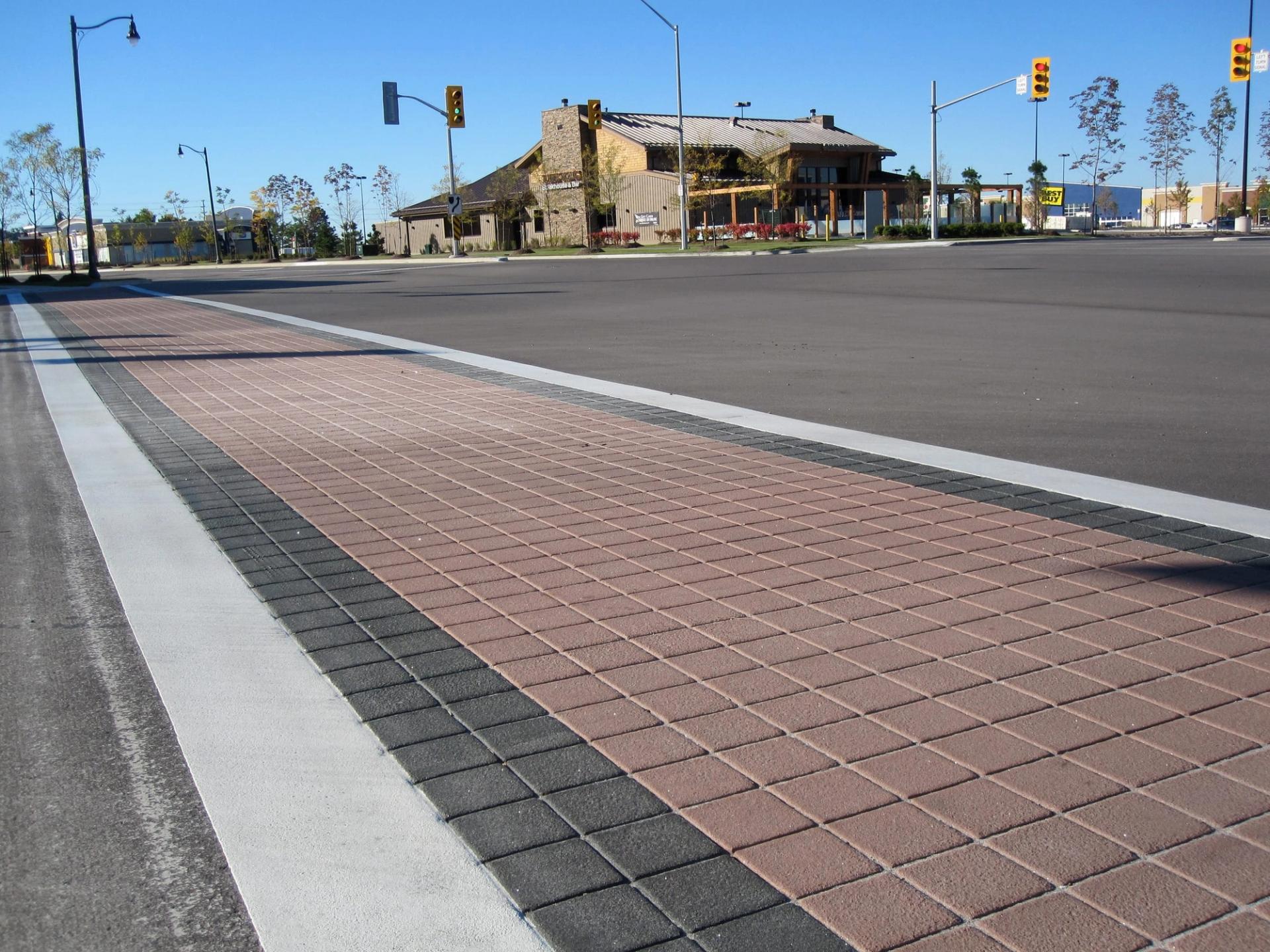
The common thread? Strategic deployment of high-visibility pavement markings, coloured crosswalks, and traffic calming surface systems that change driver behaviour without massive reconstruction budgets.
The Science Behind High-Visibility Crosswalks
How Visual Contrast Changes Driver Behaviour
Research demonstrates that crosswalk visibility enhancements (high-contrast patterns, coloured treatments, and advance warning markings) significantly modify driver behaviour at pedestrian crossings.
Key Research Findings:
- High-visibility continental and ladder-style crosswalks reduce vehicle speeds by 1.4–1.9 mph compared to standard parallel lines
- Speed reductions remain sustained 12+ months after installation
- Driver yielding behaviour increases significantly at marked high-visibility crossings
- Night visibility is critical: enhanced markings maintain retroreflectivity far longer than paint
Why It Works:
Drivers respond to visual contrast and pattern density. Standard parallel-line crosswalks provide minimal visual interruption. High-visibility continental, ladder, or decorative patterns create unmistakable cues that trigger cognitive recognition and speed reduction, particularly important at uncontrolled crossings where pedestrian vulnerability is highest.
Main Street Transformations
Many Canadian main streets and arterial roads were designed when vehicle throughput trumped pedestrian safety. The results show in crash data: long crossing distances without refuge islands, unmarked or faded crosswalks, high vehicle speeds (50+ km/h), and lack of advance warning for drivers.
Modern pedestrian safety interventions use surface treatments to create immediate safety improvements:
- TrafficPatternsXD: high-durability crosswalks with continental or ladder patterns
- StreetBond: coloured pavement in pedestrian refuge islands and conflict zones
- DecoMark: custom safety messaging and wayfinding graphics
- PreMark: advance yield markings and high-visibility stop bars
High-Performance Crosswalk Solutions
TrafficPatternsXD®: Extreme Durability Thermoplastic
Best For: Signalized intersections, school zones, downtown commercial districts, transit corridors, any high-traffic pedestrian crossing requiring maximum durability.
Key features:
- Aggregate-reinforced preformed thermoplastic engineered for extreme wear resistance
- Continental, ladder, zebra, and custom decorative patterns available
- Factory-manufactured consistency: uniform 90+ mil thickness throughout
- Heat-bonded installation creates permanent molecular adhesion
- Immediate return to service: no curing time
- Specified by Canadian municipalities coast to coast
Performance highlights:
- Proven 5–10 year durability in heavy traffic environments
- Maintains high-contrast visibility throughout service life
- Resists snowplow damage, de-icing chemicals, freeze-thaw cycling
- Embedded glass beads maintain night visibility without degradation
- Superior lifecycle cost: outlasts paint 6–8 repaint cycles
Real-World Application (York Region Transit and Metrolinx):
TrafficPatternsXD was used in high-volume bus rapid transit corridors where extreme durability is essential. The system withstands constant bus traffic, turning forces, and aggressive winter maintenance.
TrafficPatterns®: Standard High-Performance Thermoplastic
Best For: Enhanced crosswalks, mid-block crossings, residential neighbourhood traffic calming, pedestrian zones, community branding applications.
Carries the same high-performance thermoplastic technology with excellent durability for lower-traffic environments, at a lower per-square-metre cost.
*Schedule a free site assessment to see how surface treatments can improve safety at your high-priority locations. Contact Doug Bain (ON, QC, Maritimes): 416-540-9287 or Cleve Stordy (BC, AB, SK, MB)