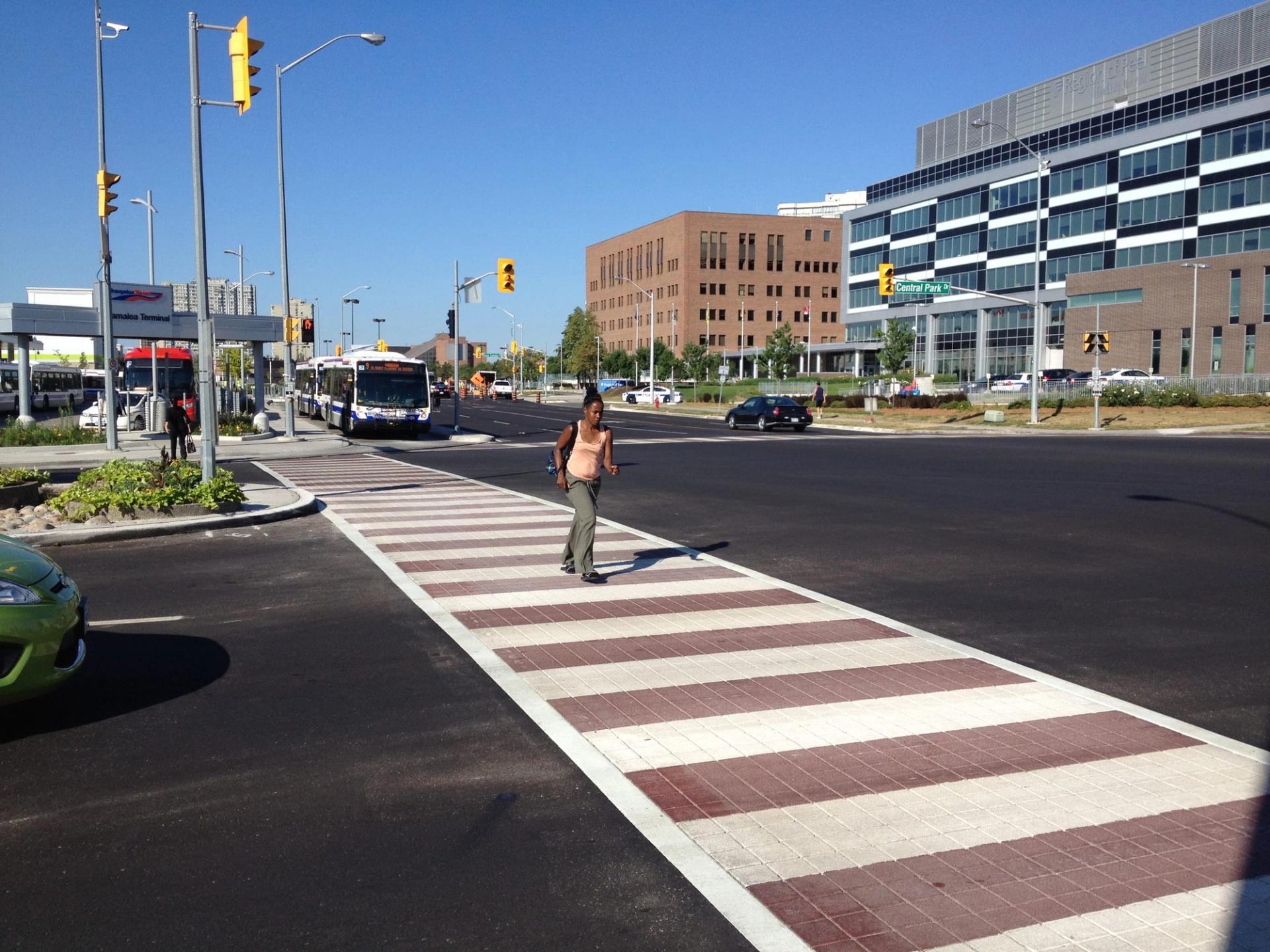
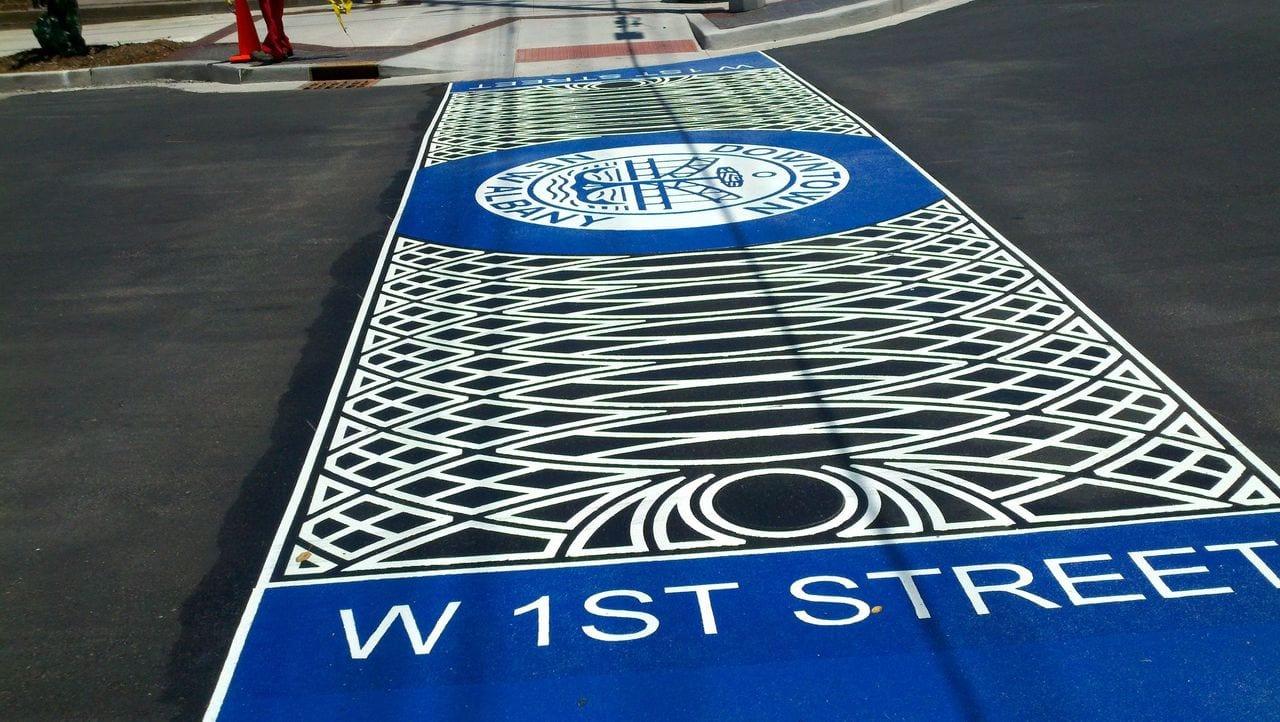
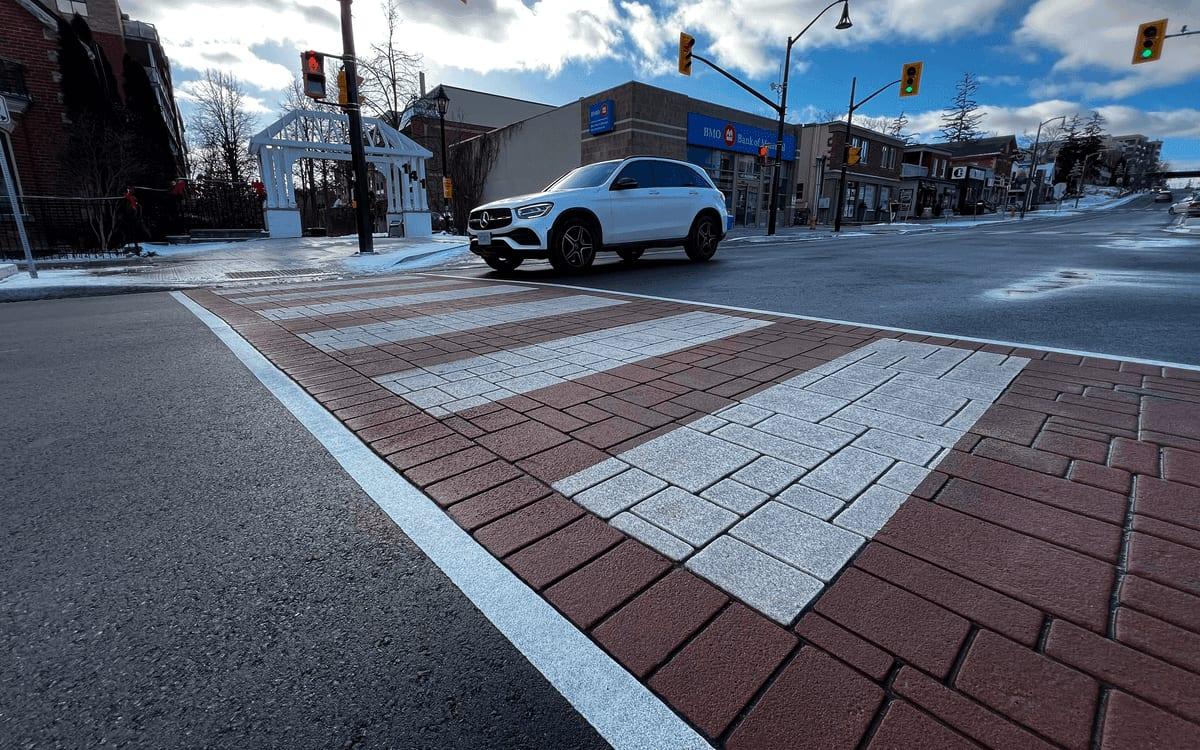
As Canadian cities adopt Vision Zero frameworks, high-visibility pavement markings are emerging as one of the most cost-effective tools in the pedestrian safety toolkit.
A $6,000 thermoplastic crosswalk installation that prevents a single pedestrian fatality saves the municipality an estimated $11–14 million in direct and indirect costs. That math, repeated across dozens of dangerous intersections, is why Vision Zero programs in Toronto, Vancouver, Edmonton, and Ottawa are making high-visibility surface markings a first-tier capital investment.
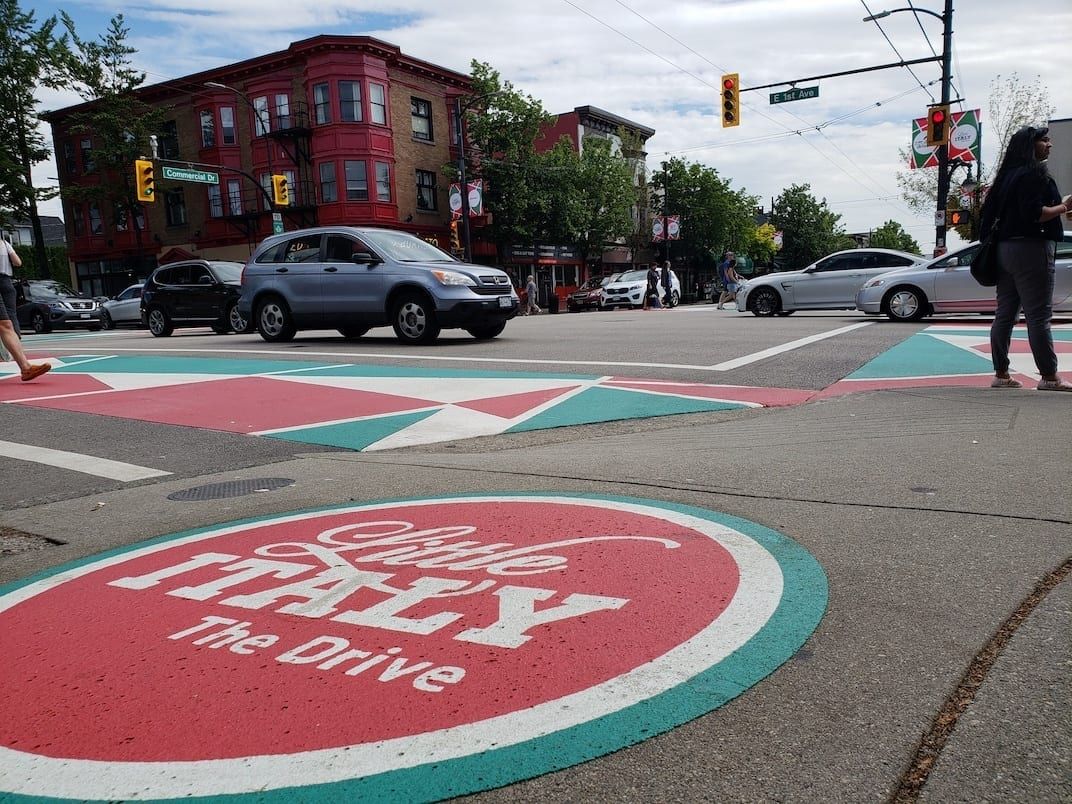
The Evidence Base
Research from Transport Canada and the Insurance Institute for Highway Safety consistently demonstrates that high-visibility crosswalk markings, particularly continental (ladder) style markings in bright thermoplastic, reduce pedestrian-involved collisions by 30–50% at uncontrolled intersections.
The mechanism is straightforward: high-contrast markings increase driver awareness of pedestrian crossing zones, reduce vehicle speeds as drivers approach marked crossings, and increase pedestrian confidence, encouraging use of designated crossings rather than mid-block jaywalking.
Beyond Standard Markings
Traditional painted crosswalk lines fade within 12–18 months in Canadian conditions, requiring regular repainting. Each repainting cycle comes with traffic management costs, material costs, and service interruption. High-visibility thermoplastic markings, such as HUB's TrafficPatterns and TrafficPatternsXD systems, maintain retroreflectivity for 5–7 years, dramatically reducing lifecycle costs while delivering consistent safety performance.
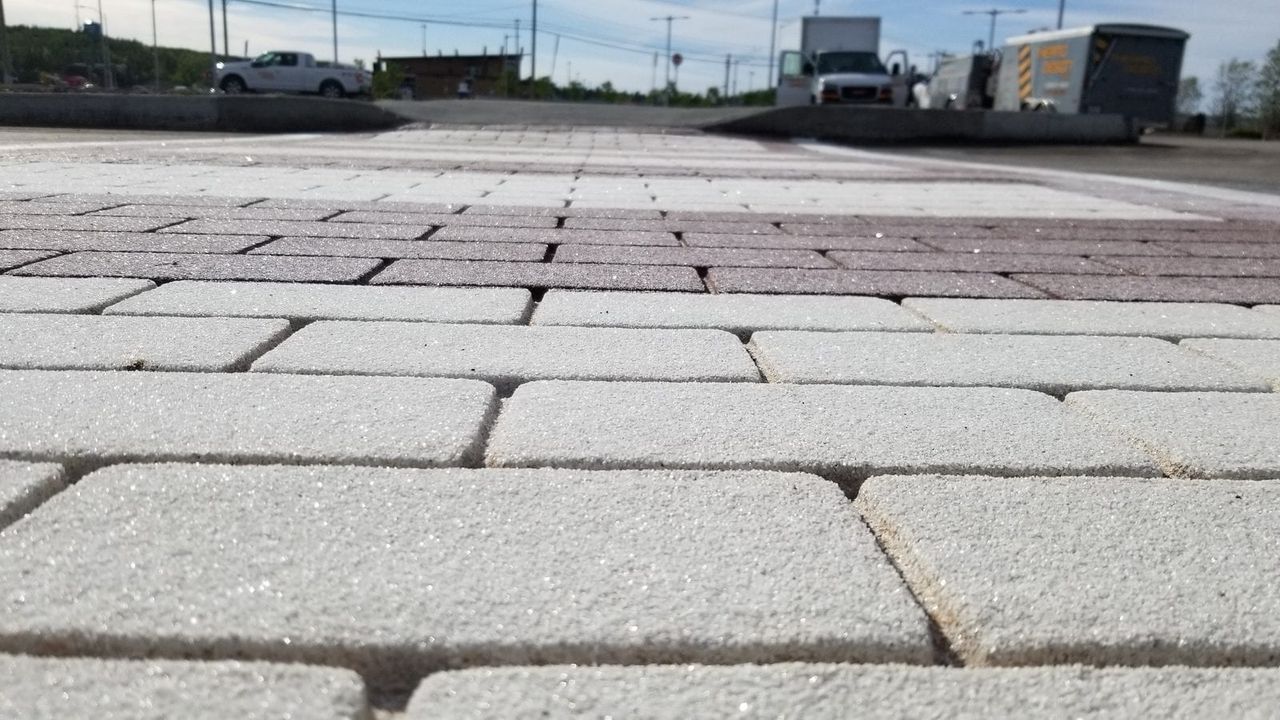
For the highest-risk intersections, aggregate-reinforced thermoplastic provides both visual prominence and tactile feedback, creating a physical texture change that alerts distracted pedestrians and drivers alike.
The Connection
Ontario's Accessibility for Ontarians with Disabilities Act ( ) and similar provincial frameworks require that pedestrian infrastructure be accessible to people with visual and mobility impairments. High-contrast surface markings, combined with tactile warning surfaces, create the multi-sensory environment that accessibility standards performance demands.
HUB Surface Systems works with municipal accessibility coordinators to design crosswalk and pedestrian zone treatments that meet or exceed accessibility requirements while delivering the visual impact that makes Vision Zero interventions effective.
ROI for Municipalities
The economic case for investing in high-quality surface markings is compelling. A single pedestrian fatality costs a municipality an estimated $11–14 million in direct and indirect costs. A high-visibility thermoplastic crosswalk installation at a dangerous intersection costs $3,000–$8,000, and lasts 5–7 years.
The math is unambiguous. For municipalities serious about Vision Zero, upgraded surface markings should be among the first items in any safety capital budget.
HUB Surface Systems offers complimentary Vision Zero product consultations. Contact your regional office to learn more.