A technical guide for transportation engineers and urban designers on building resilient, low-maintenance transit corridors using advanced surfacing systems across Canada.
Building Resilient, Low-Maintenance Transit Corridors
As Canadian cities adopt Complete Streets policies and accelerate multimodal transit development, infrastructure professionals are under growing pressure to deliver surface systems that are safe, compliant, and built for real-world wear, from freeze-thaw cycles to heavy vehicular wear.
For transportation engineers, the performance of a corridor hinges on the materials beneath it. Fading bus lanes, slippery crossings, and frequent repainting cycles not only degrade the public realm, they pose liability risks and increase long-term costs.
HUB Surface Systems works with municipalities and design consultants across Canada to implement advanced surfacing technologies that enhance safety, durability, and user experience in transit, cycling, and pedestrian environments.
What This Guide Covers
- How to reduce maintenance cycles and visual degradation
- Material strategies for high-traffic zones, bus and bike lanes
- Real-world performance data from urban projects across Canada
- Technical specs aligned with Vision Zero frameworks and Canadian infrastructure standards
Engineering Challenges at a Glance
| Challenge | Impact on Infrastructure |
|---|---|
| Premature fading & material wear | Reduced visibility, unclear navigation, maintenance costs |
| Poor traction in wet/winter weather | Increased liability and safety incidents |
| Repainting and surface fatigue | Higher long-term costs and service disruptions |
| Worn out markings | Higher risk of accidents and conflicts |
Material Systems & Applications
| Product | Applications | Key Benefits |
|---|---|---|
| MMAX | Bus lanes, bus platforms, delineation zones | MMA resin with extreme durability, cold-cure, anti-skid, fast install |
| TrafficPatternsXD | Crosswalks, station areas, pedestrian zones | Aggregate reinforced preformed thermoplastic |
| StreetBond150 | Bike lanes, pedestrian plazas, pathways | UV-stable, flexible coating with excellent colour retention and texture |
| DecoMark | Wayfinding, educational graphics, branding | Durable thermoplastic, fast installation, de-skid finish, custom designs |
| TrafficPatterns | Crosswalks, station areas, pedestrian zones | High-visibility thermoplastic for controlled traffic areas, customizable |
HUB Surface Systems products are engineered for high colour contrast, slip resistance, and multimodal design visibility, trusted by transportation engineers coast to coast.
Field-Tested Projects Across Canada
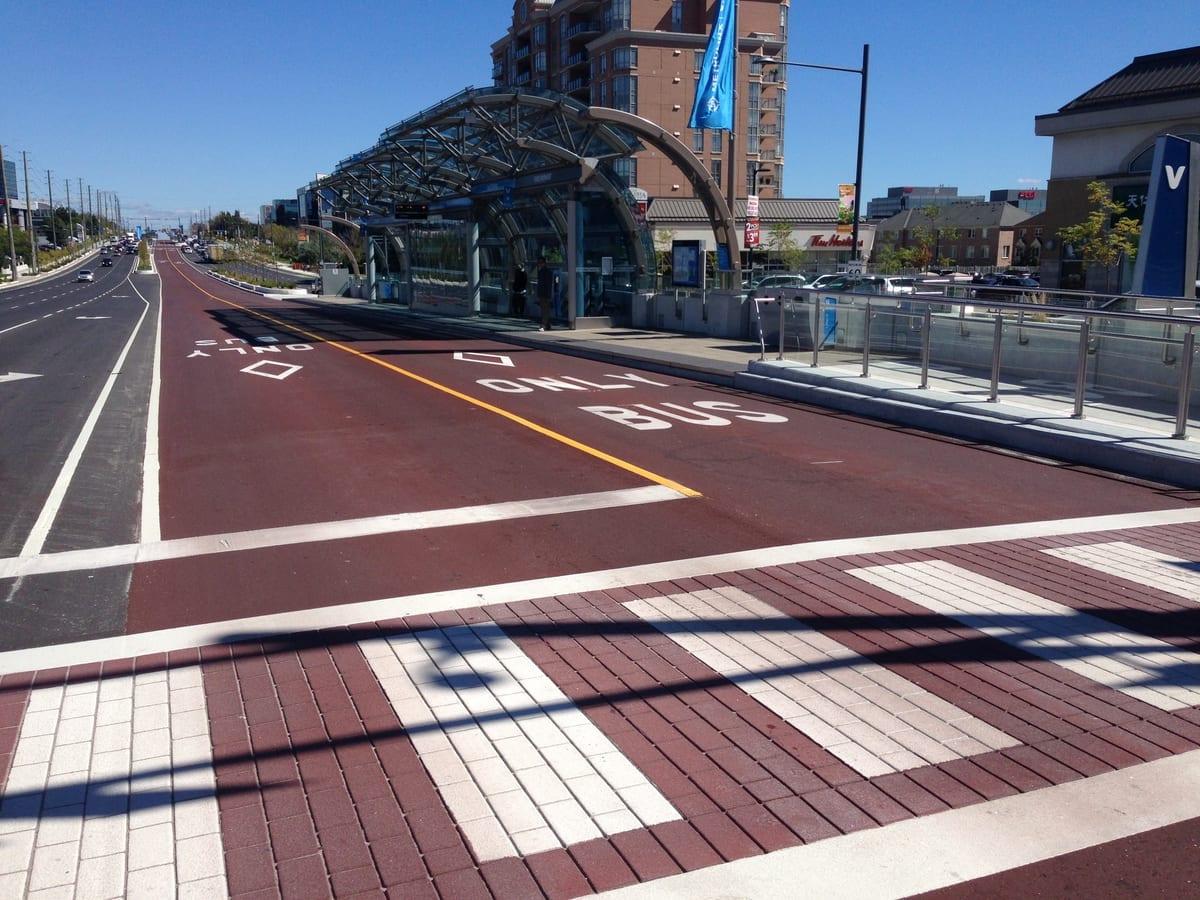
York Region: VIVA Bus Rapid Transit Network
To support its Complete Streets strategy and accommodate growing multimodal traffic along the Highway 7 corridor, York Region deployed a dual-surface strategy:
- TrafficPatternsXD was installed at 28 intersections, providing high-friction, long-lasting crosswalks and pedestrian zones that withstand winter abrasion and transit turning movements.
- Green MMAX was applied to delineate dedicated bus and cycling lanes, ensuring year-round visibility and enhanced navigation for active mobility users.
Result: Safer, more intuitive streetscapes with long-term visual cohesion across one of Ontario's busiest Bus Rapid Transit (BRT) corridors.
East London Link, Bus Rapid Transit: London, ON
London's East London Link, a major component of the city's Bus Rapid Transit Network, required materials that could handle both transit wear and cycling integration:
- Green MMAX was used to define bicycle lanes with vibrant, slip-resistant surfacing that cured quickly and minimized traffic disruption.
- TrafficPatternsXD was installed at intersections and pedestrian conflict zones, improving safety and visibility in winter-prone conditions.
Result: Fewer maintenance interventions, better traction during freeze-thaw cycles, and stronger multimodal coordination along the corridor.
Richmond: Brighouse Station (TransLink)
At the busiest transfer point in Richmond's B-Line system, TransLink required a surface solution capable of withstanding both heavy pedestrian use and continuous vehicle traffic while ensuring reliable, all-season safety:
- TrafficPatternsXD was installed near transit boarding platforms and pedestrian crossings, offering a textured, anti-skid solution for critical modal transition zones.
- The system delivered long-term durability, reducing maintenance cycles while maintaining high visibility to improve safety in heavy-use areas.
Result: Improved pedestrian visibility, reduced risk of slippage, and better alignment with Richmond's Complete Streets and accessibility goals.
Vancouver: Commercial Drive (Little Italy)
In one of Vancouver's most culturally significant urban corridors, the City prioritized both safety and placemaking at key intersections and public spaces, ensuring infrastructure improvements also reflected the character and identity of the community.
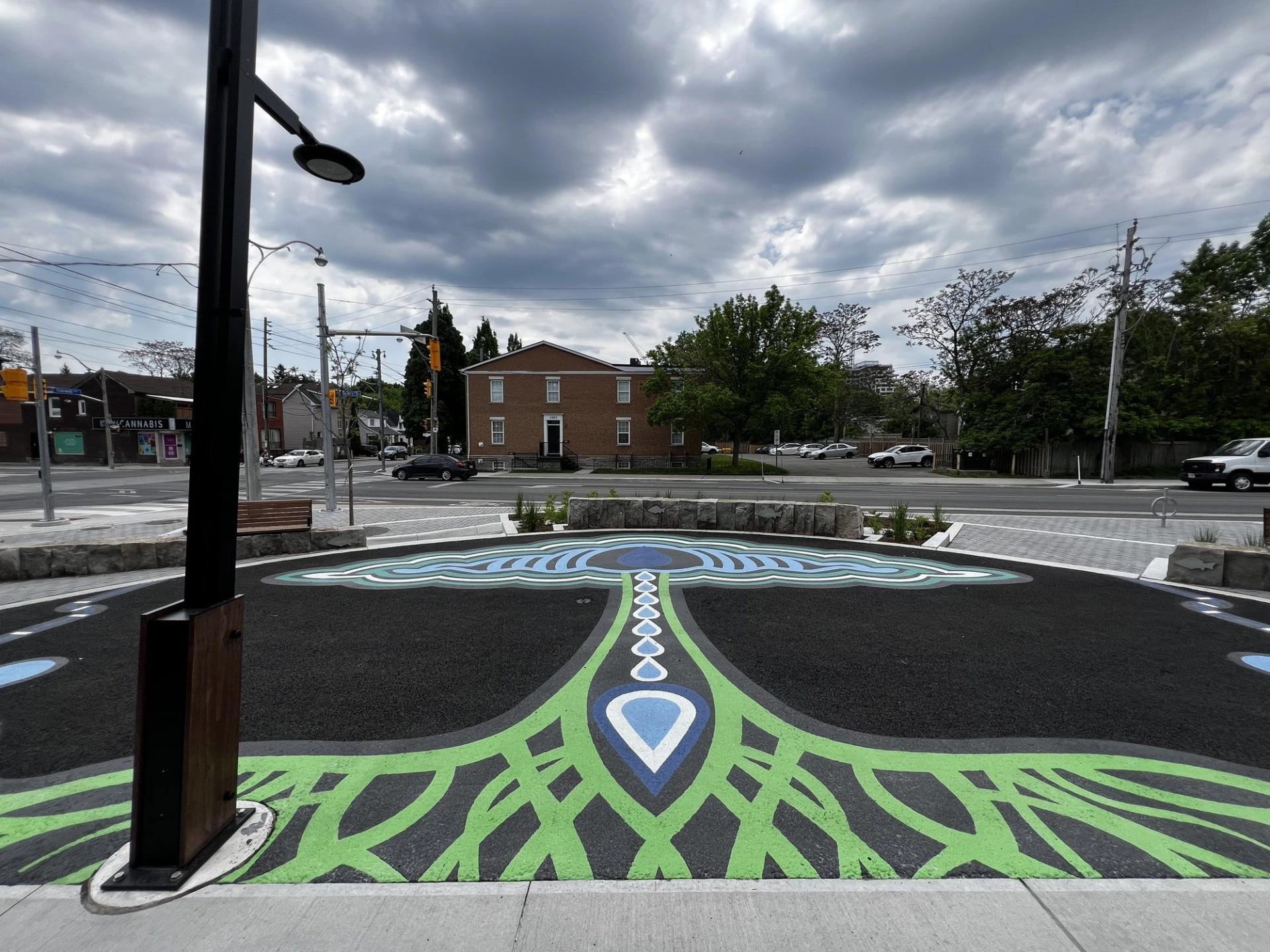
- DecoMark was used to install custom-designed crosswalk graphics, reinforcing civic identity and artistic expression in the heart of Little Italy.
- TrafficPatterns added functional clarity and anti-slip protection in pedestrian-heavy areas, enhancing both aesthetic value and safety performance.
Result: A vibrant, community-branded public space that meets technical durability requirements while celebrating local heritage.
Why Engineers Choose HUB
- Engineered for Canada: Withstands snowplows, road salt, freeze-thaw, and heavy loading
- Efficient Installation: Thermoplastics and MMA systems allow fast turnaround, minimal lane closures
- Proven Performance: Field-tested across Canada's highest-volume corridors
- Flexible Application: Overlays, inlays, stencils, or full-lane systems to match any design challenge
- Vision Zero Aligned: Designed to support complete streets and pedestrian safety objectives
Product Line at a Glance
Engineered Surface Solutions for Modern Urban Infrastructure
TrafficPatternsXD: Preformed thermoplastic system for high-traffic crosswalks and intersections
- Best For: Pedestrian crossings, streetscape enhancements and traffic calming zones
- Aggregate-reinforced thermoplastic for enhanced durability
- Supplied in 150 mil thickness (3.8 mm)
- Installed using infrared heating and stamping technology
- Designed to withstand heavy vehicular loads
- Maintains skid resistance over time
- Low maintenance with long service life
MMAX: Methyl methacrylate (MMA) resin-based coating for high-durability lane markings
TrafficPatterns: Preformed thermoplastic markings for decorative crosswalks and streetscapes
StreetBond SB150: Advanced waterborne epoxy-modified acrylic coating for asphalt and concrete surfaces
DecoMark: Preformed thermoplastic graphics for branding and wayfinding
Ready to Collaborate?
Whether you're working on a master plan, issuing an RFP, or looking for long-term solutions to reduce maintenance costs, HUB's surface systems deliver performance you can trust, backed by 27 years of experience in Canada.
Trusted by: Toronto, Vancouver