A strategic guide for Public Works Directors on surface solutions that extend pavement marking lifespan, reduce maintenance costs, and improve multimodal safety across Canadian transit corridors.
Surface Solutions for Resilient Transit Infrastructure
As Canadian municipalities face growing demands for safer, longer-lasting, and cost-effective transit infrastructure, the role of surface systems has become increasingly critical. Fading pavement markings, winter weather damage, and frequent maintenance cycles are not just operational challenges. They're budgetary liabilities. This white paper equips Public Works Directors with practical strategies and proven materials to extend pavement markings, reduce repainting needs, and improve multimodal safety across bus corridors, bike lanes, and pedestrian zones.
Explore how engineered systems such as MMAX area markings, TrafficPatternsXD, and StreetBond150 are helping cities build smarter, more resilient streetscapes.
Engineering Challenges and Solutions
| Challenge | Impact |
|---|---|
| Fading and surface wear | Reduced lane visibility, increased safety liability |
| Poor wet and winter traction | Increased slip risk and liability near platforms and crossings |
| Repainting and maintenance cycles | Higher lifecycle costs, frequent service disruptions |
| Design-code misalignment | Inaccessibility, visual confusion, public dissatisfaction |
HUB Surface Systems: Built for Public Works
| Product | Use Case | Key Benefits |
|---|---|---|
| MMAX | Bus lanes, bike lanes, area markings | MMA durability, cold weather application, long repainting cycle |
| TrafficPatternsXD | Crosswalks and traffic calming | Preformed thermoplastic with anti-skid texture and high visual contrast |
| StreetBond150 | Asphalt and concrete coatings | Colourful, epoxy modified acrylic coating, UV-stable, low VOC, flexible surface adhesion |
All HUB systems are engineered for safety, visibility, and long-term performance in Canadian transit environments.
Real Results from Canadian Cities
York Region: VIVA Rapidway
To modernize transit safety and improve multimodal navigation, York Region installed TrafficPatternsXD at 28 intersections along the Highway 7 transit corridor.
- Strategically applied at all signalized pedestrian crossings
- Enhanced slip resistance and visibility in year-round conditions
- High-friction, long-lasting surfacing supports consistent wayfinding and reduces maintenance
Key outcomes:
- Safer pedestrian environments across multimodal corridors
- Long-term surface durability with reduced maintenance costs
- Reinforced York Region's Complete Streets and Vision Zero goals
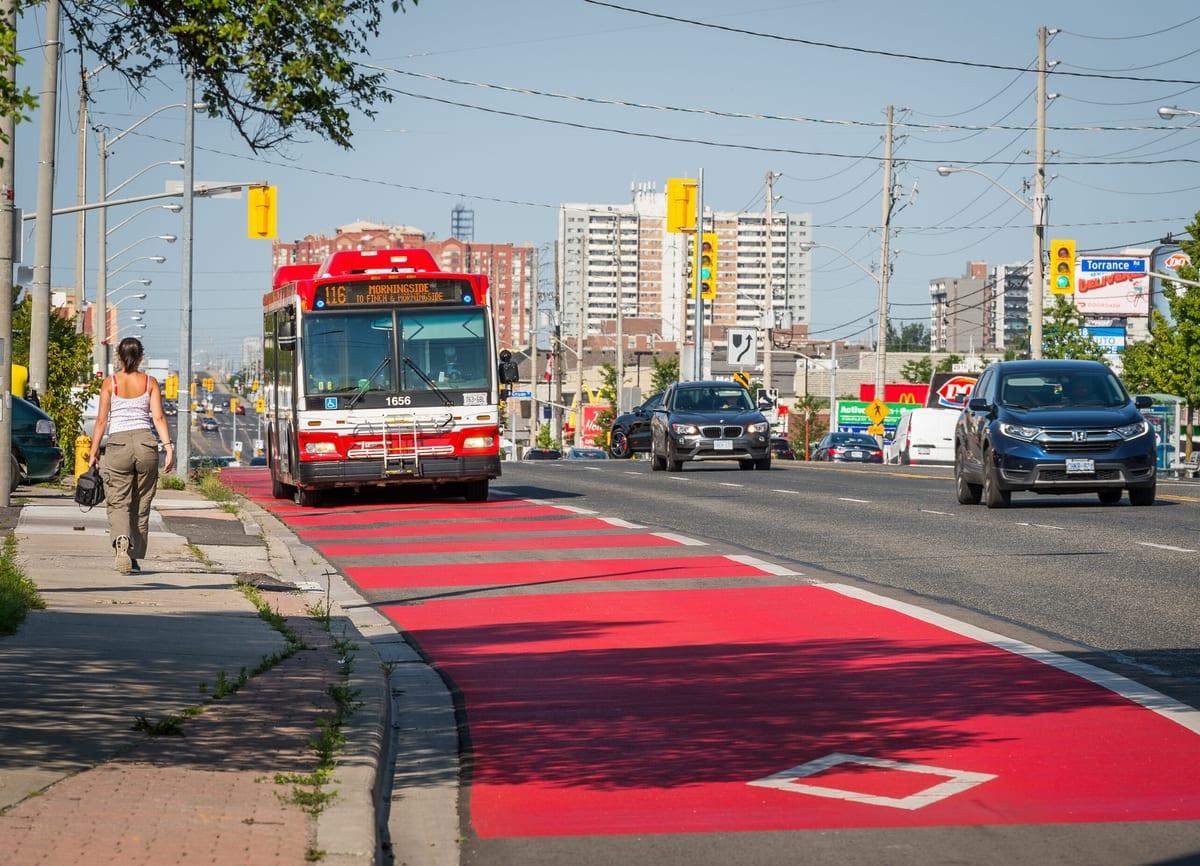
Toronto: TTC Bus Corridors
Toronto applied MMAX across priority bus lanes to improve visibility, extend surface durability, and reduce maintenance needs, while ensuring reliable performance through winter conditions.
- Installed on routes experiencing high-volume bus traffic and frequent turning movements
- MMA-based coating provides strong UV stability, skid resistance, and color retention
- Applied during off-peak hours with minimal surface disruption
Key outcomes:
- Reduced repainting interventions over a 5+ year window
- Improved safety and visibility during snow, rain, and low light
East London Link BRT: London, ON
London enhanced its new bus corridor with a dual application of Red MMAX for bus lanes and TrafficPatternsXD for pedestrian crossings. This combined approach improved safety and visibility for all users while delivering the durability needed to handle heavy transit traffic and minimize ongoing maintenance.
- Red MMAX was applied to bus-lanes to ensure long-term durability, visibility and skid resistance
- TrafficPatternsXD was installed at intersections and crossings to guide pedestrians
- Fast installations minimize community disruption
Key outcomes:
- Improved pedestrian safety
- Durable surface solutions resilient to freeze-thaw cycles and de-icing chemicals
- Reduced maintenance workload and helps to achieve Complete Streets objectives
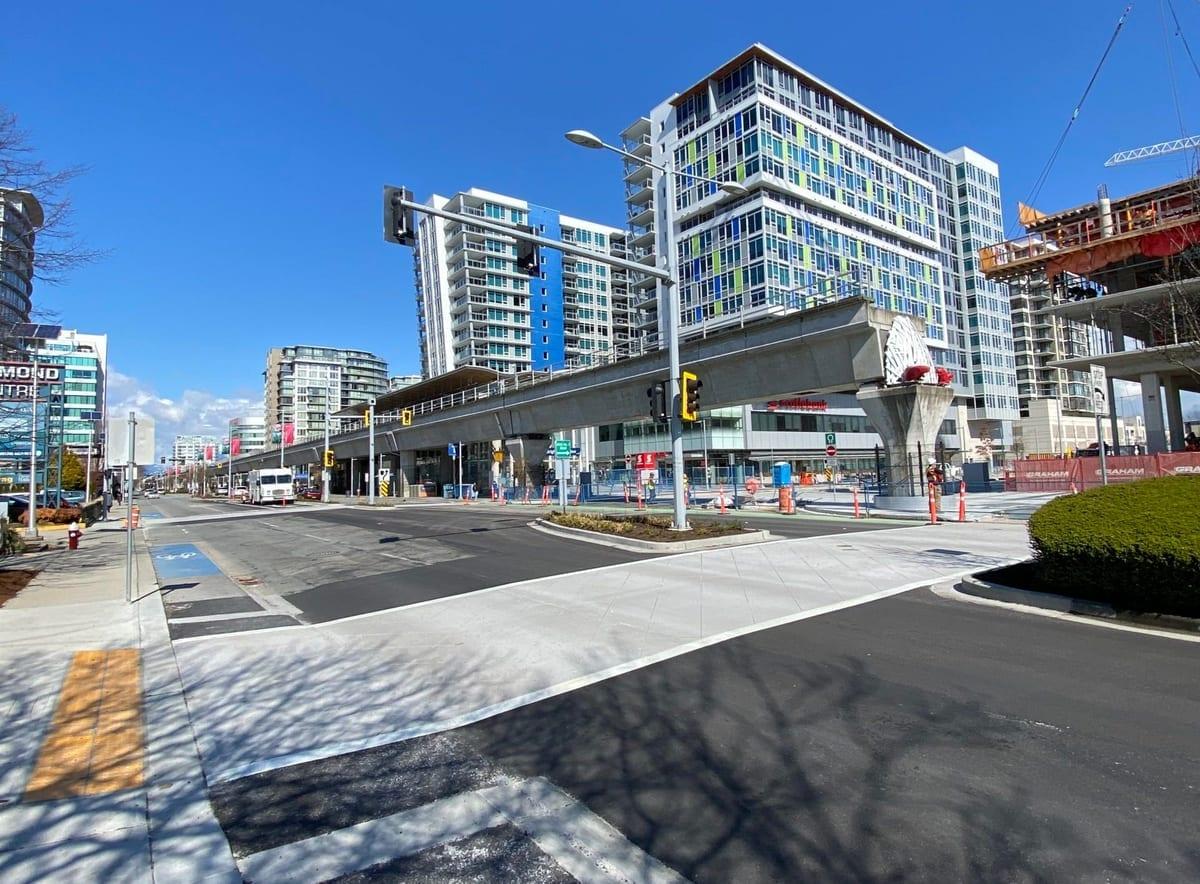
Richmond: Brighouse Station (TransLink)
As Richmond's busiest B-Line transfer hub, Brighouse Station required a surface solution that could withstand constant foot traffic and harsh weather while enhancing safety. The chosen system delivered long-term durability, high visibility, and reliable performance, ensuring the station could serve thousands of daily commuters with both safety and resilience.
- TrafficPatternsXD was installed at pedestrian zones, crossings, and access points
- Raised, skid-resistant texture improved traction for foot traffic year-round
- Designed for high durability under bus turning, braking, and plowing conditions
Key outcomes:
- Visibly defined pedestrian zones for increased safety
- Lower long-term maintenance versus traditional paint
- Seamless integration with accessibility and urban design initiatives
GrandLinq LRT: Waterloo Region
Waterloo's ION LRT project incorporated TrafficPatternsXD at key pedestrian crossings and transfer points, improving safety, visibility, and user experience while delivering durable, long-lasting performance in a high-traffic environment.
- Installed at high-volume pedestrian zones along the LRT corridor
- Provided a durable, anti-slip surface ideal for boarding zones and multimodal interfaces
- Applied quickly with no need for extensive surface preparation
Key outcomes:
- Consistent visual cues for improved navigation
- Reduced slip risk in wet and icy conditions
- Extended lifespan of pedestrian areas across LRT platforms
Vancouver: Commercial Drive (Little Italy)
To combine civic identity with enhanced safety, Vancouver applied DecoMark and TrafficPatterns throughout the culturally vibrant Commercial Drive corridor, creating durable, high-visibility surfaces that reflect the neighborhood's character while improving pedestrian experience.
- DecoMark enabled Italian-themed graphics for heritage crosswalks
- TrafficPatterns delivered high-traction durability in creative, multi-use designs
- Reinforced wayfinding while turning crossings into artistic placemaking assets
Key outcomes:
- Improved pedestrian safety in a high-footfall cultural district
- Elevated visual identity through public space design
- Long-lasting, low-maintenance performance with strong community impact
Results for Public Works Departments
- Lower lifecycle costs through extended surface performance
- Fewer urgent maintenance cycles means more time for strategic projects
- Enhanced public safety and corridor visibility
- Infrastructure that holds up t