How MMAX, TrafficPatternsXD, and StreetBond150 are extending pavement life and reducing maintenance costs across TTC Toronto, East London Link BRT, VIVA Next York Region, and Brighouse Station Richmond.
Rapid Transit & Priority Corridors: VIVA Next BRT | TTC Toronto | Brighouse Station, Greater Vancouver
The Challenge
Across Canada, municipalities are under pressure to deliver safer, more reliable transit service while reducing infrastructure upkeep costs. In Toronto, York Region, and Richmond, high-frequency bus corridors were deteriorating prematurely due to:
- Heavy transit loads and aggressive turning movements at intersections
- Winter stress, including de-icing salts, freeze-thaw cycles, and snowplow abrasion
- Fading paint requiring frequent touch-ups
- Recurring lane closures, disrupting transit flow and increasing maintenance costs
These challenges impacted service reliability, strained public works budgets, and created safety concerns for both operators and pedestrians.
The Objective
Each city wanted a surface treatment that could:
- Withstand extreme traffic wear and climate exposure
- Maintain strong colour visibility and skid resistance over time
- Minimize long-term maintenance cycles and lane disruptions
- Support agency branding and multimodal safety goals
TTC bus priority corridors: Toronto, ON
Product Used: MMAX (MMA surface coating)
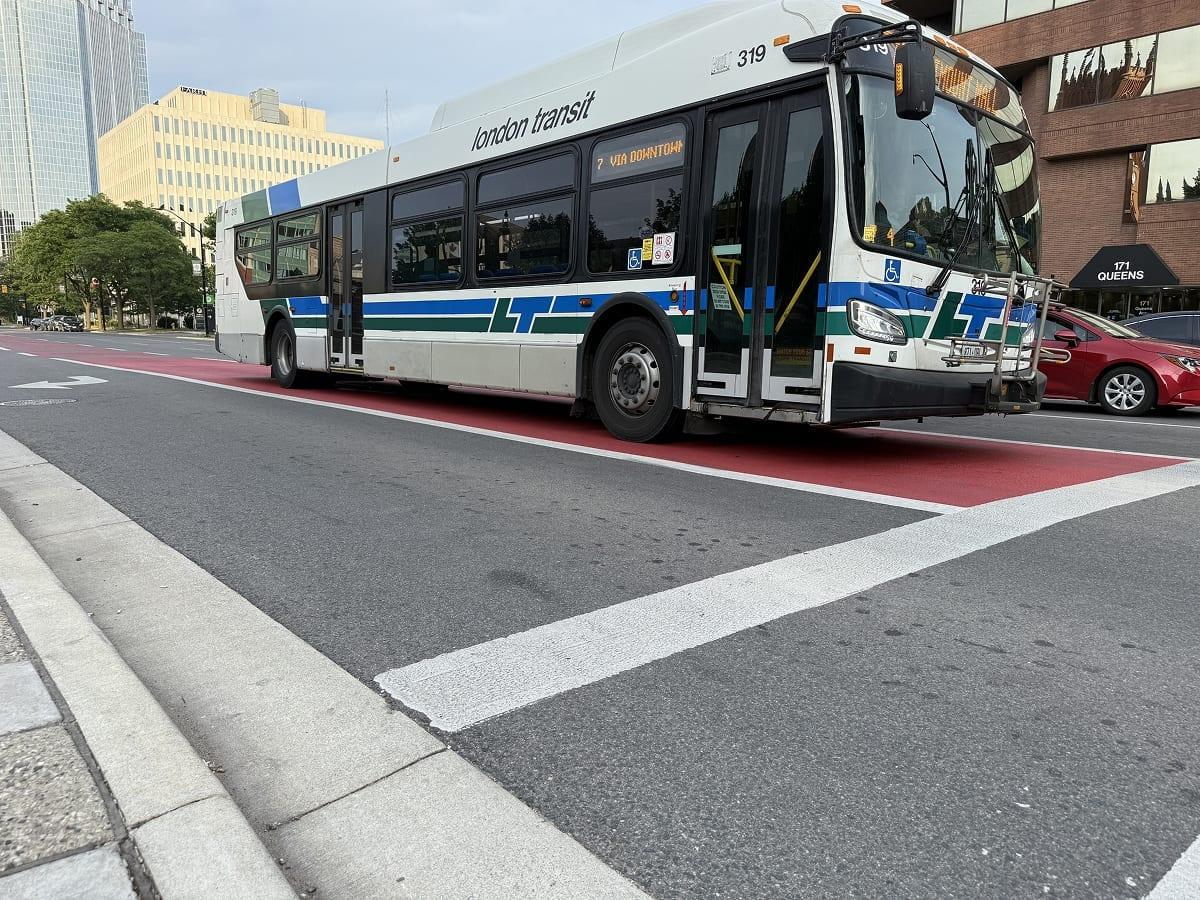
To boost safety and efficiency along its busiest transit routes, Toronto applied durable MMAX surfacing across key TTC bus-priority corridors. The treatment kept the lanes visible and reduced maintenance.
Key Benefits:
- Long-lasting red lane colour with excellent UV and abrasion resistance
- High-friction, MMA-based surface for operator safety in all conditions
- Fast curing allows overnight installations with no long-term closures
Results:
- Fewer repainting cycles over 5+ years
- Improved transit lane visibility in winter and wet conditions
- Reduced service interruptions and maintenance costs
East London Link BRT: London, ON
Products Used: MMAX and TrafficPatternsXD
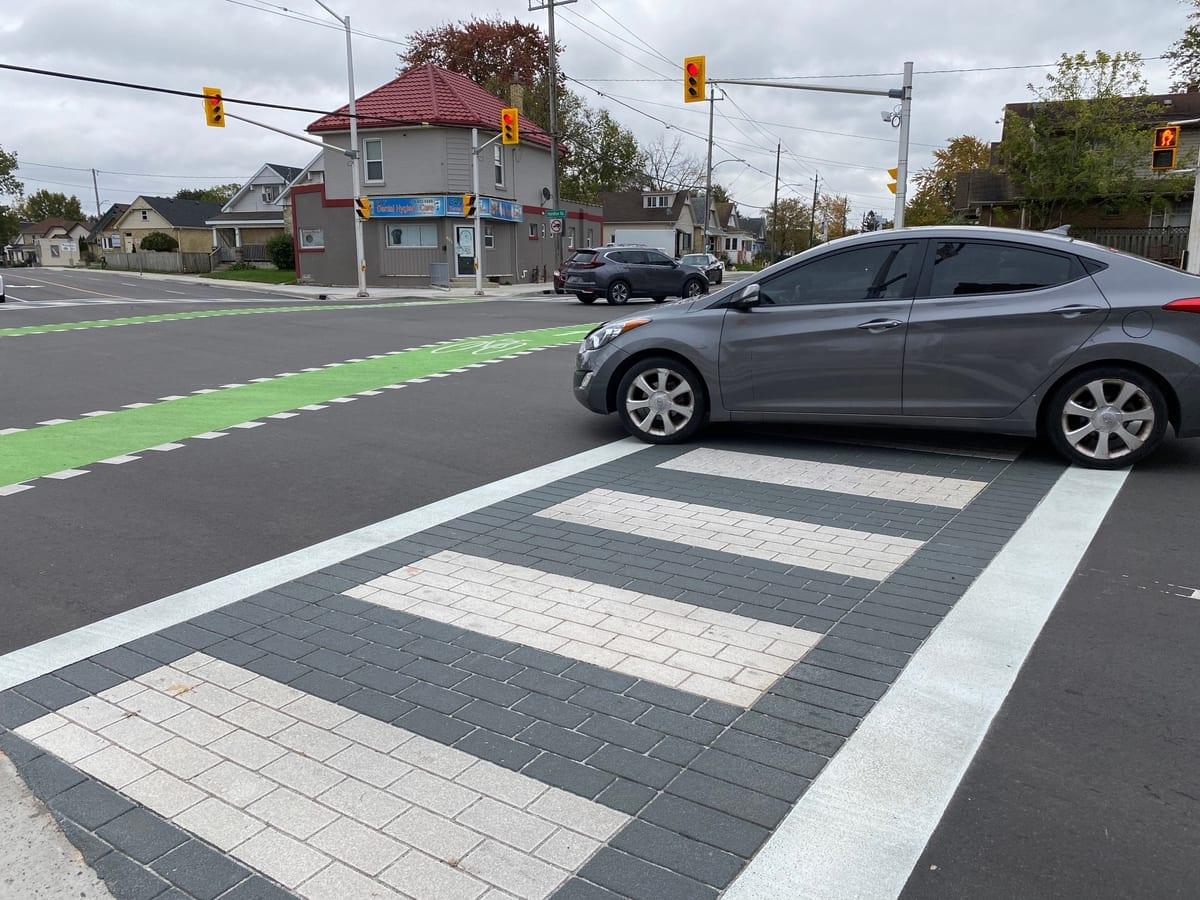
To improve multimodal safety and reduce long-term maintenance, the City of London put two surfaces on its East London Link BRT corridor. MMAX marked the bus lanes, with strong colour retention and high skid resistance, even in winter. For the crosswalks, TrafficPatternsXD was installed for high-visibility, anti-slip surfaces at the conflict points.
Key Benefits:
- MMAX: Durable MMA coating with UV-stable green pigment, engineered for bus lane longevity
- TrafficPatternsXD: Preformed thermoplastic with aggregate texture for safer pedestrian movement
- Efficient installation minimized lane disruptions and service delays
Results:
- Improved safety and clarity across cycling and pedestrian zones
- Reduced repainting cycles and surface deterioration
- Supported London's Complete Streets and BRT infrastructure goals
VIVA Next BRT: York Region, ON
Products Used: StreetBond150 (bike lanes), TrafficPatternsXD (crosswalks)
To advance its Complete Streets strategy and improve safety on the multimodal Highway 7 corridor, York Region used two surfaces.
TrafficPatternsXD at the crosswalks and conflict zones
- Preformed thermoplastic with aggregate-infused friction for pedestrian traction
- High-visibility design reinforces safety at crosswalks and conflict points
- Heated and stamped into the asphalt, with a quick installation and little disruption
StreetBond150 in the active transportation zones
- Durable, pigmented coating system for asphalt and concrete surfaces
- UV- and weather-resistant finish improves visibility and safety
- Cold-applied treatment enables rapid installation with minimal surface disruption
Project Outcomes:
- Improved navigation and safety across transit, cycling, and pedestrian flows
- Reduced maintenance frequency thanks to highly durable surface systems
- Unified visual identity supporting York Region's BRT branding and mobility goals
Brighouse Station: Richmond, BC
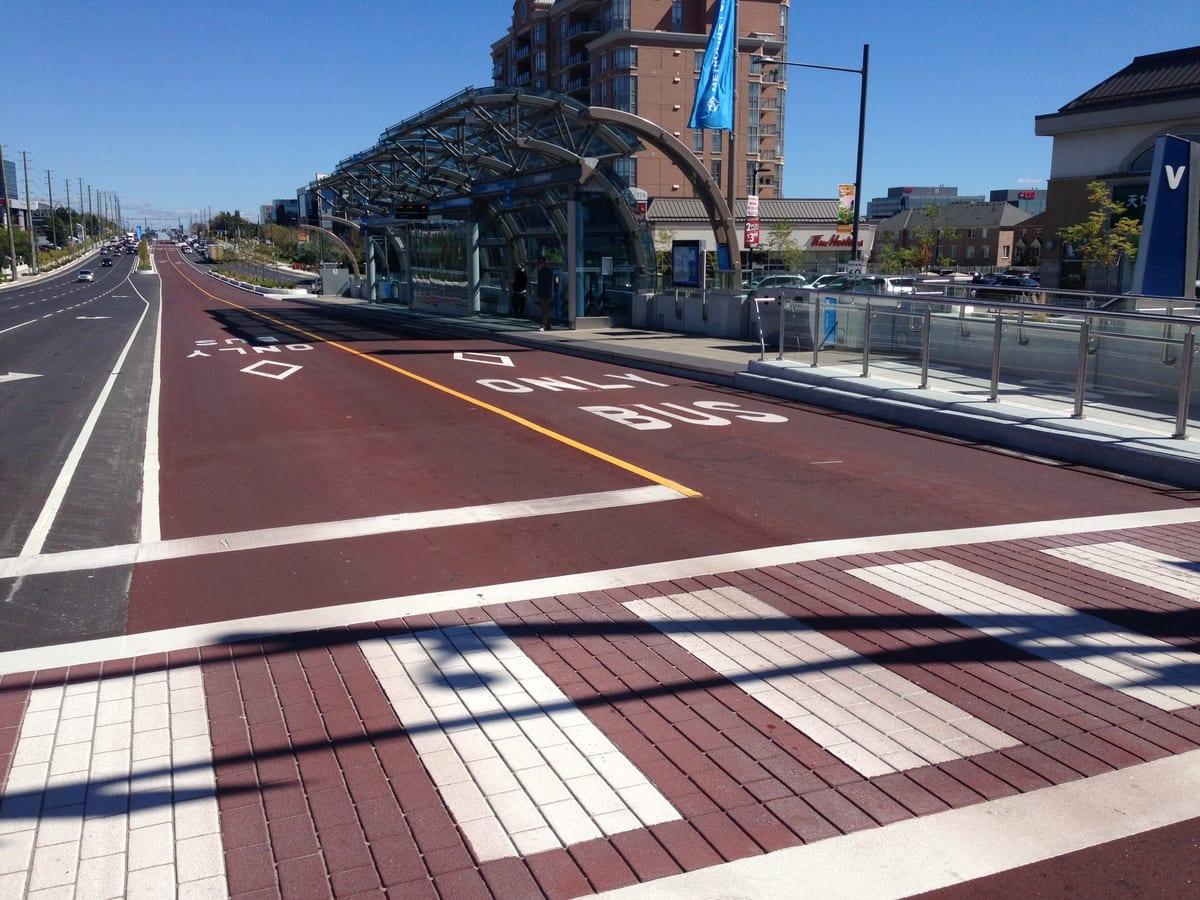
Product Used: TrafficPatternsXD (preformed thermoplastic)
As the busiest transfer hub in Richmond's B-Line network, Brighouse Station required a surface treatment that could withstand heavy foot traffic, bus movements, and seasonal weather, while enhancing pedestrian safety. HUB Surface Systems deployed TrafficPatternsXD.
Key Features:
- Textured, skid-resistant surface improves traction near transit platforms
- Clearly defined pedestrian zones enhance wayfinding and flow
- Engineered to endure frequent bus turns, de-icing salts, and snowplow abrasion
Project Outcomes:
- Safer crossings and boarding zones for all users
- Reduced surface wear and maintenance compared to traditional paint
- Strong alignment with Richmond's Complete Streets and accessibility goals
Conclusion
In Toronto, York Region and Richmond, HUB's surface systems proved their value.
- MMAX for long-lasting, colour-stable, low-maintenance surfacing for transit and bike infrastructure.
- TrafficPatternsXD gave safe, durable pedestrian areas across Canada's busiest intersections.
- StreetBond150 delivers durable, colour-stable surfacing for bike lanes, transit zones, and pedestrian areas.
These projects show what other cities can do to extend pavement life, improve safety and cut the cost of transit lane maintenance.