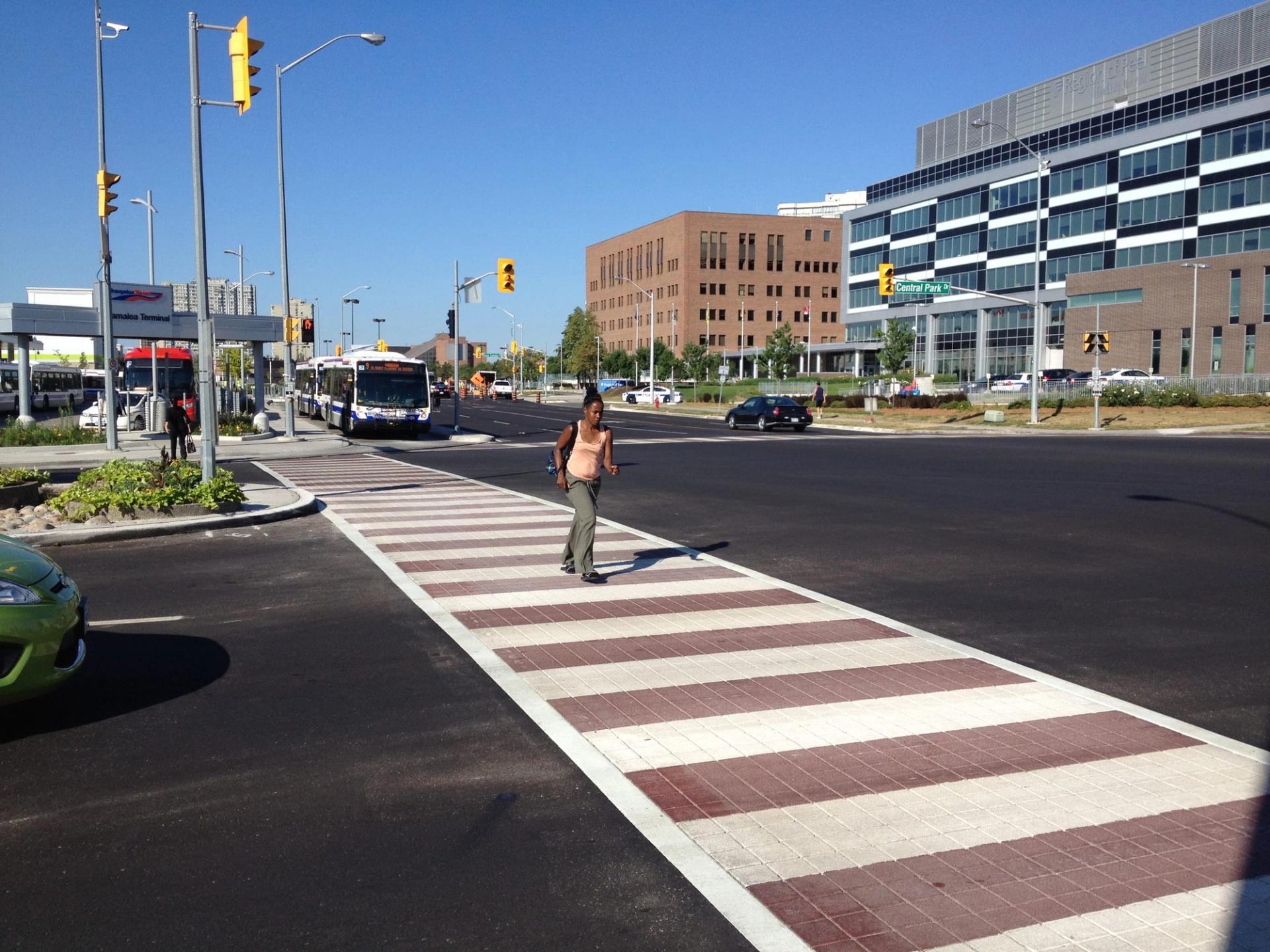
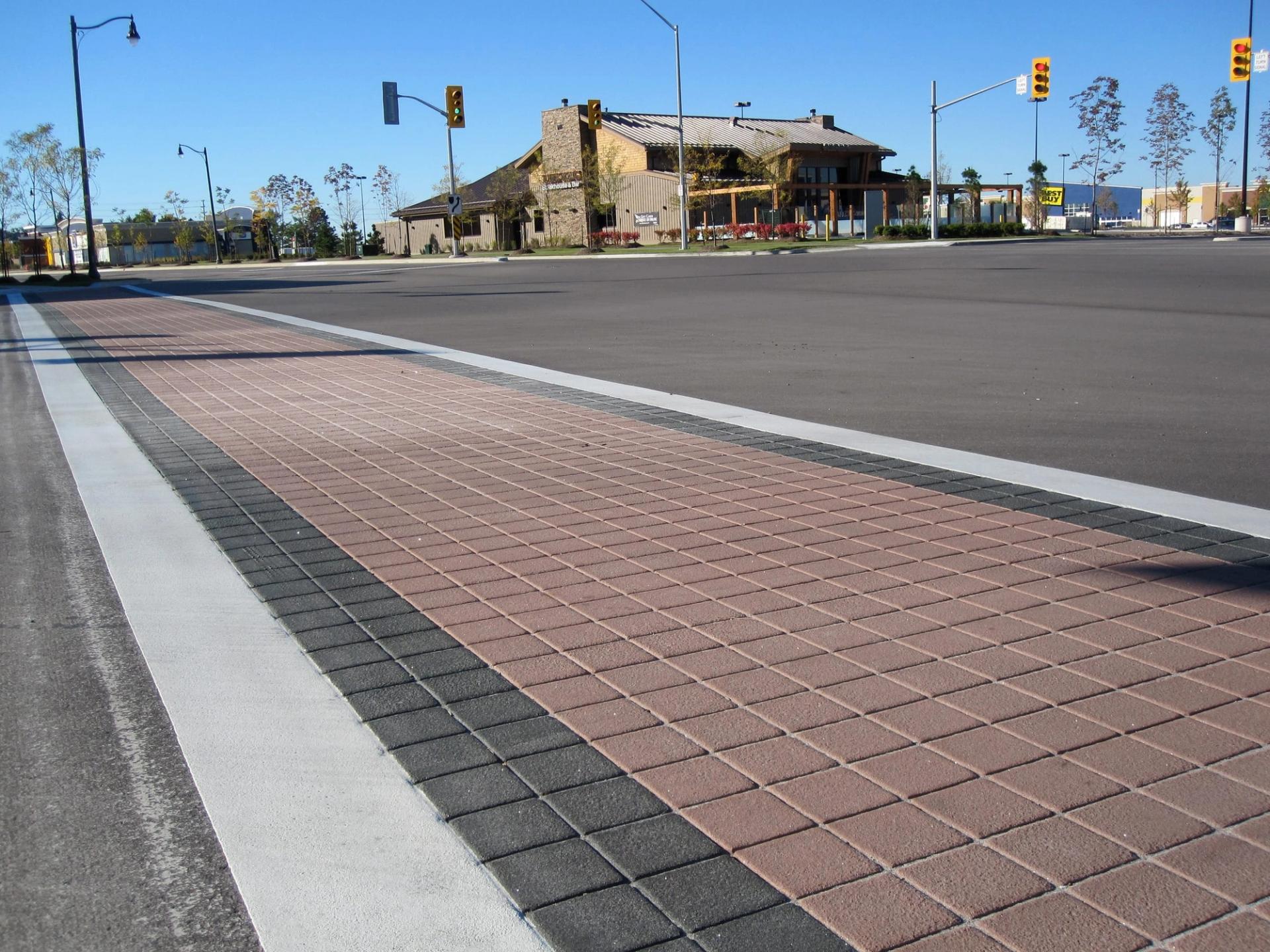
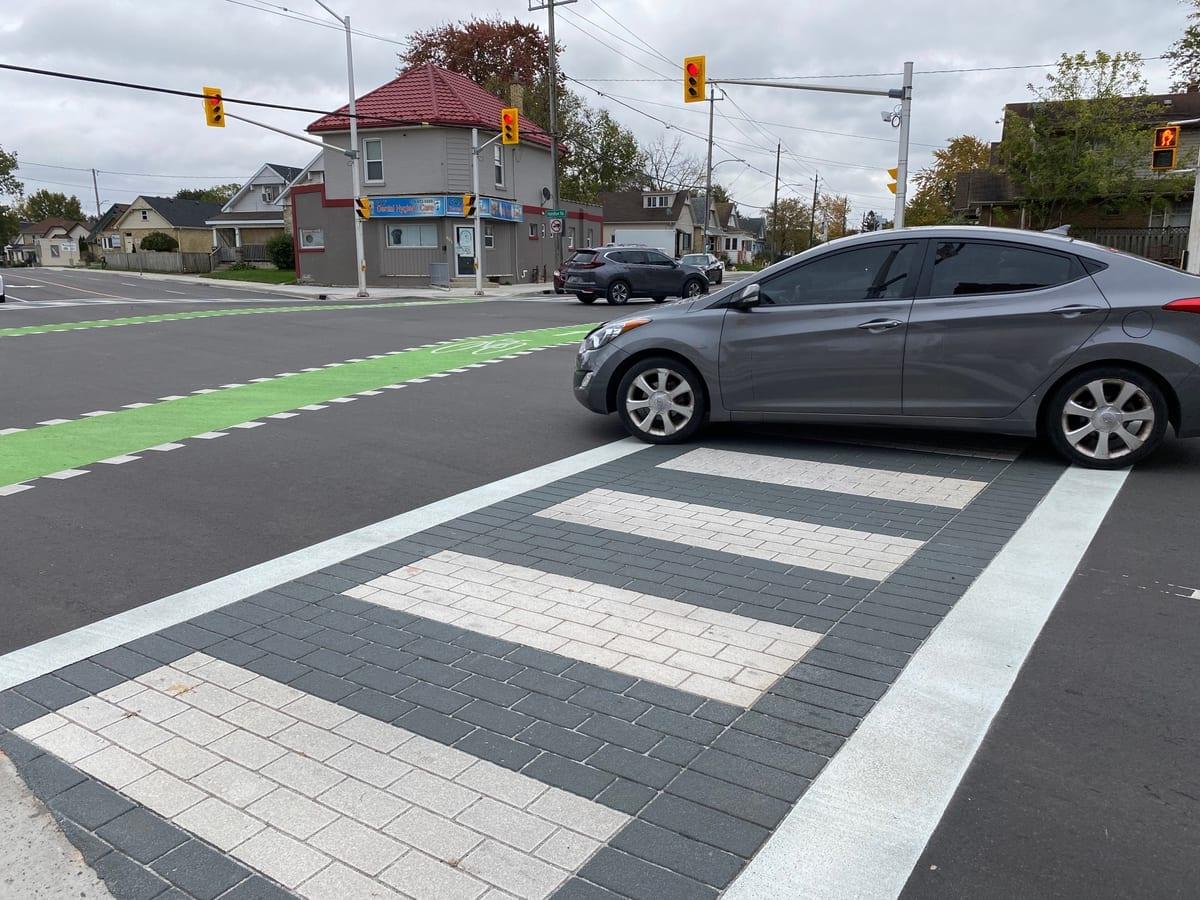
In London's East London Link BRT and Toronto's TTC bus corridors, municipalities replaced painted lanes with MMAX MMA coatings and TrafficPatternsXD thermoplastic, and eliminated the repainting cycle that had been consuming maintenance budgets for decades.
For decades, painted bus lanes and crosswalks have been the default, not because they perform well, but because they were assumed to be the only practical option at scale. The reality is well-documented by any maintenance manager who has watched a freshly painted transit corridor fade within a season: paint fades, chalks, and loses retroreflectivity under the combination of heavy axle loads, freeze-thaw cycling, and de-icing chemical application that defines Canadian transit infrastructure.
MMAX MMA coatings and TrafficPatternsXD thermoplastic represent the alternative that transit agencies have been adopting as the true cost of the paint cycle becomes undeniable.
London: East London Link BRT
The City of London's East London Link Bus Rapid Transit corridor required surface marking systems that could hold up under the specific load conditions of BRT operations: concentrated axle loads at bus stops, tight turning radii at intersection entry points, and the expectation that markings remain legible without repainting through full seasonal cycles.
Painted markings were ruled out from the outset. The solution was a dual system: MMAX MMA red bus lane coatings throughout the corridor, combined with TrafficPatternsXD thermoplastic crossings at intersection conflict zones.
MMAX delivered long-lasting colour, UV stability, and certified skid resistance across the bus lane surface. Cure time in the 30-60 minute range allowed overnight application without disrupting weekday transit operations. TrafficPatternsXD crossings heat-fused permanently to the intersection asphalt surface, providing slip-resistant pedestrian zones with BPN 65+ skid resistance at the exact locations where bus, cyclist, and pedestrian movements converge.
The East London Link now provides a safer, more legible multimodal corridor, and the repainting cycle that previously consumed maintenance budget and lane availability has been effectively eliminated.
Toronto: TTC Bus Corridors
Toronto's TTC bus priority corridors operate at some of the highest vehicle and pedestrian volumes in the country. Traditional painted bus lane designations required recurrent repainting, each cycle causing service disruptions, lane closures, and temporary loss of the marking visibility that bus priority lanes depend on for driver compliance.
MMAX MMA coatings changed the maintenance equation. Applied during off-peak overnight windows, MMAX bonds securely to the asphalt surface and achieves traffic-ready hardness before morning service resumes. The MMA formula provides excellent UV stability and abrasion resistance under the lateral shear forces generated by bus turning movements, the failure mechanism that defeats standard acrylic coatings fastest in transit lane applications.
The result for Toronto is bus lanes that hold their colour, contrast, and safety specification season after season, with dramatically reduced intervention frequency compared to the painted baseline.
The Specification Case
The pattern across both cities points to the same underlying logic: the total cost of ownership for durable surface marking systems (MMAX for colour lanes, TrafficPatternsXD for high-load crossings and intersection treatments) is substantially lower than the total cost of the painted alternative when repainting frequency, lane closure duration, and safety performance degradation between cycles are properly accounted for.
For transit agencies, municipalities, and engineering teams specifying new BRT corridors, bus priority lanes, or high-frequency pedestrian crossing upgrades, the question is no longer whether durable thermoplastic and MMA systems outperform paint. The question is how to structure the specification to capture the lifecycle cost advantage.
Contact HUB Surface Systems to discuss MMAX and TrafficPatternsXD specifications for transit corridor projects. Technical documentation and reference project support available.