A Toronto park walkway where the surface does the placemaking: colour and pattern set into the path, maintained as pavement rather than replaced.
Toronto, Ontario
Most placemaking budgets go up: signage, sculpture, planting, lighting. Geary Works spent its budget on the ground.
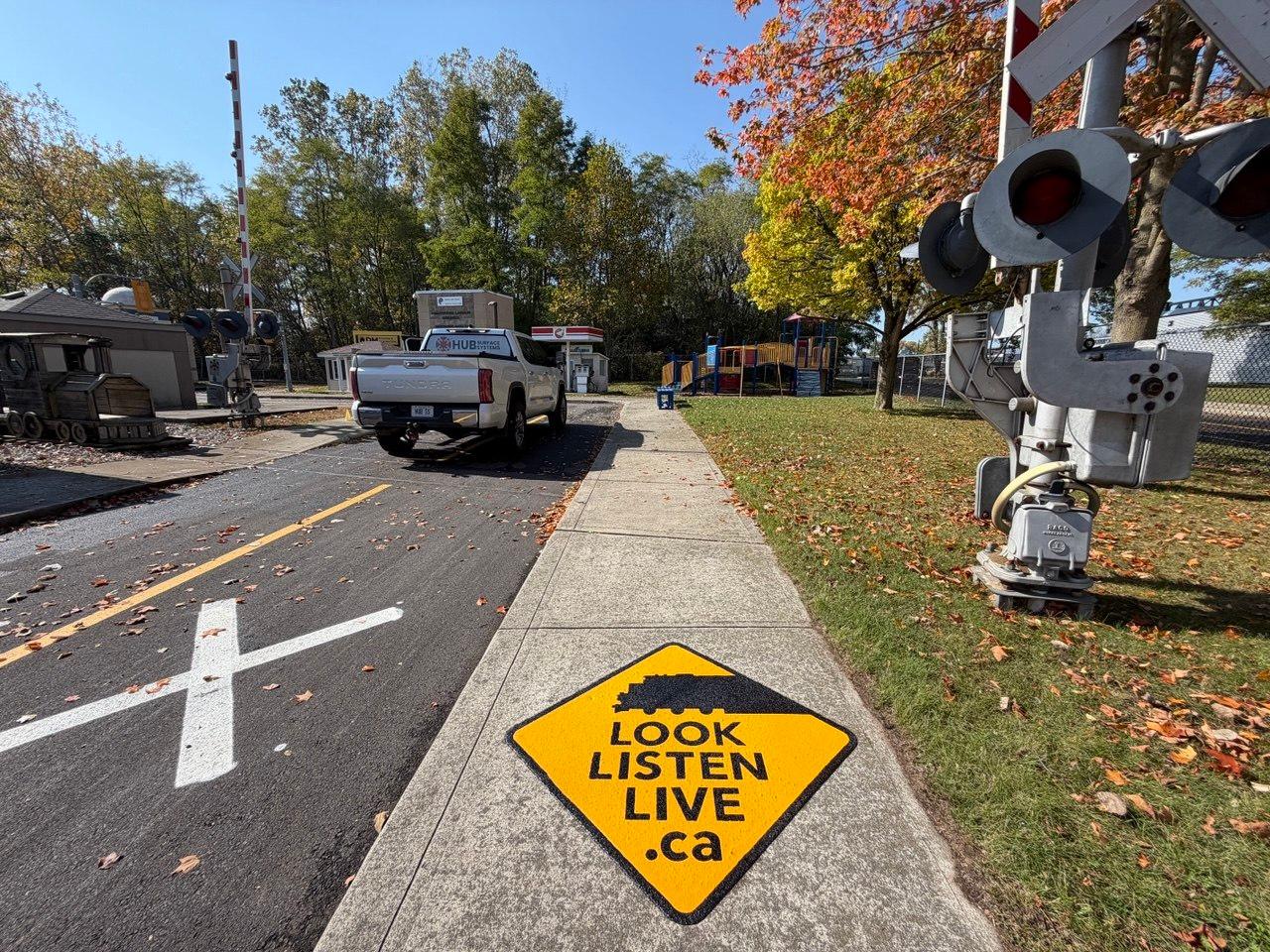
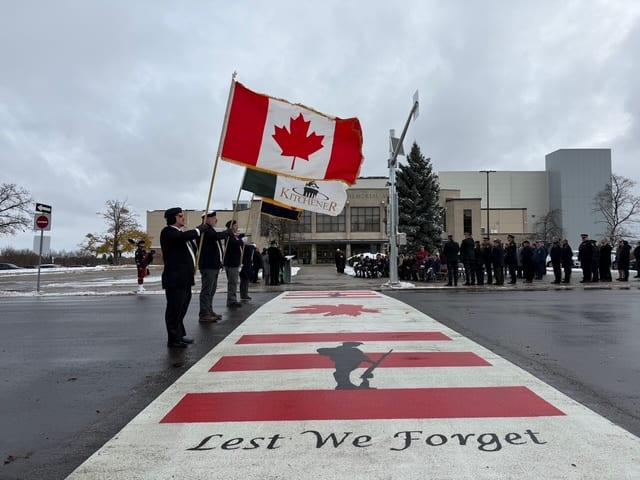
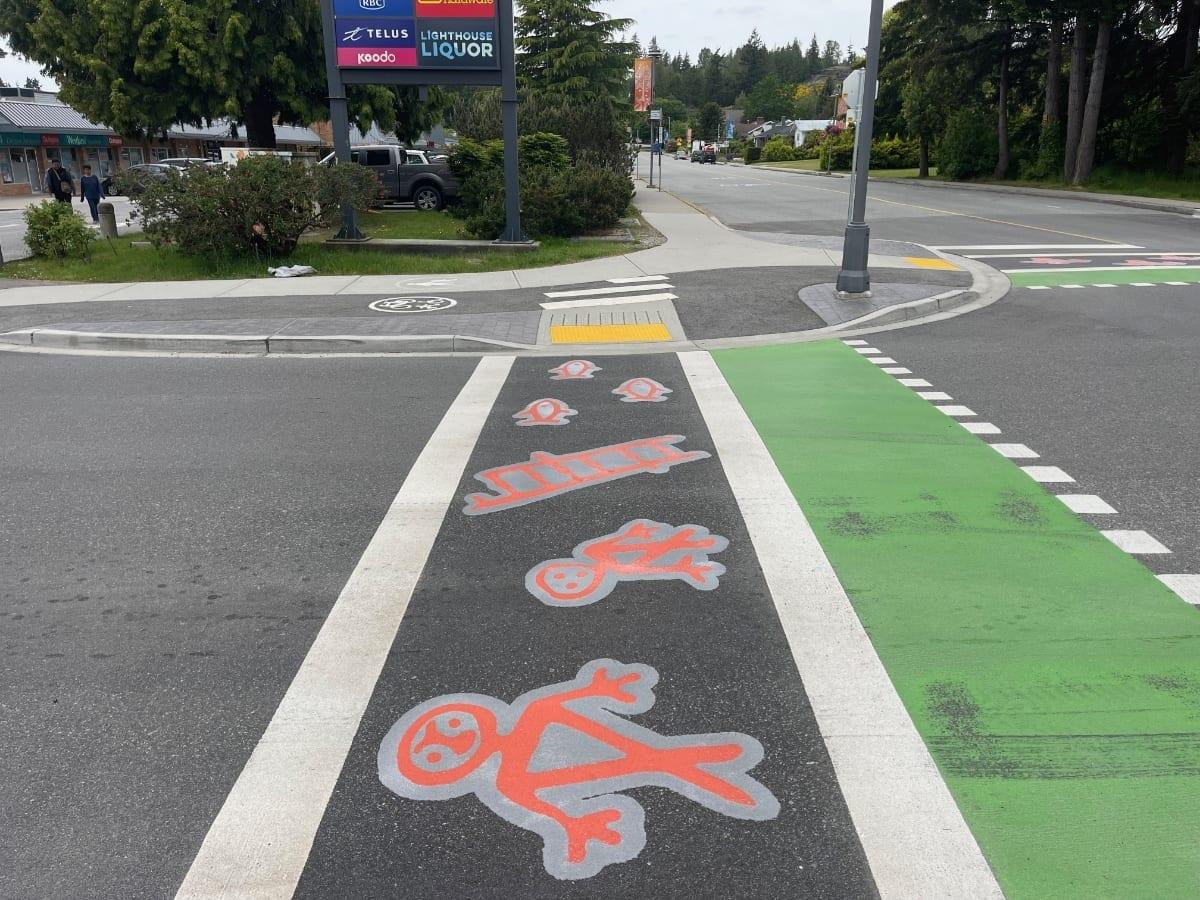
The walkway carries its identity in the surface itself: colour and pattern set into the path, with the name and its gear motif reading straight off the pavement as you walk it. There is no plinth and no interpretive panel. The ground is doing the work.
What is in the surface
DecoMark preformed thermoplastic, fabricated to vector artwork and heat-fused into the asphalt.
That process is what makes ground-plane graphics practical outdoors. The artwork is manufactured to specification first (colour is chosen from the palette or matched before anything is made) and then fused into the surface as a single operation. What ends up on the path is part of the asphalt rather than a coating over it.
It holds grip in wet weather, which is not a small consideration on a walkway that people actually use, and it sits flush to grade.
The maintenance argument
The reason this approach keeps coming back in park and streetscape work is the back end.
A surface treated this way is maintained as pavement rather than replaced. It stays on the same maintenance cycle the path was already on: it does not introduce a separate asset with its own replacement schedule, its own budget line, and its own end of life.
For a parks department, that distinction is often what decides whether a placemaking idea survives the capital review.
Where else this works
The same method carries neighbourhood crests, BIA identities, heritage markers, wayfinding, and commemorative work, anywhere a place wants to say something and the ground is the largest available surface to say it on.