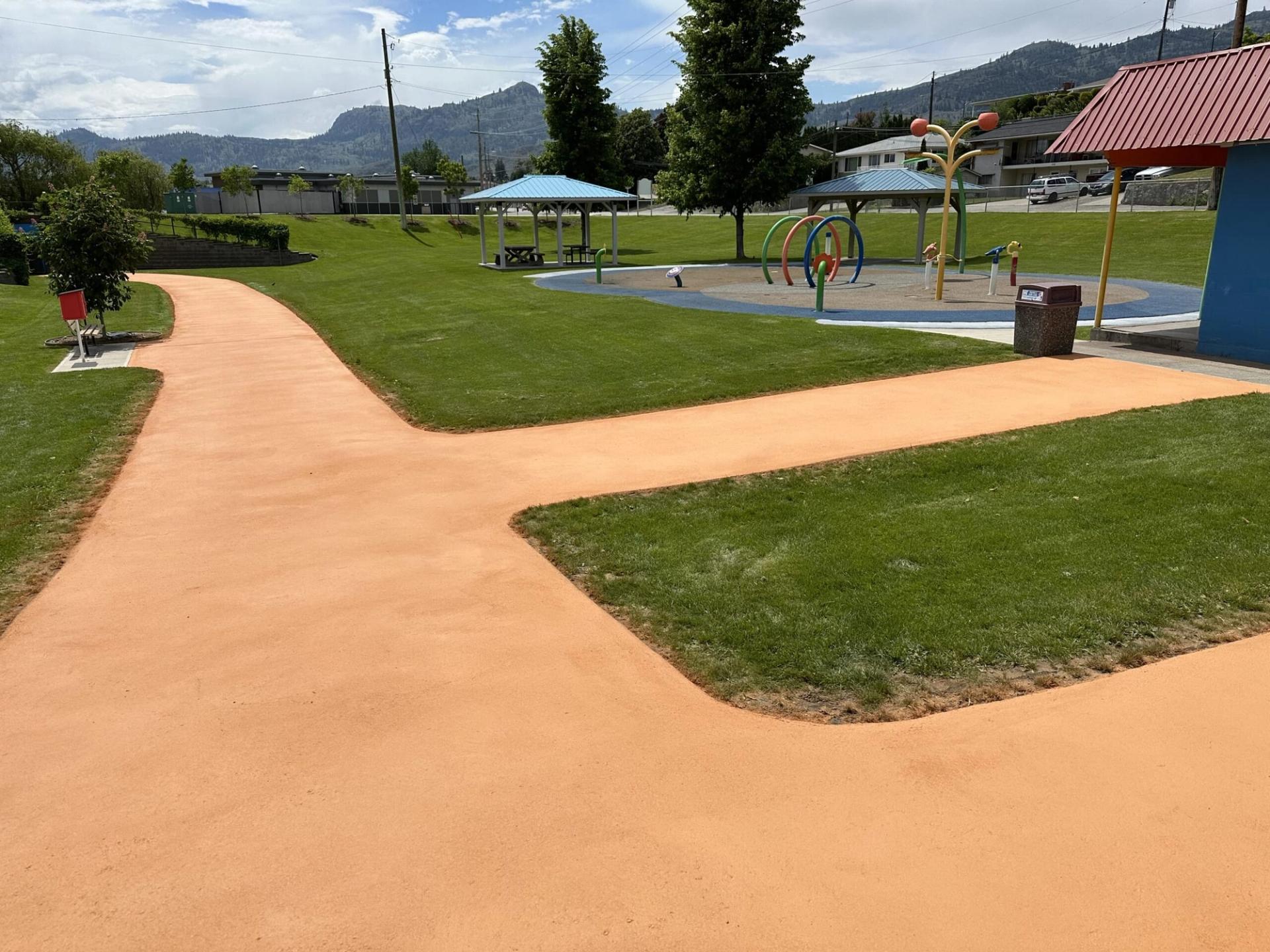
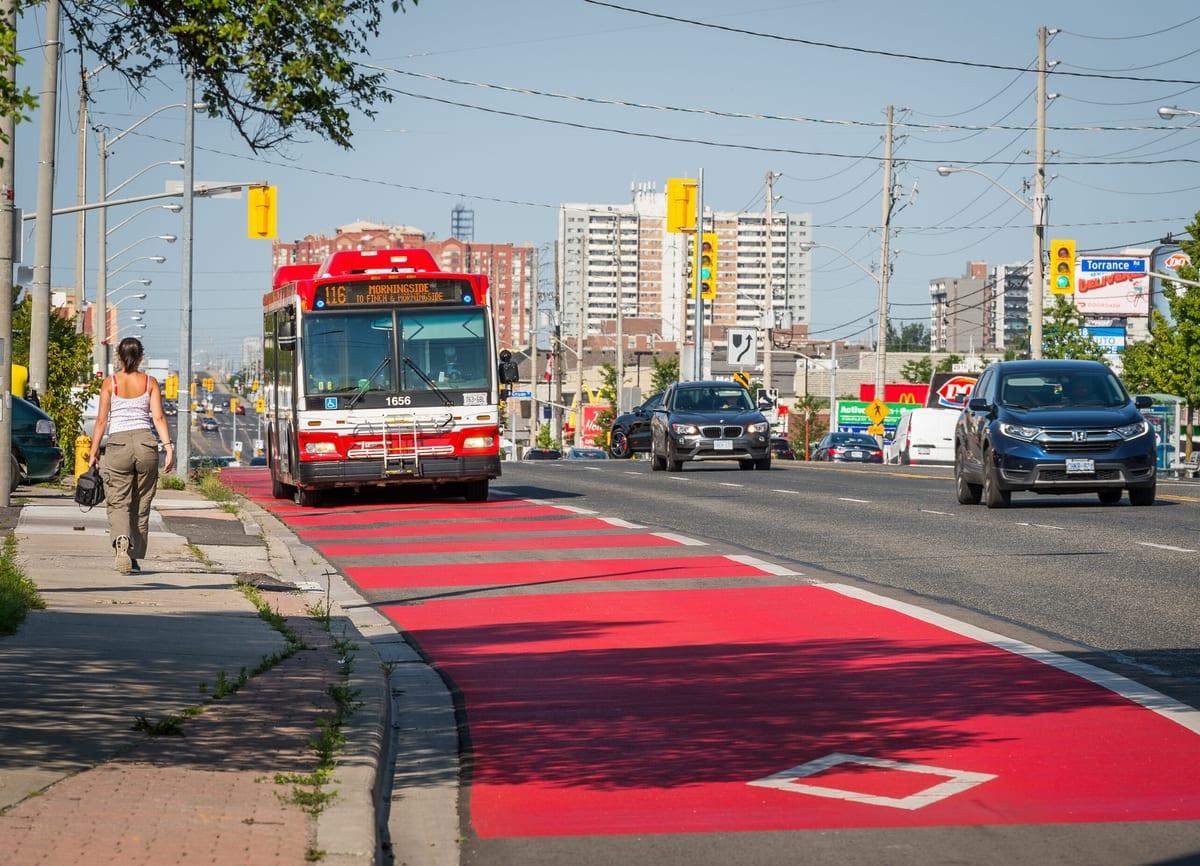
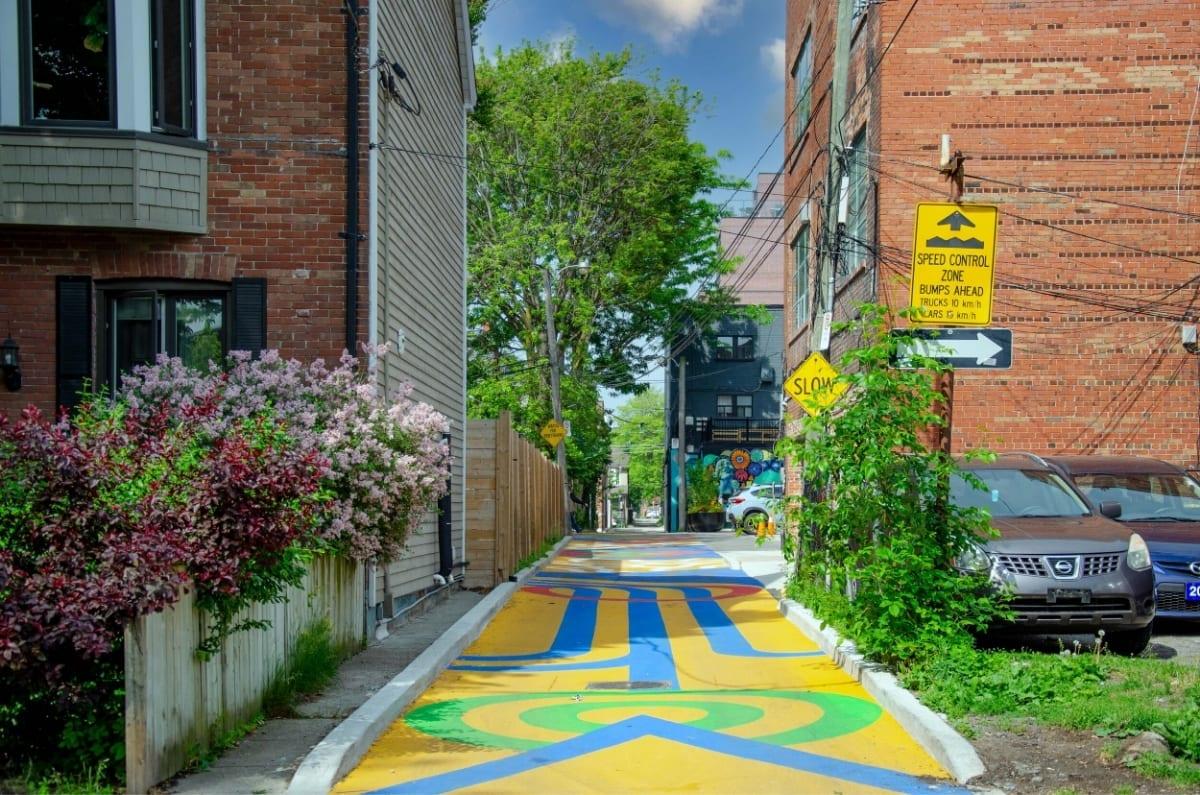
Osoyoos, BC used StreetBondSR solar reflective coatings to reduce urban heat island effect across parks and pathways. Here's how high-SRI pavement coating works, and why it's becoming standard in climate-conscious municipal specifications.
The urban heat island effect is not an abstraction. In cities and towns where dark asphalt surfaces cover 30–40% of the land area, surface temperatures on a summer afternoon can run dramatically higher than the surrounding air temperature, and significantly higher than the rural land adjacent to the urban boundary. That temperature differential drives air conditioning demand in nearby buildings, accelerates pavement degradation, and creates genuine heat-stress risk for pedestrians, cyclists, and outdoor workers.
Osoyoos, British Columbia (one of Canada's warmest towns, situated in the Okanagan at the country's northern end of the Sonoran Desert) understood this dynamic acutely. When the town undertook improvements to its parks and pathways, reducing pavement surface temperatures became a specific project objective. The solution was StreetBondSR solar reflective pavement coating.
The Science Behind High-SRI Pavement
Solar Reflectance Index (SRI) is the standard measure of a material's ability to reject solar heat: a composite of solar reflectance (how much incoming radiation is reflected) and thermal emittance (how much absorbed heat is re-radiated rather than retained in the material). Standard dark asphalt has an SRI near zero, absorbing the vast majority of solar radiation and converting it to surface heat. High-SRI pavement coatings redirect a significant portion of that radiation, reducing surface temperatures measurably.
StreetBondSR is formulated specifically for high-SRI performance. Applied to asphalt or concrete surfaces, it maintains the flexible, permanent-bond characteristics of StreetBond while delivering the reflective performance required for LEED v4 Sustainable Sites credit SS Credit: Heat Island Reduction, the green building standard that recognizes paving materials contributing to urban heat mitigation.
What Osoyoos Achieved
The StreetBondSR installation in Osoyoos delivered measurable surface temperature reduction across treated pathways and park surfaces. Pedestrian routes that had previously generated uncomfortable radiant heat during summer months became noticeably cooler, extending the hours during which the spaces were actively used and reducing heat stress for both residents and visitors.
The installation also contributes to the broader sustainability framework of any site pursuing LEED or climate action certification. Unlike passive infrastructure that simply minimizes harm, StreetBondSR is an active contributor to environmental performance metrics, a distinction that matters in municipal climate action plans and in the LEED documentation package for surrounding buildings.
Installation by Square One Paving Inc.
The Broader Specification Case
Osoyoos represents a clear use case, but the StreetBondSR specification extends well beyond hot-climate municipalities. Any development project with LEED targets, any municipality with a climate action plan that addresses urban heat, and any property with significant surface area exposed to summer sun faces the same fundamental challenge.
Parking lots, commercial campus plazas, institutional grounds, and residential common areas are all surfaces where the heat island contribution is measurable, and where StreetBondSR provides a practical, cost-effective mitigation strategy that carries independent green building certification value.
The coating is available in a curated SRI-optimized palette of lighter tones, with custom Pantone matching available for projects where colour integration with the surrounding environment is a design requirement.
Contact HUB Surface Systems to discuss StreetBondSR specifications for LEED projects or urban heat island mitigation programs. LEED documentation support available.