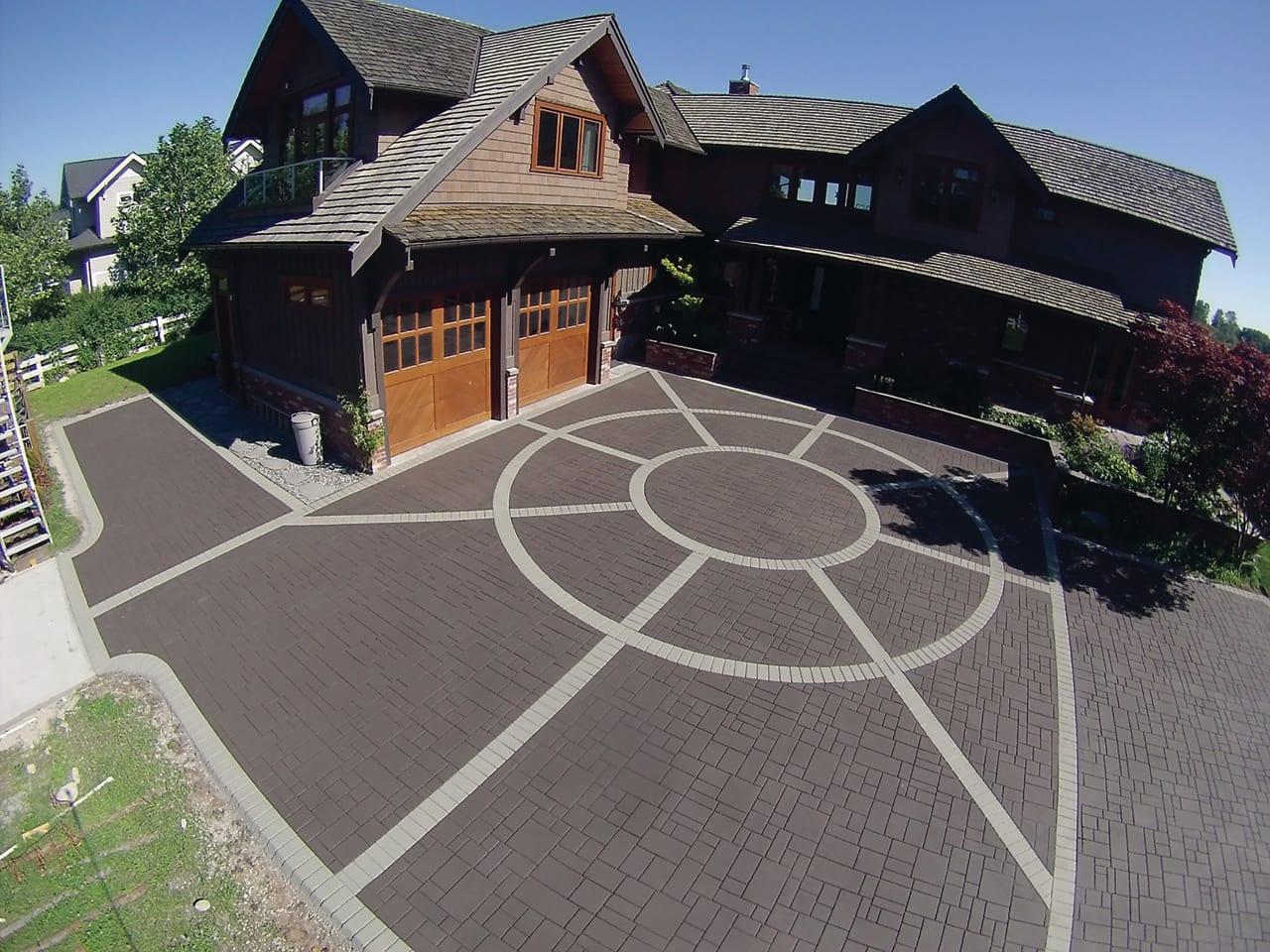
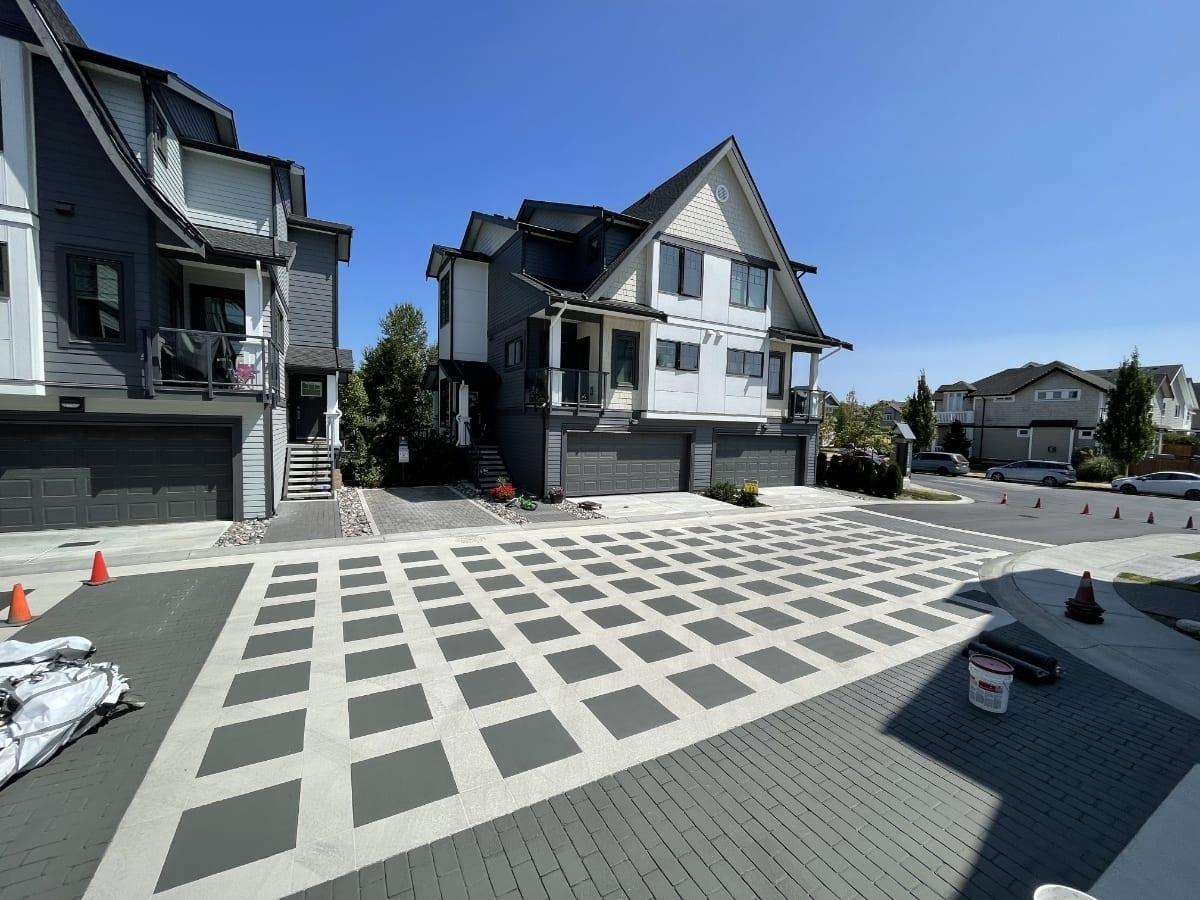
Decorative concrete gets all the attention in spec meetings. In Canadian climates, stamped asphalt consistently outperforms it, at lower installation cost, lower lifecycle cost, and far greater resilience to the freeze-thaw cycles that fracture concrete from the inside out.
After 27 years of delivering decorative surface solutions across Canada, HUB Surface Systems has watched a consistent pattern play out: municipalities that specified decorative concrete end up back on the phone within a decade, asking about alternatives. Those that chose stamped asphalt are still running strong, and their maintenance crews have other things to worry about.
The freeze-thaw numbers explain why.

Why Concrete Fails in Canadian Climates
Concrete is a rigid, high-compressive-strength material. Those properties make it excellent in controlled, dry environments. They make it a liability in Canadian winters.
The failure mode is well understood: water enters micro-cracks that appear within the first few seasons of service. When that water freezes, it expands with forces that exceed the tensile strength of the concrete surrounding it. The result is spalling: surface delamination that starts as a cosmetic issue and becomes a structural one. Decorative concrete is even more vulnerable: the stamping process creates relief patterning that traps water and accelerates the failure cycle. The sealers applied over decorative concrete protect the surface initially, but require regular reapplication and fail progressively in freeze-thaw conditions.
Municipalities in Canada spend significant portions of their capital maintenance budgets on concrete infrastructure that failed prematurely. Decorative concrete pedestrian features (stamped plazas, decorative crosswalk areas, feature intersections) are among the highest-failure-rate investments.
Why Asphalt Thrives in the Same Conditions
Asphalt is a flexible pavement material. It moves with temperature changes rather than resisting them, which is exactly the right response to the thermal cycling that Canadian infrastructure endures. A well-designed StreetPrint stamped asphalt surface flexes through hundreds of freeze-thaw cycles without fracturing.
Water is also managed differently. An intact asphalt surface doesn't micro-crack in the same way; and when StreetBond protective coating is applied over the stamped surface, it provides a flexible, elastomeric seal that moves with the pavement rather than cracking away from it.
The Lifecycle Cost Comparison
The real case for stamped asphalt isn't just performance. It's economics over time.
Decorative concrete has a higher initial installation cost in most applications. It also carries substantially higher maintenance cost as the surface ages: sealer reapplication, crack repair, spall patching, and eventually partial or full replacement. In northern Canadian climate zones, the remediation window is compressingly short: damage happens over winter, and crews are racing against the next freeze.
Stamped asphalt with StreetBond coating requires routine maintenance, but the maintenance profile is dramatically different: periodic recoating of the colour layer rather than structural repair. The underlying asphalt substrate remains sound and flexible. When localized damage does occur, asphalt is patchable: a damaged section can be milled and replaced without visible seams, which is not possible with concrete.
Over a full lifecycle, municipalities typically find that stamped asphalt delivers significantly lower total cost of ownership than equivalent decorative concrete installations in Canadian conditions.
Repairability: The Factor Designers Underestimate
One of the most underappreciated advantages of stamped asphalt is what happens when something goes wrong. Concrete failures are complete failures: a spalled section requires full removal and replacement, and matching the original appearance after years of weathering is rarely possible.
Asphalt failures are localized. A damaged section of StreetPrint can be milled out, repaved, restamped, and recoated. The colour system resets. The geometry is reproduced exactly. The repair is invisible.
For public installations (plazas, civic crosswalks, branded driveways), this is not a minor consideration. These surfaces carry the identity and visual character of a place. The ability to maintain that appearance over decades, through whatever the Canadian climate delivers, is the difference between an investment that holds its value and one that degrades into an eyesore.
The Specification
HUB's StreetPrint system is specifically engineered for Canadian climate performance. The in-place stamping process works with existing asphalt infrastructure, eliminating demolition. StreetBond UV-stable acrylic colour maintains vibrancy through seasons of sun, salt, and freeze-thaw cycling without the sealer reapplication burden that decorative concrete demands.
For engineers and landscape architects specifying decorative surfaces in Canadian municipalities, the performance record is clear. The question isn't whether stamped asphalt outperforms decorative concrete in this climate. It's whether the project team wants to prove it again with the next installation.
Contact HUB Surface Systems to request a stamped asphalt spec sheet or book a Lunch & Learn for your engineering or landscape architecture team.