How municipalities and parks departments are using decorative pavement coatings and stamped asphalt to transform utilitarian pathways into civic amenities, with a decade-plus of service life and universal accessibility.
A pathway does its job when people use it. Not just when it meets minimum surface standards. When it draws people in, guides them clearly, and makes the walk itself feel like something. The infrastructure argument for pedestrian pathways is well-established. The design argument is catching up.
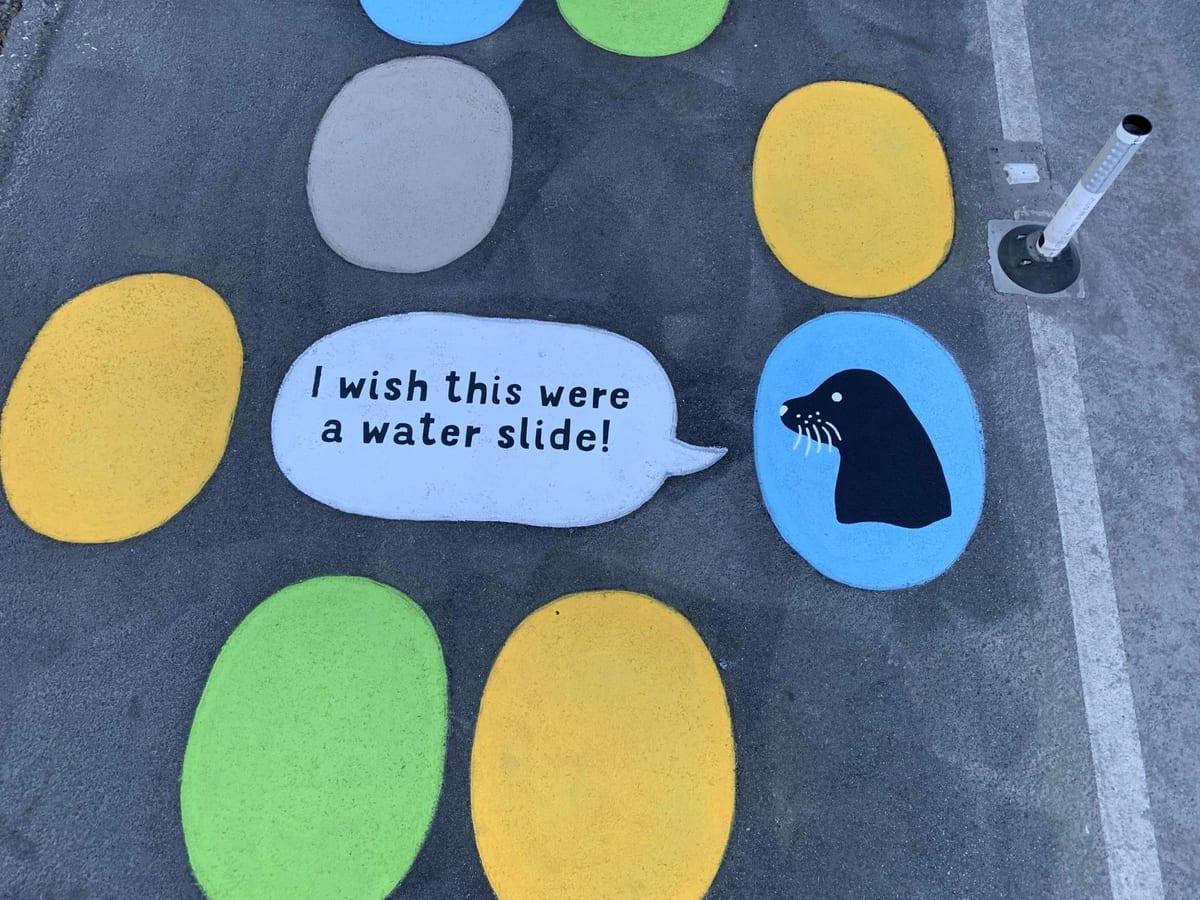
Municipalities across Canada are rethinking the surface of their active transportation networks, not just the structure, but the experience. Coloured surfaces, wayfinding systems, integrated public art, and accessible design principles are coming together on the same asphalt. The results are pathways that work harder, and that people actually choose to use.
StreetBond on Pathways: Colour as Infrastructure
StreetBond is a polymer-modified colour coating developed for high-traffic horizontal surfaces. On pathway applications, it transforms a standard grey asphalt surface into a colour-rich civic amenity with full UV stability, skid resistance, and a durability profile measured in decades, not seasons.
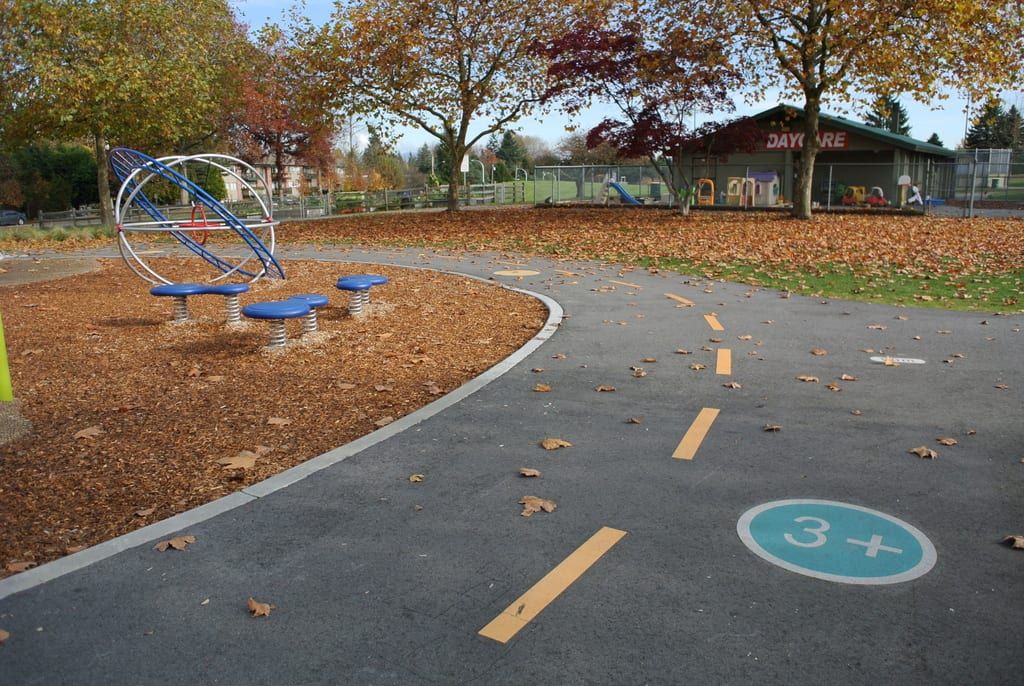
The colour application serves functional and experiential purposes simultaneously. Route identification: a coloured pathway system in a park network allows users to navigate by colour (the red trail to the waterfront, the green trail to the community centre). Wayfinding without signs. Safety: coloured surfaces are more visible in low-light conditions and signal pathway presence to cyclists and vehicles at intersection crossings. And aesthetics: a pathway that is beautiful encourages use. Active transportation uptake is partly a design problem.
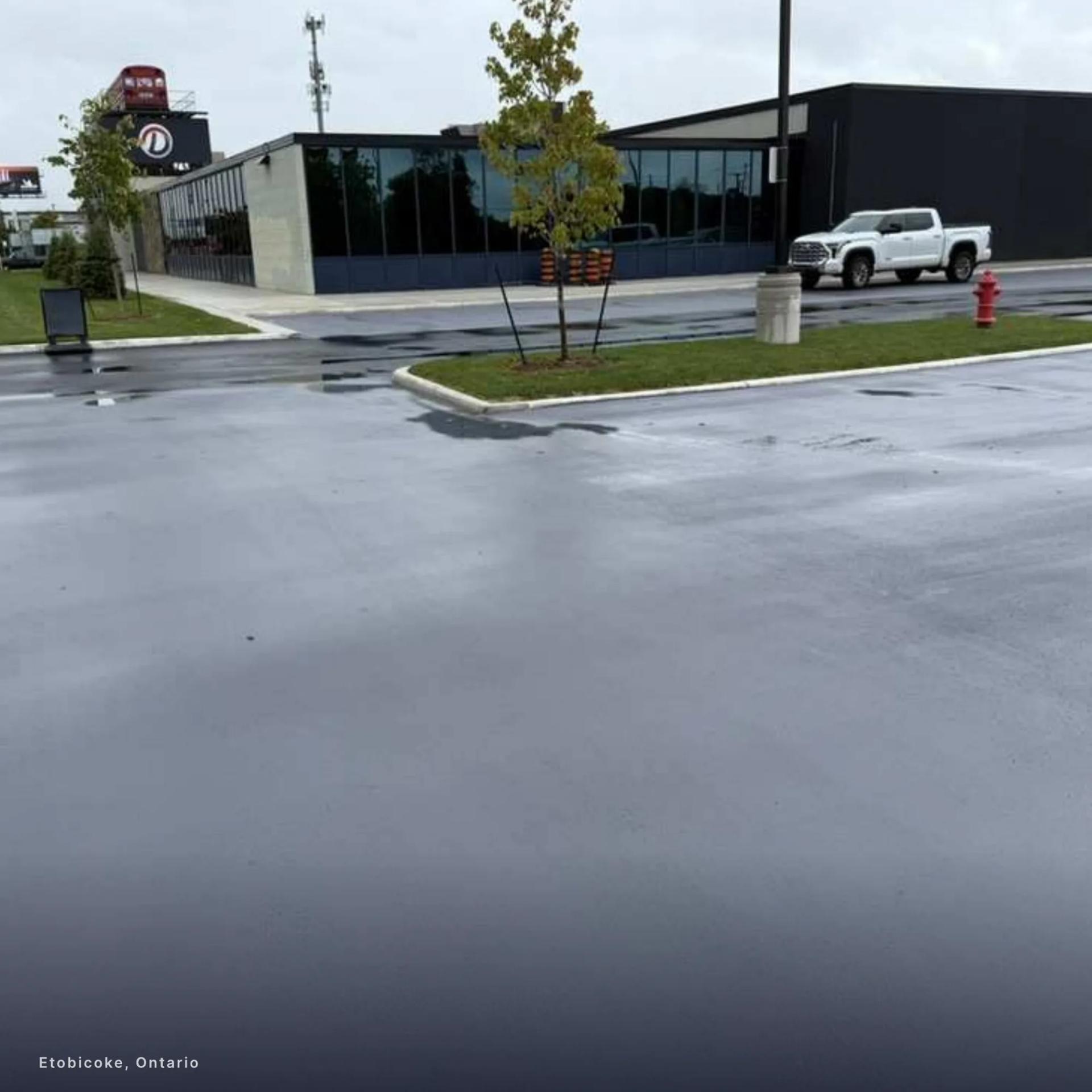
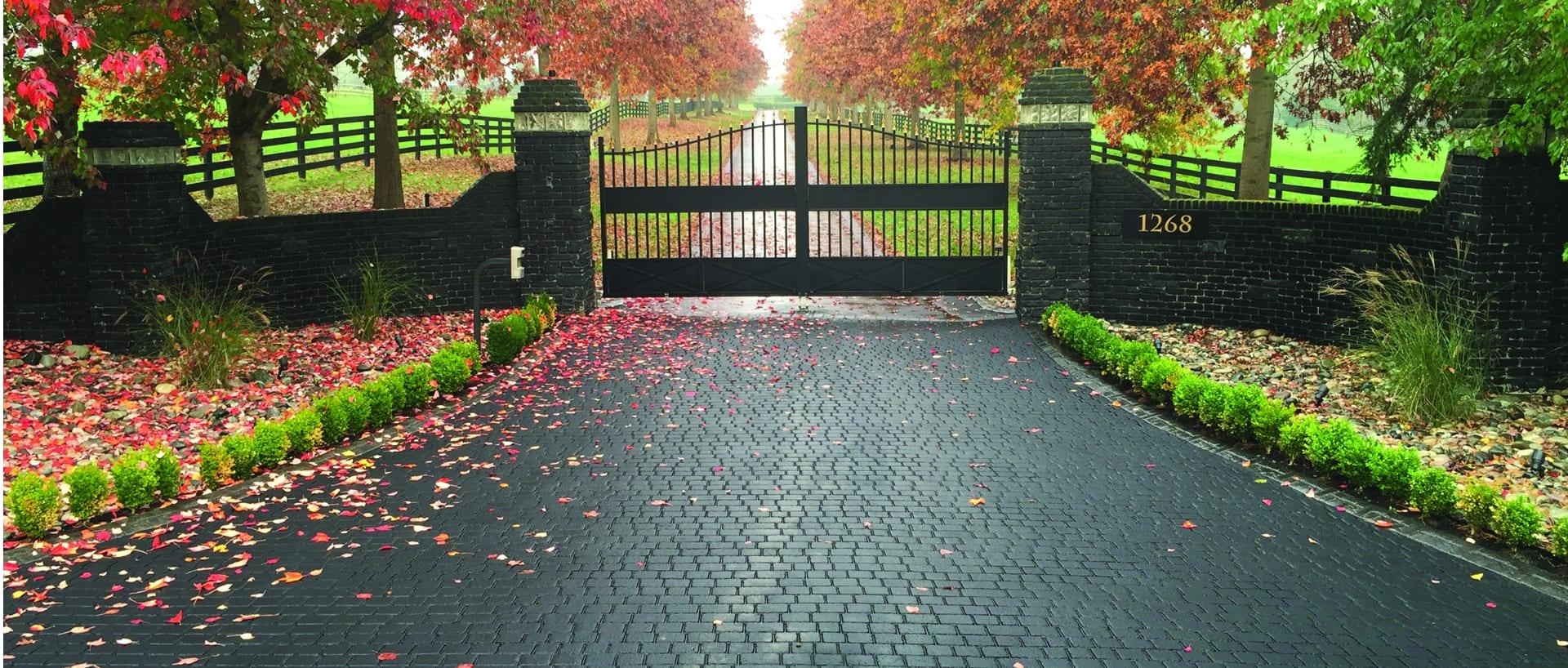
StreetBond bonds to existing asphalt without surface removal. It adds no measurable elevation change: zero trip hazard, full universal accessibility. It accepts standard road marking thermoplastics over the coating for directional arrows, distance markers, and accessibility symbols.
Bowen Island: A Case Study in Environmental Sensitivity
The Bowen Island pathway installation is a reference project for StreetBond in naturalistic environments. The colour palette (sunset terracotta, forest green, earth brown, water blue) was drawn from the island's own landscape. The result is a pathway system that feels continuous with its environment rather than imposed on it.
The Bowen Island project demonstrates what's possible when colour selection is driven by context rather than convention. The pathway doesn't announce itself as infrastructure. It announces itself as place.
Greenways and Active Transportation Networks
Greenways (continuous active transportation corridors connecting parks, schools, transit nodes, and commercial areas) are a planning priority in virtually every Canadian city. The challenge is that greenways typically run through a patchwork of surface conditions, ownership boundaries, and design standards. A cohesive surface treatment system is one of the strongest tools available to make a greenway read as a unified network.
Consistent colour application across a greenway corridor creates visual identity. Users know they're on the network. Municipalities can brand the network, manage it as an asset, and communicate its extent to residents. The Spirit Trail in Vancouver is a reference example: a continuous waterfront and inland greenway corridor that uses surface treatment and signage to create a coherent experience across kilometres of varying surface types.
Surface colour also supports modal separation. Bike-specific green lanes are well-established. The same logic applies to mixed-use pathways: colour zoning helps pedestrians and cyclists self-organize on shared paths, reducing conflict and improving safety.
Accessibility: The Technical Requirements
For any public pathway application, accessible design is foundational. StreetBond and related surface systems are engineered to exceed Canadian accessibility requirements:
Surface texture: The coating adds a fine aggregate texture that provides traction without creating a rough surface that impedes wheeled mobility devices. Skid resistance values meet or exceed accessibility pathway standards.
Elevation change: The coating adds negligible thickness. Zero trip hazard at edges where treated and untreated surfaces meet. This is a critical differentiator from overlay systems that add meaningful height.
Colour contrast: Surface colour systems can be selected to provide accessibility-compliant contrast at transition points, enhancing navigation for users with low vision.
Freeze-thaw performance: Canadian winters are the critical test for any pathway surface system. StreetBond is formulated for freeze-thaw cycling. The coating does not delaminate or crack under thermal stress. It has been proven across hundreds of installations in all Canadian climate zones.
Durability in Exposed Environments
Outdoor pathway environments are the most demanding test for surface coatings. UV exposure, freeze-thaw cycling, snowplow contact, chemical exposure from de-icing treatments, and heavy foot traffic from pedestrians and cyclists combine to degrade lesser products rapidly.
StreetBond is formulated for exactly this environment. UV-stable pigments maintain colour depth without bleaching. The polymer matrix retains flexibility through temperature extremes. De-icing salt resistance is a design criterion, not an afterthought. And the product is proven: HUB has installations across Canada with 10+ year track records in outdoor pathway applications.
The maintenance requirement is minimal. The pathway surface can be cleaned with standard equipment. If a section requires renewal after years of heavy use, recoating is straightforward: no removal, no base work, just surface preparation and a fresh coat.
What to Specify
For pathway projects, the decision tree is relatively straightforward. New pathway installation: specify StreetBond in the pathway surface specification alongside the asphalt base course. Existing pathway renewal: surface prep, crack repair, then StreetBond application. Wayfinding integration: StreetBond base colour, standard preformed thermoplastic markers and directional graphics overlay.
HUB Surface Systems works with municipal parks departments, public works teams, and engineering consultants on pathway specifications. We provide product specifications, sample colour ranges, and installation guidance. And we support every installation with manufacturer-backed technical documentation and post-installation guidance.
A good pathway doesn't just get people from A to B. It makes them want to walk it again.
Contact your regional HUB rep for pathway project consultation, or book a Lunch & Learn for your parks and engineering teams.