How TrafficPatternsXD and MMAX supported Complete Streets and Vision Zero implementation on the VIVA BRT corridor in York Region and the East London Link in London, Ontario.
How surface design supports Complete Streets and Vision Zero
As Ontario municipalities accelerate Complete Streets and Vision Zero implementation, transit agencies in York Region and London had long-standing surface problems on key corridors:
- Inconsistent markings at transit stations and intersections
- Faded lane demarcations in bus zones, creating confusion for operators and pedestrians
- Slippery surfaces in wet/winter conditions, especially at crossings and curbside platforms
- Rising repainting costs and recurring maintenance disruptions
Where buses, motorists, cyclists and pedestrians share the same space, municipal engineers needed a system that could deliver durable visibility, anti-slip performance, and long-term cost efficiency.
TrafficPatternsXD and MMAX
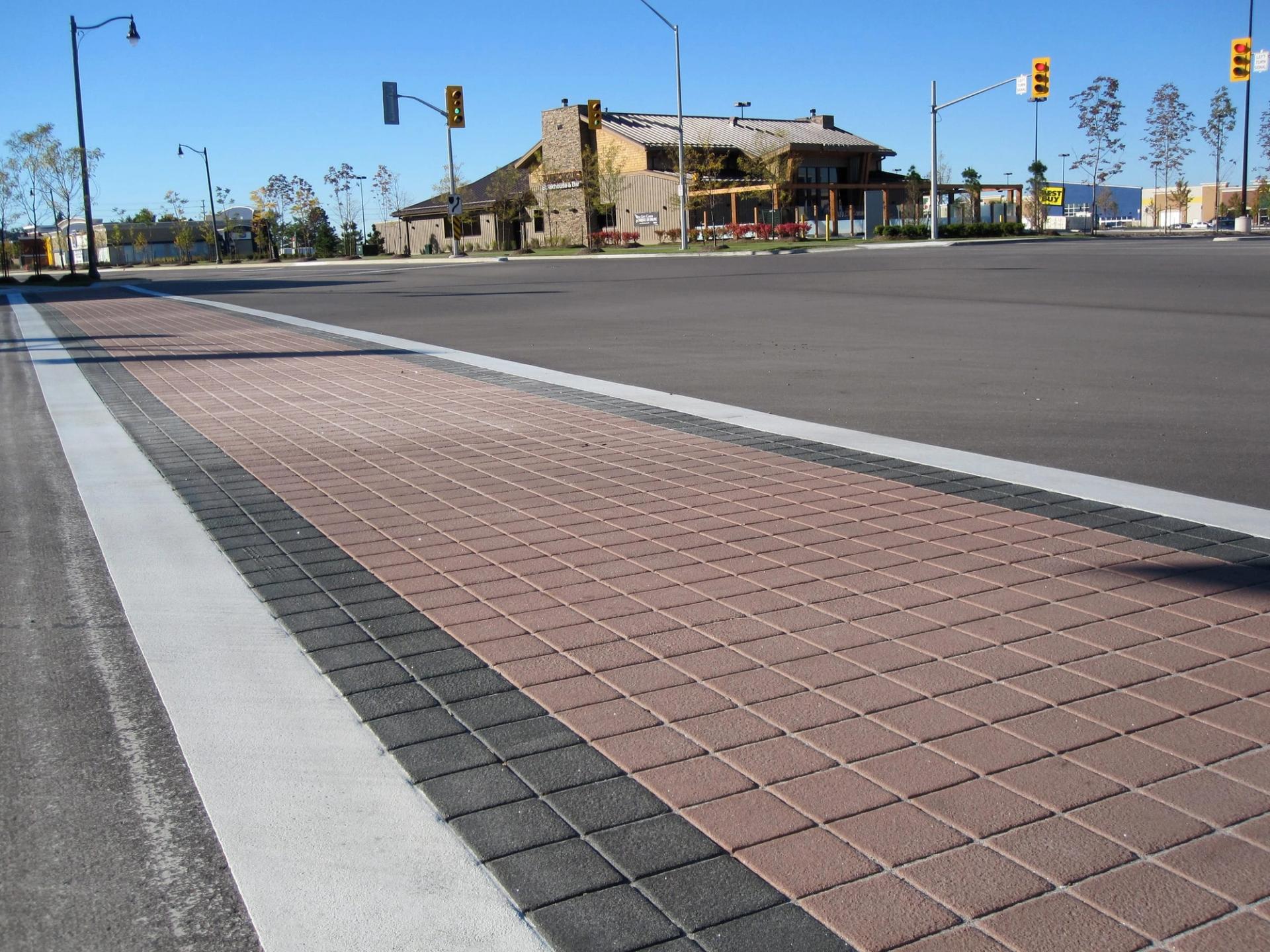
HUB Surface Systems proposed TrafficPatternsXD, a preformed thermoplastic made for heavy use where safety, durability and design all matter.
Key Benefits:
- Embedded aggregate for superior year-round traction, even in rain, snow, or freeze-thaw cycles
- UV-stable, high-contrast markings that resist fading and surface wear
- Fast installation requiring minimal surface preparation
- Supports Canadian transportation guidelines and Vision Zero
VIVA Rapid Transit in York Region
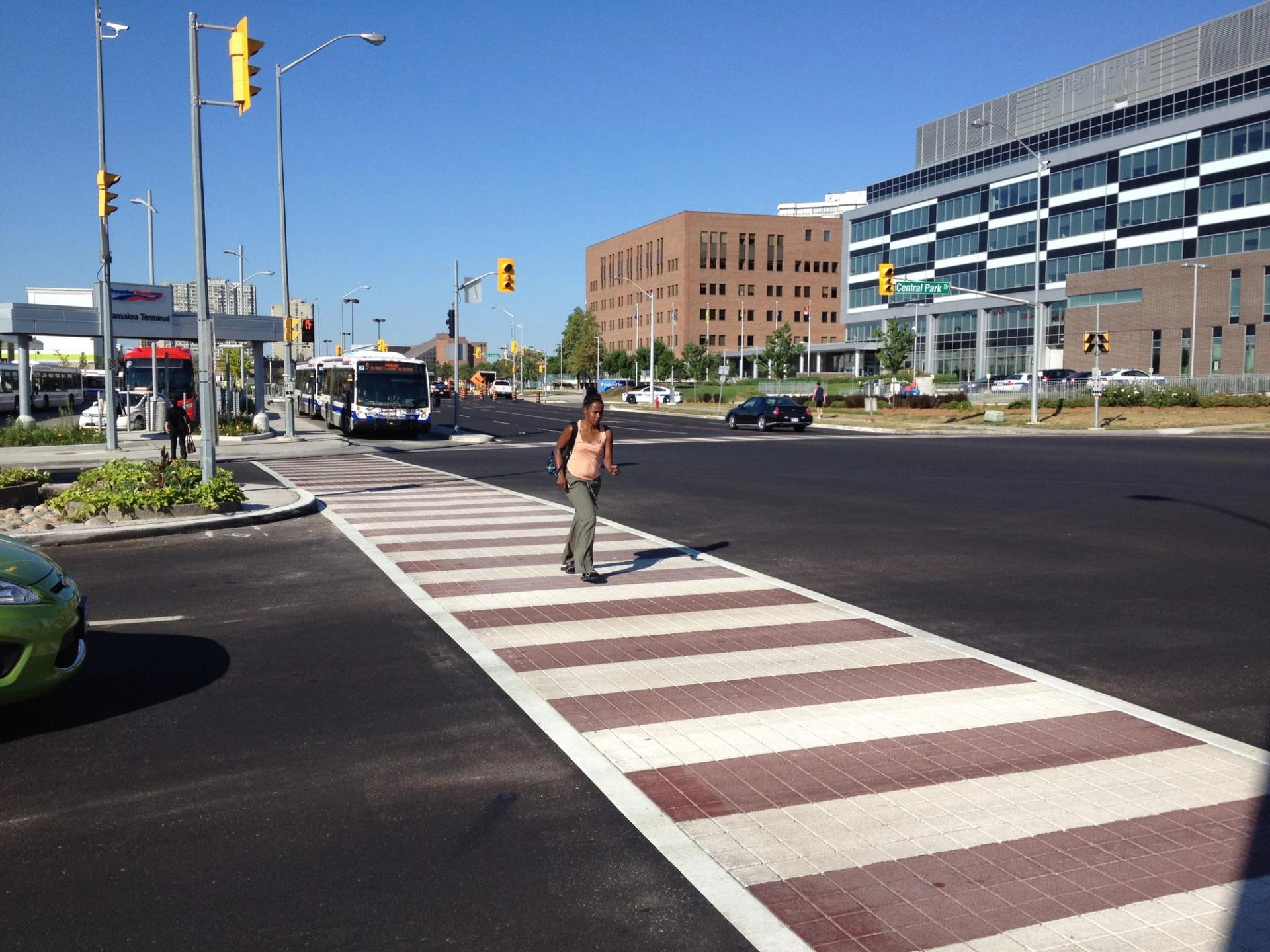
York Region installed TrafficPatternsXD at more than 30 intersections along the Highway 7 Rapidway, a bus rapid transit (BRT) corridor designed under the Complete Streets framework.
Installations included:
- Bus stop platforms and crosswalks for improved legibility
- Modal transition points connecting cyclists, buses, and pedestrians
- Lane definition in bus priority zones to reduce operator error and improve efficiency
Results:
- Pedestrian channelling for safe bus stop access
- Long-lasting surface visibility through multiple winter seasons
- Stronger alignment with York Region's Complete Streets policy and multimodal expansion
East London Link bus rapid transit in London, Ontario
London's East London Link needed surfaces that would stand up to heavy transit wear and keep cycling safe:
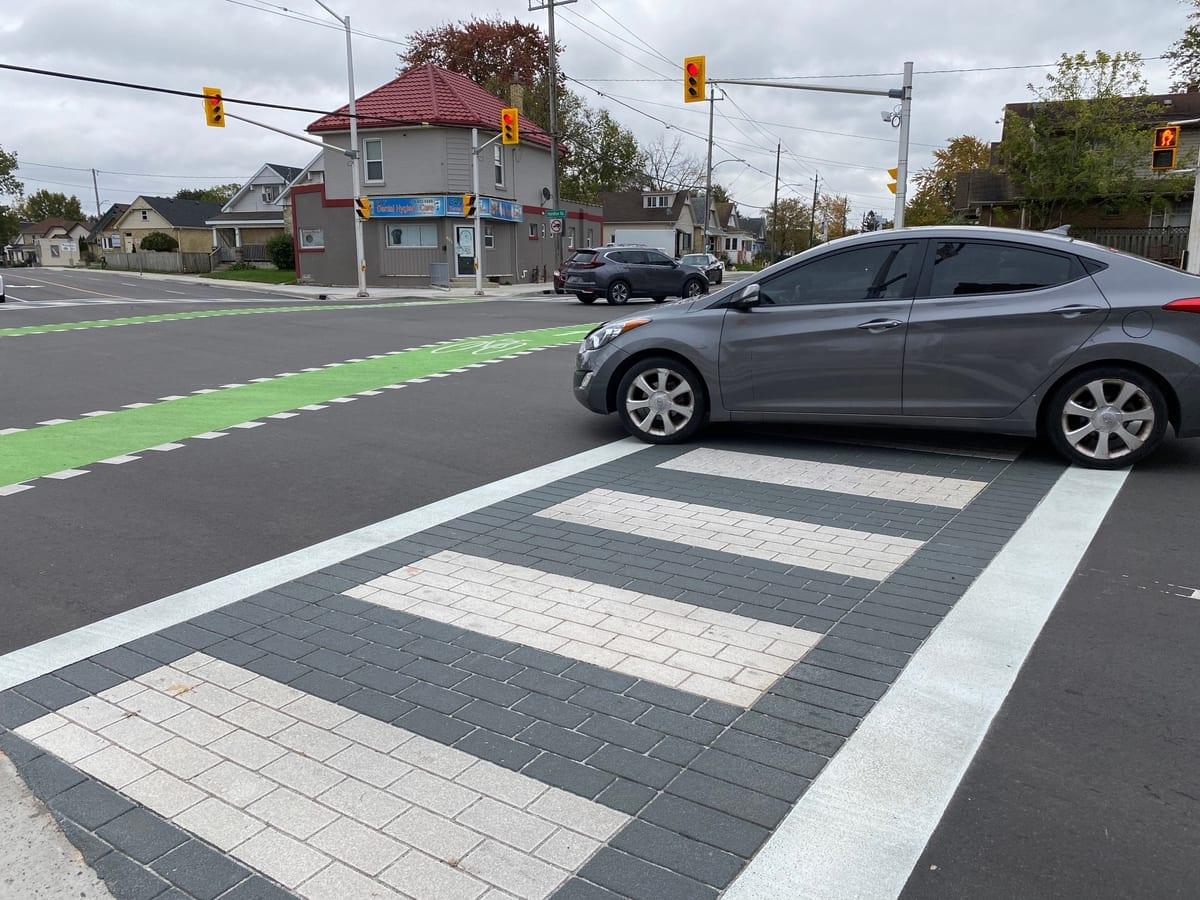
MMAX was applied to define bicycle lanes with vibrant, slip-resistant surfacing that cured quickly and minimized traffic disruption.
TrafficPatternsXD was installed at intersections and pedestrian conflict zones, improving safety and visibility through the winter.
Result: Reduced maintenance interventions, improved traction through freeze-thaw cycles, and stronger alignment with London's Complete Streets and active transportation goals.
Results across both projects
Feedback from municipal stakeholders, planners, and transit operators noted:
- Improved platform navigation and user confidence at pedestrian zones
- Greater safety for cyclists via consistently visible, anti-slip surfaces
- Reduced maintenance frequency compared to traditional paint or epoxy-based treatments
- Improved modal separation, enhancing transit flow and commuter satisfaction
Conclusion
By implementing TrafficPatternsXD on these busy transit corridors, York Region and London made them safer, easier to read and cheaper to maintain.
These case studies illustrate how performance surfacing contributes to:
- Greater transit efficiency through clear delineation of BRT and LRT zones
- Increased public safety for all road users, including cyclists and pedestrians
- Reduced maintenance costs and fewer disruptive repainting cycles
- Stronger integration of multimodal infrastructure across urban corridors
Trusted by Toronto, Vancouver, London, Mississauga, Richmond, York Region, and Waterloo. Contact HUB Surface Systems to request spec sheets or book a Lunch & Learn.