StreetPrint goes into the pavement that is already there: no removal, no repaving, no haul-away. Here is the three-step process, what each step needs, and when a surface is a candidate.
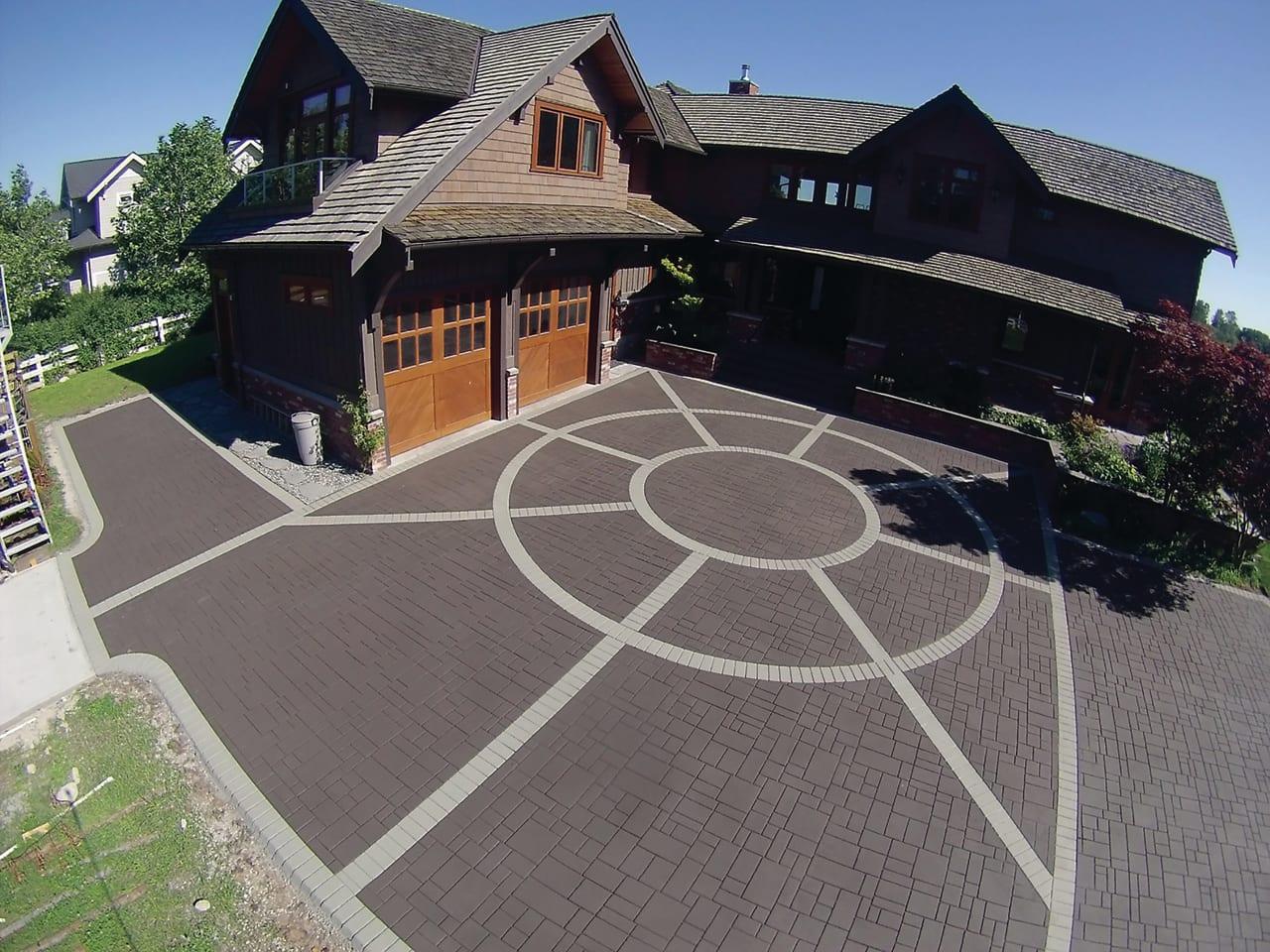
Most people meet stamped asphalt as a finished surface: a brick-pattern crosswalk, a cobblestone driveway, a plaza that looks like it was laid unit by unit. The question that follows is almost always the same: did they tear out the road to do that?
They did not, and that is the whole point of the system.
StreetPrint is the original stamped asphalt, a Canadian invention, installed here since 1992. It works with the pavement already in place. Three steps, and the surface you end up with is the surface you started with, patterned and coloured.
01: Reheat
Infrared reheaters bring the existing asphalt back to a workable temperature.
That is the step that makes everything else possible. No removal, no repaving, no haul-away. A sound existing driveway, plaza or intersection does not need to be reconstructed to be patterned; it needs to be brought back up to temperature so it can take an impression.
New asphalt can be stamped too, while it is still hot behind the paver. But the retrofit case (an existing surface, still structurally fine, that simply looks like every other grey surface in the city) is where the process earns its keep.
02: Stamp
Flexible templates press the pattern into the warm surface, then a plate compactor sets it flush.
Brick, cobble, herringbone, or a custom design: the template is the pattern. The templates are precision-made, reusable, and custom shapes are available, which is how a municipality gets a crest or a community motif into the road rather than choosing from a catalogue of four.
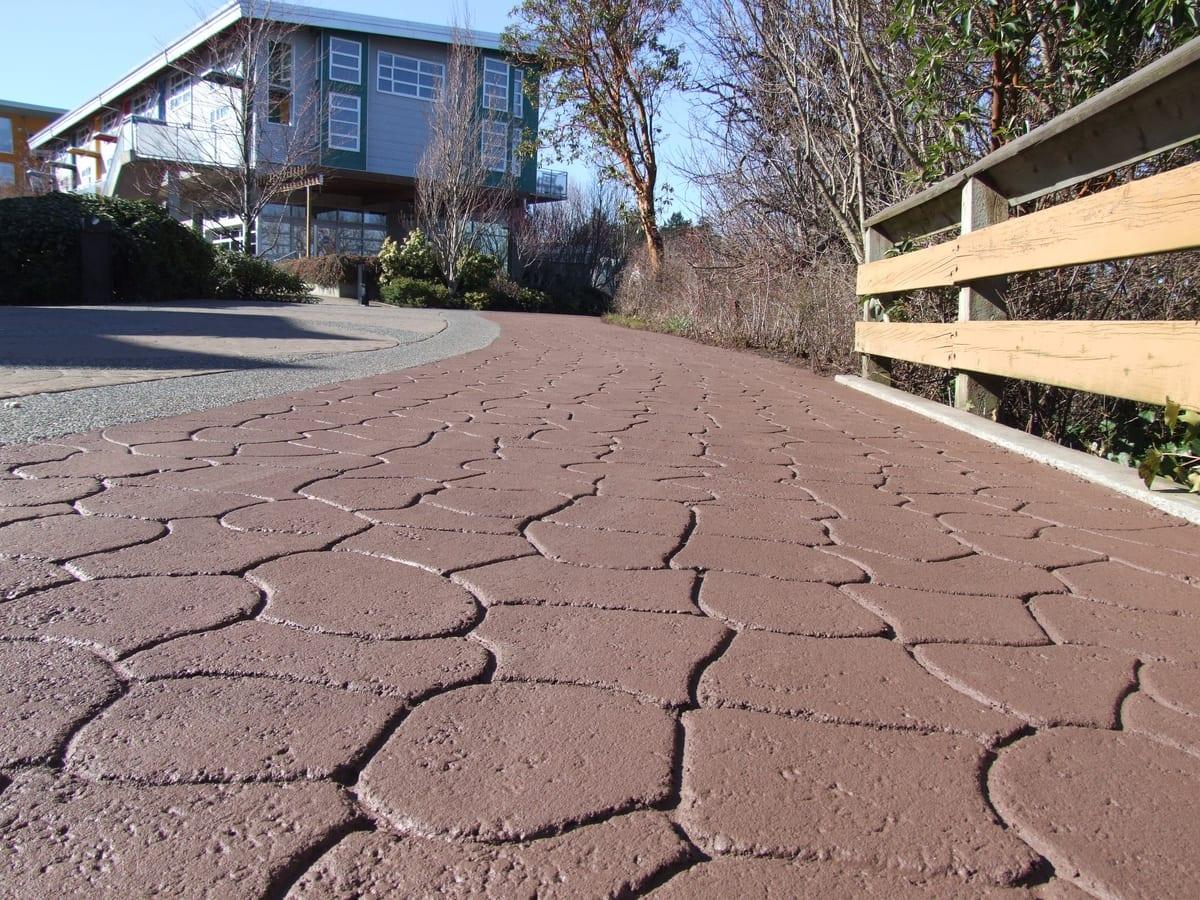
The critical word in that sentence is flush. The pattern is an impression in the asphalt, not a layer sitting on top of it. Nothing stands proud of the road surface.
03: Coat
StreetBond colour locks the pattern in.
The coating is a water-based, epoxy-modified acrylic engineered to move with the pavement rather than resist it, which is what keeps it from cracking, wearing prematurely, or turning slippery, the three ways rigid coatings fail. It is UV-stable and skid-resistant, and it is formulated for plow blades and de-icing seasons.
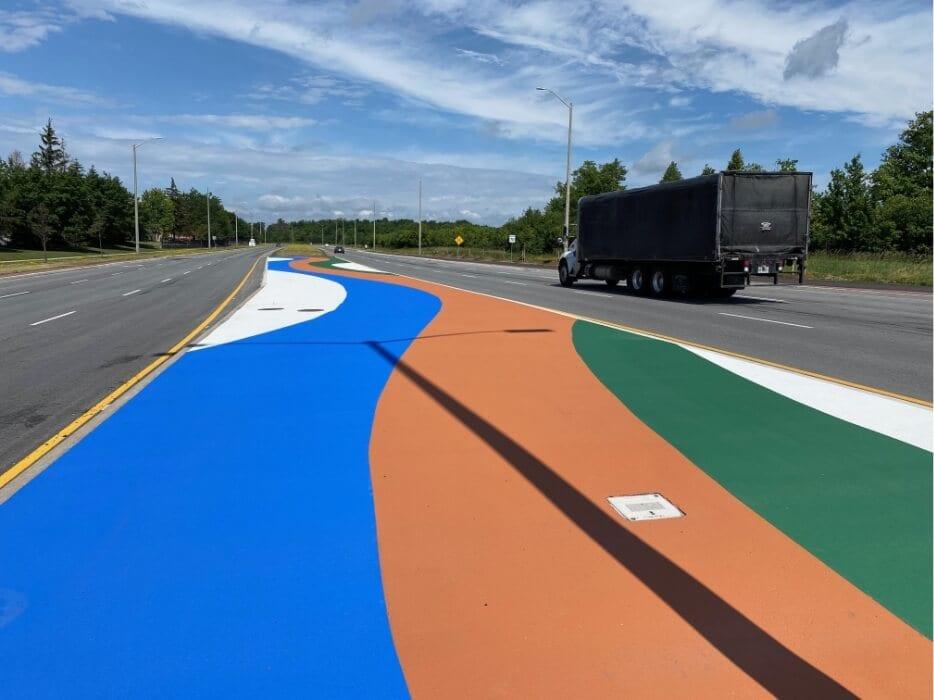
Sixty-three standard colours, plus full custom colour matching.
Why the flush surface matters in Canada
Interlocking pavers do the same visual job. They do it with units, joints and a raised edge profile, and in a freeze-thaw climate that profile is a liability:
- Nothing for a plow blade to catch. A stamped surface is level with the road. A plow passes over it.
- No joints to weed. There is no jointing sand, so there is nothing for seeds to find.
- No pavers to settle. There are no units to shift, heave, or need repointing in year five.
- The asphalt stays flexible. It moves with temperature the way asphalt is supposed to.
That is the argument for stamped asphalt in a country that salts its roads.
Service life
In Canadian service, StreetPrint delivers 10 to 20 years, installed on sound pavement. The pattern is as durable as the asphalt it is stamped into.
The StreetBond coating runs its own cycle. When colour eventually needs freshening, the surface is recoated, not rebuilt: a maintenance operation measured in days, on a surface that never left service.
Is your surface a candidate?
The honest answer is that it depends on the asphalt, not on the pattern you want. Stamping goes into stable asphalt designed for its application and installed to specification. Sound pavement takes a pattern; failing pavement needs to be addressed first.
The fastest way to find out is to have someone look at it.
Book a Lunch & Learn and we will bring the templates, the colour card and the technical data to your office, or see StreetPrint for the full specification.