How municipalities, universities, and First Nations are using horizontal surfaces (crosswalks, plazas, pathways) as the new medium for civic storytelling, cultural expression, and neighbourhood identity.
For most of the twentieth century, civic identity lived on vertical surfaces. Street signs. Banners. Murals. The horizontal plane (the road, the sidewalk, the crosswalk) was reserved for utility: white lines, yellow paint, regulatory arrows. It told you where to stop, not who you were.
That is changing.
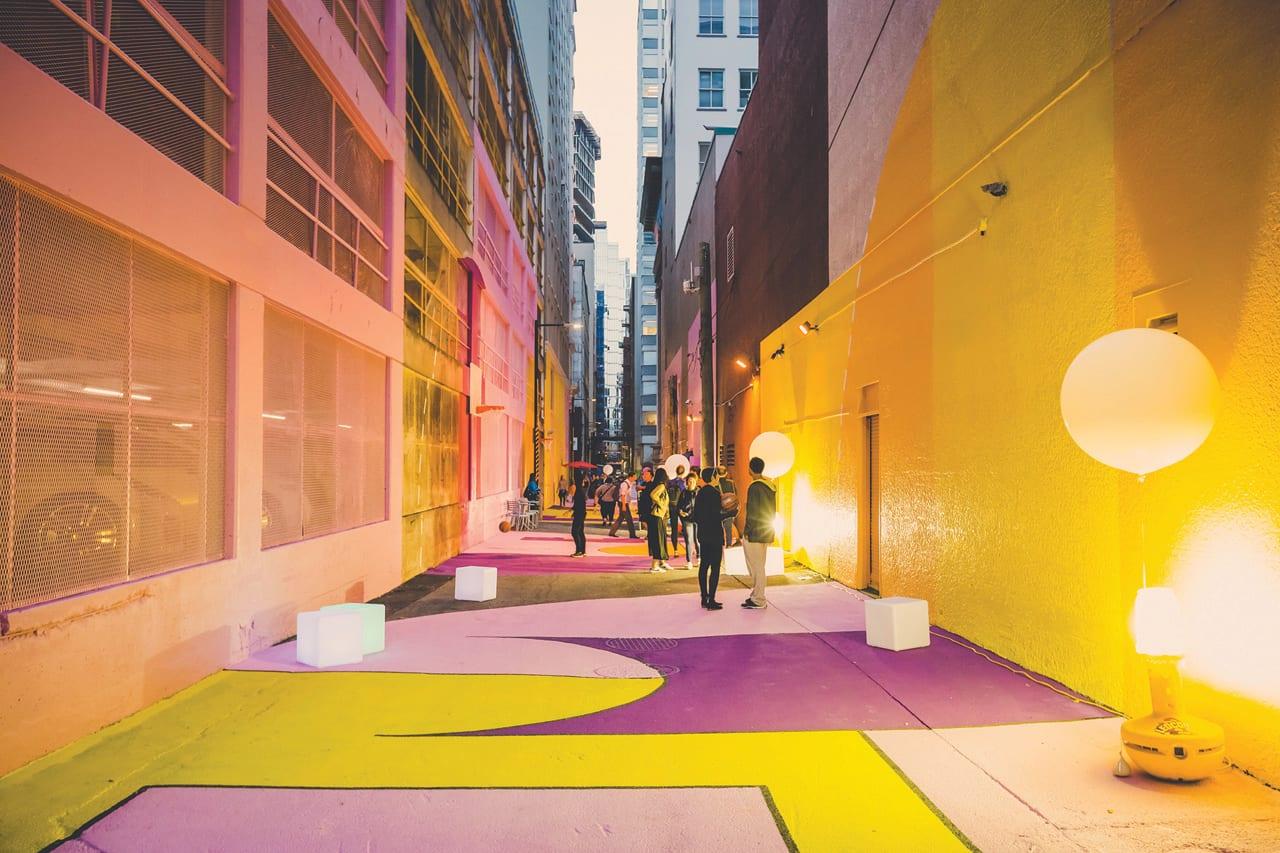
Across Canada, municipalities, First Nations, universities, and BIA districts are rethinking the street surface as a medium. Not just infrastructure. A canvas.
Why Horizontal, Why Now
Three forces are converging. First, cities are removing visual clutter: fewer overhead banners, simplified signage frameworks, cleaner streetscapes. The ground plane has become the uncongested medium. Second, pedestrian attention has shifted downward. Smartphone use and urban density have people scanning a three-metre radius. Surface graphics meet viewers exactly where they are. Third, the materials have caught up. Preformed thermoplastic graphics like DecoMark can reproduce Pantone-matched, print-quality artwork at street scale, and hold it for 6–8 times the lifespan of spray-applied paint.
The result: surface design has become one of the most cost-effective placemaking investments available to municipalities and property managers.
DecoMark: Precision at Pavement Scale
DecoMark is a preformed thermoplastic system manufactured with full Pantone colour matching, fine-detail capability, and UV-stable pigments. A community's crest, a First Nations design, a university wordmark, a BIA district logo: all can be reproduced at crosswalk scale with the same precision as a commercial printer.
The installation is permanent, skid-resistant, and built to withstand Canadian winters. Unlike paint-based stencil graphics that fade within a season, DecoMark installations retain their colour depth and edge definition for years. The economic math is straightforward: a lower cost per year of visibility than any alternative horizontal medium.
Case Studies in Civic Storytelling
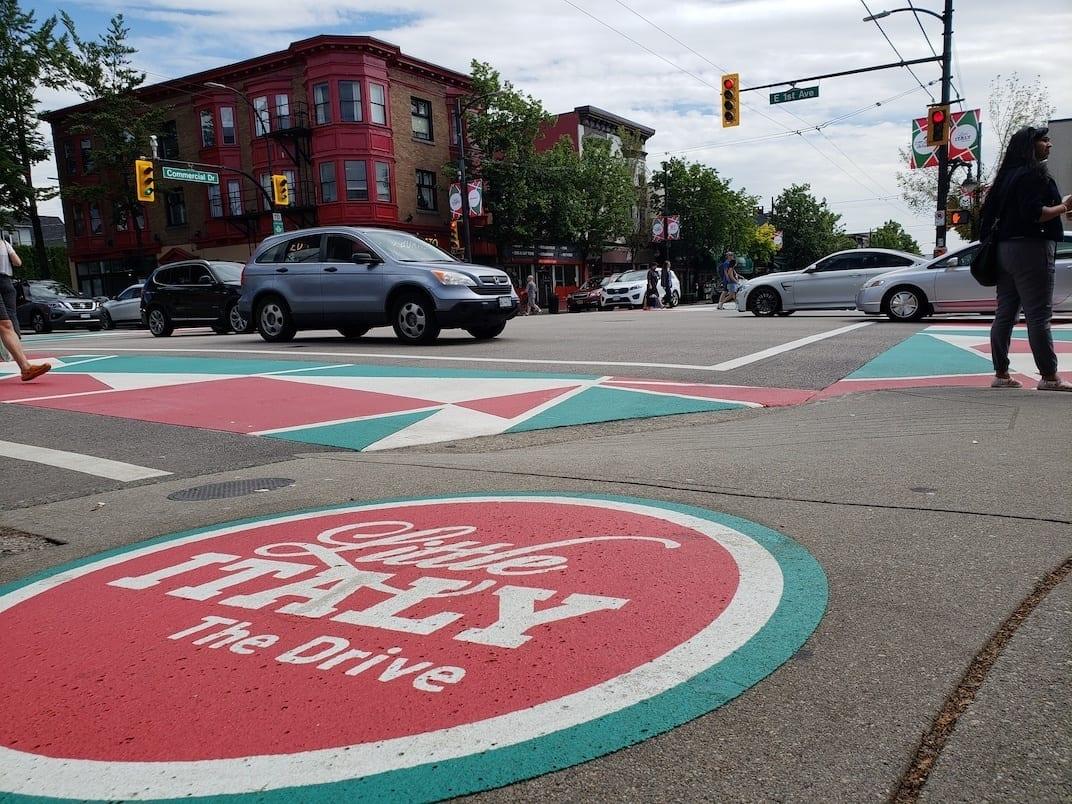
Commercial Drive, Vancouver. The Little Italy corridor on Commercial Drive features Italian flag-themed crosswalks using multicoloured thermoplastic. The result is immediately legible: you know where you are, what the neighbourhood is, what it celebrates. Foot traffic in BIA districts with branded crosswalks typically increases 25–40% over baseline. The crosswalk does what no banner can: it stops traffic, literally and figuratively.
Every Child Matters, Multiple Municipalities. Following the Truth and Reconciliation Commission's calls to action, dozens of Canadian municipalities have installed orange Every Child Matters crosswalks as permanent civic statements. These installations, produced with DecoMark precision thermoplastic, are acts of civic memory. They transform daily infrastructure, the thing you cross to get to the coffee shop, into a moment of acknowledgement. The durability matters: a faded memorial is worse than no memorial.
Terry Fox Plaza, Coquitlam. The plaza installation at Coquitlam's Terry Fox memorial incorporates custom graphic pavements that honour a specifically Canadian story. The surface extends the commemorative space: not just a plaque, but a ground plane that communicates at the scale of civic gathering.
BC Children's Hospital Labyrinth, Vancouver. A therapeutic labyrinth installed in StreetBond coloured coatings on the hospital grounds. Here the surface design is simultaneously functional (the labyrinth path), therapeutic (the experience of walking it), and communicative (it announces a different kind of institution, one that cares about experience, not just outcomes).
BIA Districts and Cultural Corridors
Business Improvement Areas across Canada are using crosswalk branding as a district identity tool. Chinatown, Little Portugal, Little Italy, Indigenous cultural corridors, arts districts: each has a visual language that can be applied to horizontal surfaces at intersections. The crosswalk becomes the district's business card, visible to every vehicle and pedestrian that passes through.
University campuses are doing the same. Custom colour-coded pedestrian routing, faculty-identified pathways, logo crossings at main entries and athletic facilities. The campus ground plane becomes part of the institution's brand environment.
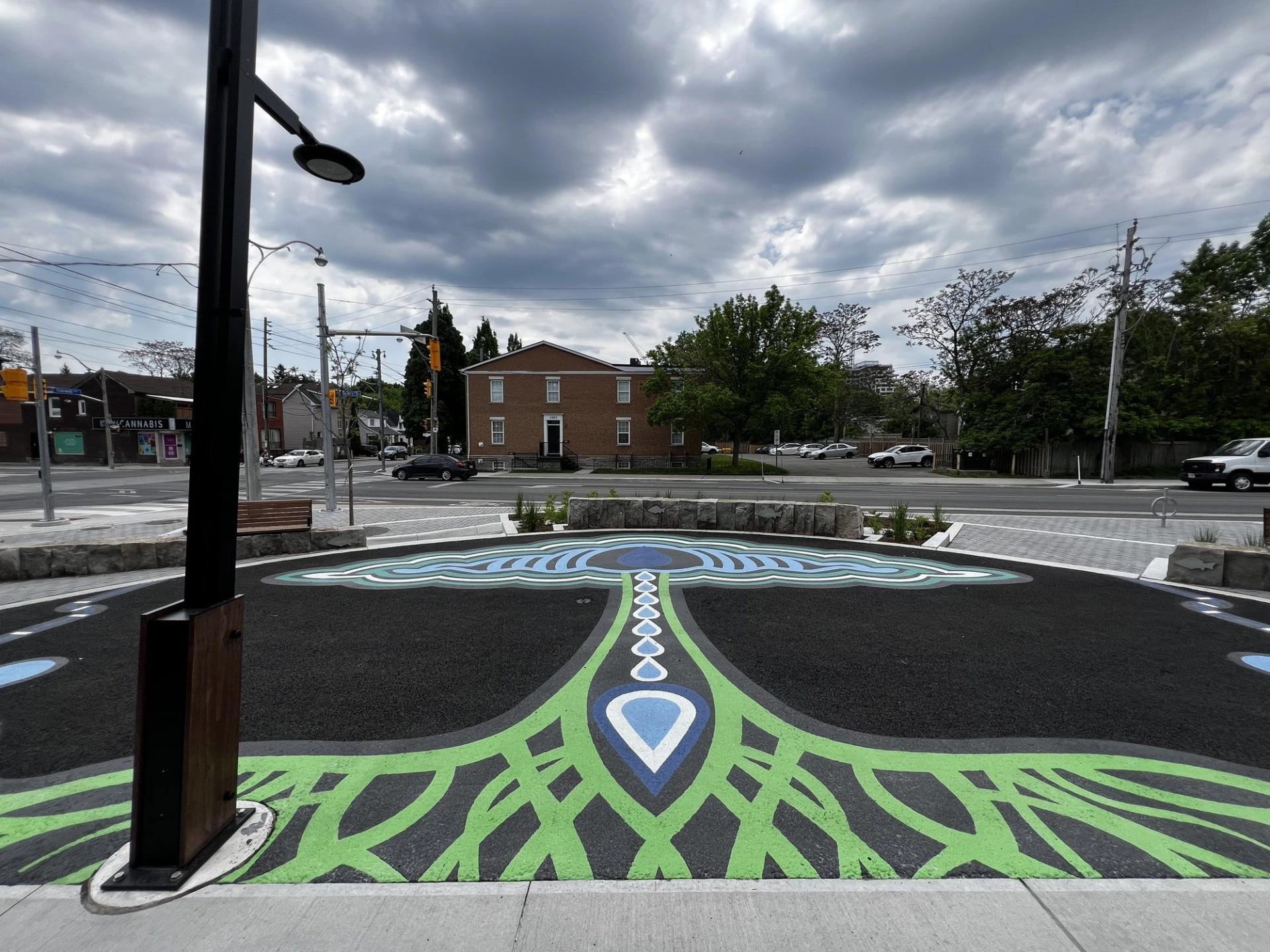
First Nations communities are expressing cultural identity and land acknowledgement simultaneously, through design language, symbology, and colour applied to the surfaces of their communities. These installations have a permanence that reflects the permanence of the communities they represent.
What to Consider
The best surface identity projects share a few characteristics: they are designed with the community they represent, not just for it. They use professional colour management (Pantone matching matters: a slightly wrong red reads as wrong). They are planned for durability: a memorial crosswalk installed with inferior materials does the cause no favours when it fades in two seasons.
HUB Surface Systems brings 27 years of experience in this space. We work with municipal staff, First Nations, universities, and BIA coordinators to develop surface identity programs that reflect specific community intentions and survive Canadian climate conditions.
The street is your canvas. Let's talk about what you want to put on it.
Book a Lunch & Learn to explore community identity applications with your team. We'll bring the case studies and the product samples.